The world's most critical chipmaker is paying a steep price for political compliance. TSMC, the Taiwan-based semiconductor giant that manufactures chips for Apple, Nvidia, and AMD, has committed $200 billion to U.S. manufacturing facilities since Trump's 2025 return to the White House - and the move is hammering its profit margins. The massive investment represents the largest foreign manufacturing commitment in American history, but it's reshaping the economics of AI chip production in ways that could ripple through the entire tech industry.
TSMC just made the most expensive political compromise in semiconductor history. The company's staggering $200 billion commitment to American manufacturing isn't just about building fabs - it's about fundamentally restructuring how the world's most advanced AI chips get made, and who pays for the privilege.
The announcement comes as Trump's second administration doubles down on tech sovereignty, particularly around AI infrastructure. Since returning to power in 2025, the administration has wielded tariffs, export controls, and direct political pressure to force semiconductor production back to American soil. TSMC, which controls over 60% of the global foundry market and manufactures virtually every cutting-edge AI chip, had little choice but to comply.
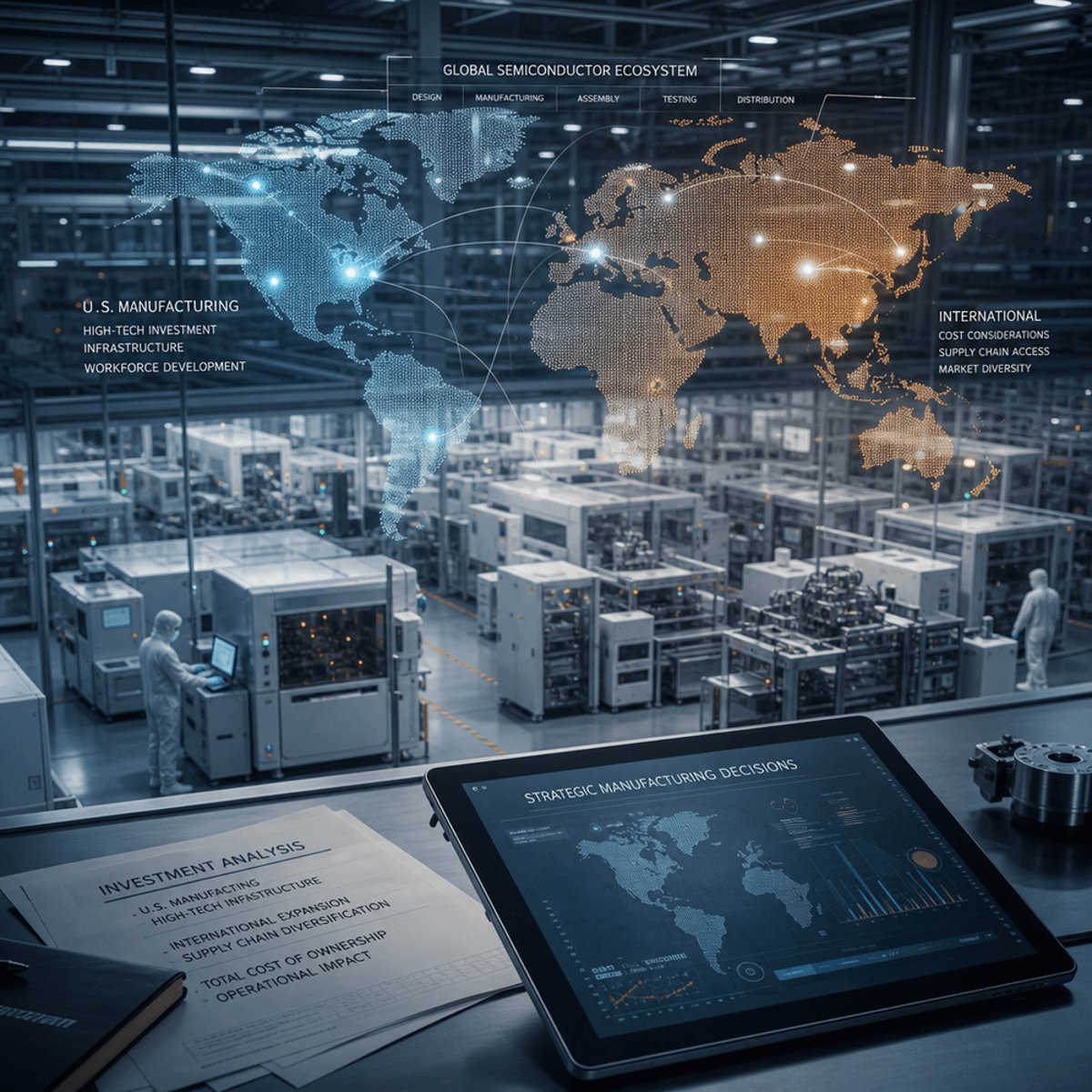
But compliance carries a brutal price tag. Manufacturing costs in the United States run 30-50% higher than TSMC's established operations in Taiwan, according to industry analysts. Labor, regulatory compliance, and construction expenses in Arizona - where TSMC is building its largest U.S. presence - dwarf what the company pays in Hsinchu. Those economics directly pressure the margins that have made TSMC one of the world's most profitable manufacturers.
The ripple effects extend far beyond TSMC's balance sheet. Nvidia, whose H100 and next-generation AI accelerators rely almost entirely on TSMC's advanced packaging and 3-nanometer processes, now faces the prospect of higher chip costs filtering through to data center customers. Apple, which depends on TSMC for every iPhone and Mac processor, is already gaming out scenarios where U.S.-manufactured chips carry premium pricing.
AMD finds itself in a similar bind. The company's MI300 AI accelerators and Ryzen processors both come exclusively from TSMC fabs. As production shifts to higher-cost American facilities, AMD's competitive positioning against Intel's domestic manufacturing becomes more complicated, not less.
The $200 billion figure represents a dramatic escalation from TSMC's initial U.S. commitments. When the company first announced Arizona expansion plans in 2020, the project carried a $12 billion price tag. That number swelled to $40 billion by 2022. Now, under direct White House pressure, it's quintupled again. The investment will eventually support multiple fabs capable of producing chips at 3-nanometer and smaller process nodes - the geometries required for frontier AI models and next-generation graphics processors.
Trump's push reflects broader anxiety about America's dependence on Taiwan for critical technology. With China maintaining pressure on Taiwan and semiconductor supply chains proving vulnerable to geopolitical shocks, Washington views domestic chip production as national security infrastructure. The CHIPS Act, passed during Biden's term but now aggressively enforced under Trump, provides some subsidies - but nowhere near enough to offset TSMC's total costs.
Industry insiders see the margin squeeze as inevitable. "You can't replicate Taiwan's semiconductor ecosystem overnight," one fab equipment executive noted. "TSMC built that over 30 years with government support, trained engineers, and established supply chains. Doing it in Arizona means starting from scratch at American prices."
The timing couldn't be worse for TSMC's customers. AI infrastructure spending is exploding, with hyperscalers like Microsoft, Google, and Amazon racing to deploy GPU clusters for training and inference. Any increase in chip costs directly impacts data center economics and, eventually, the price of AI services reaching consumers and enterprises.
Intel, meanwhile, watches with mixed feelings. The company has long advocated for domestic semiconductor manufacturing and stands to benefit from renewed American fab investment. But TSMC's forced expansion also means a better-capitalized competitor building state-of-the-art facilities on U.S. soil, potentially poaching talent and supply chain partners Intel needs for its own turnaround.
Samsung, the other major player in advanced logic manufacturing, faces similar pressures. The Korean giant already operates fabs in Texas but now confronts expectations to expand further as Washington pushes allied nations to reduce China exposure and increase American production.
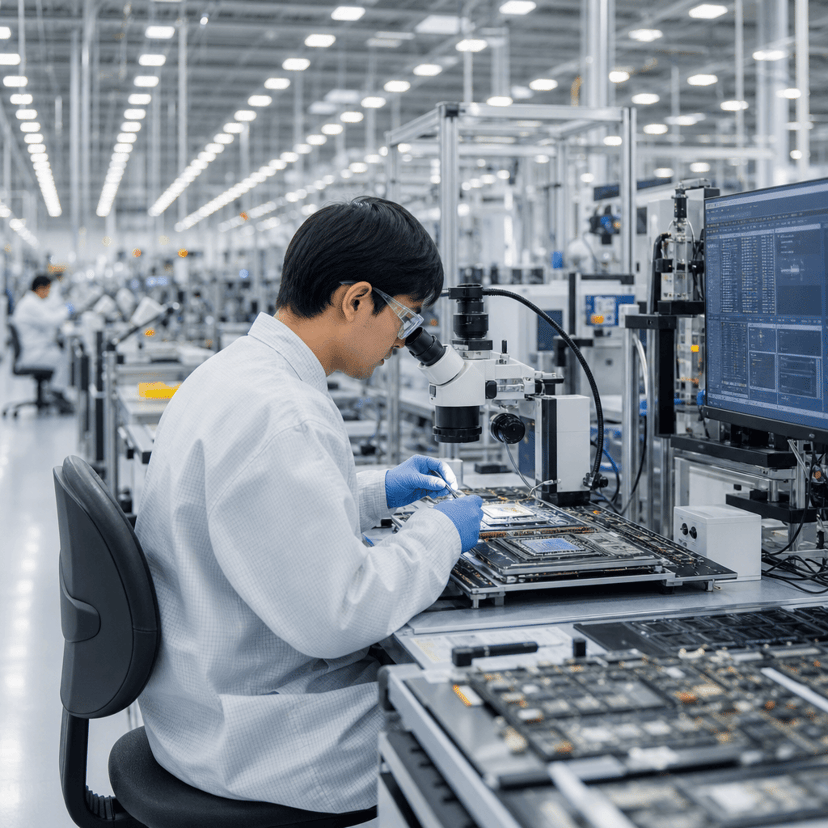
The $200 billion commitment will unfold over the next decade, with initial Arizona fabs expected to reach volume production by late 2025 or early 2026. TSMC hasn't disclosed exactly how much margin compression to expect, but analysts estimate U.S. operations could run 5-10 percentage points below Taiwan facilities once fully ramped.
For an industry where margins often separate winners from losers, that's a significant handicap. But it's also the new reality of semiconductor geopolitics. As chips become as strategically critical as oil once was, companies like TSMC find themselves caught between engineering excellence and political necessity - and discovering that excellence alone no longer determines where fabs get built.
TSMC's $200 billion American expansion marks a turning point in how geopolitics shapes technology economics. The company's margin pressure won't stay confined to its own P&L - it'll flow through to every AI chip customer, every cloud provider, and ultimately every company building on top of AI infrastructure. As manufacturing costs rise and supply chains reorganize around political boundaries rather than pure efficiency, the era of ever-cheaper, ever-faster chips faces its first serious economic headwind in decades. What happens next depends on whether TSMC can engineer its way out of the cost disadvantage, whether subsidies increase to bridge the gap, or whether the industry simply accepts that American-made AI chips come with an unavoidable premium. For now, the world's most important chipmaker is learning that in the new era of tech sovereignty, even Taiwan's semiconductor crown jewel must bend to Washington's will.