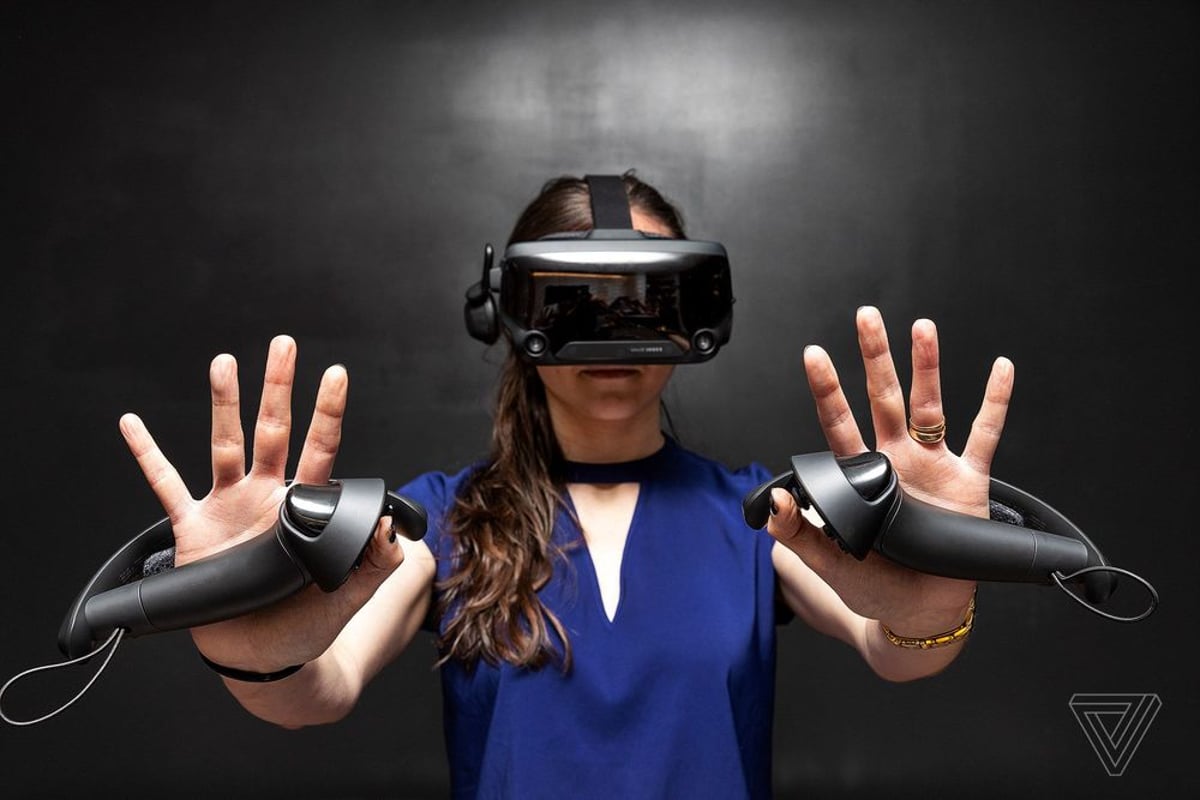
Valve just pulled the plug on its flagship Index VR headset after five years, designer Lawrence Yang confirmed to The Verge. The move clears the deck for the company's ambitious Steam Frame - a wireless headset that streams PC games while running Windows titles locally through an onboard Arm chip. It's a symbolic end to the tethered VR era and Valve's bet on standalone's future.
Valve just made the VR industry's most anticipated transition official. The gaming giant confirmed it's no longer manufacturing the Index VR headset, ending production of the $999 device that defined premium PC VR for half a decade. The news comes as Valve prepares to launch its Steam Frame in early 2026, a wireless headset that represents everything the Index wasn't - untethered, standalone, and built for the modern VR landscape.
"We're no longer manufacturing" the Index, designer Lawrence Yang told The Verge during the Steam Frame announcement. The statement marks the end of an era for PC VR enthusiasts who swore by the Index's crisp visuals and innovative Knuckles controllers, despite its hefty price tag and complex setup requirements.
The timing isn't coincidental. Meta has completely reshaped VR expectations since the Index launched in 2019, selling tens of millions of Quest headsets that work without any PC connection. Even premium players like Apple with the Vision Pro and Samsung with Galaxy XR have embraced the standalone approach. Tethered headsets suddenly look like relics from a different generation.
The Steam Frame isn't just a wireless Index - it's Valve's complete reimagining of PC VR. The headset packs 2160x2160 per-eye resolution, a significant jump from the Index's 1440x1600 screens. But the real innovation lives in its dual-mode design: a 6GHz wireless streaming stick connects to your gaming PC for high-end titles, while an onboard Arm processor runs Windows games locally when needed.
Early hands-on reports from Valve's headquarters suggest the wireless streaming works flawlessly, potentially solving PC VR's biggest pain point. "The streaming worked extremely well," according to The Verge's testing. That's crucial for Valve's strategy - the company needs wireless to feel as responsive as wired connections to win over hardcore gamers.
The biggest casualty might be Valve's lighthouse tracking system. Those laser-sweeping base stations, first introduced with the HTC Vive in 2016, won't work with the Steam Frame. "We're not working on lighthouse support for it," Yang confirmed. Instead, the Frame uses four monochrome cameras and IR illuminators for inside-out tracking, the same approach that's become standard across the industry.
For the thousands of VR enthusiasts with lighthouse setups already mounted in their rooms, this represents a forced upgrade. Those base stations that cost hundreds of dollars and required precise wall mounting are suddenly obsolete. Valve is betting that wireless convenience outweighs the tracking precision advantage that lighthouses provided.
The Steam Frame will cost less than the Index's $999 price point, though Valve hasn't revealed exact pricing yet. That positions it against Meta's Quest Pro and other premium standalone headsets, while maintaining the PC gaming focus that Valve knows best. The challenge will be convincing Steam users to pay premium prices when Quest headsets offer similar experiences for hundreds less.
Industry watchers see this as Valve's acknowledgment that the VR market has moved beyond enthusiast early adopters. The Index succeeded with hardcore gamers willing to deal with cables and base station setups for the best possible experience. But mainstream VR adoption demands the simplicity that wireless headsets provide, even if it means compromising on some technical specifications.
Valve's decision to discontinue the Index signals more than just a product transition - it's the industry's formal goodbye to the tethered VR era. The Steam Frame represents a calculated bet that wireless convenience trumps the technical advantages of wired connections and lighthouse tracking. For VR enthusiasts, it's bittersweet: the technology that delivered the most precise tracking is being retired for mass market appeal. But if Valve can deliver console-quality PC gaming without cables, the compromise might be worth it. The real test comes in early 2026 when Steam Frame hits the market and proves whether wireless can truly replace wired for serious VR gaming.