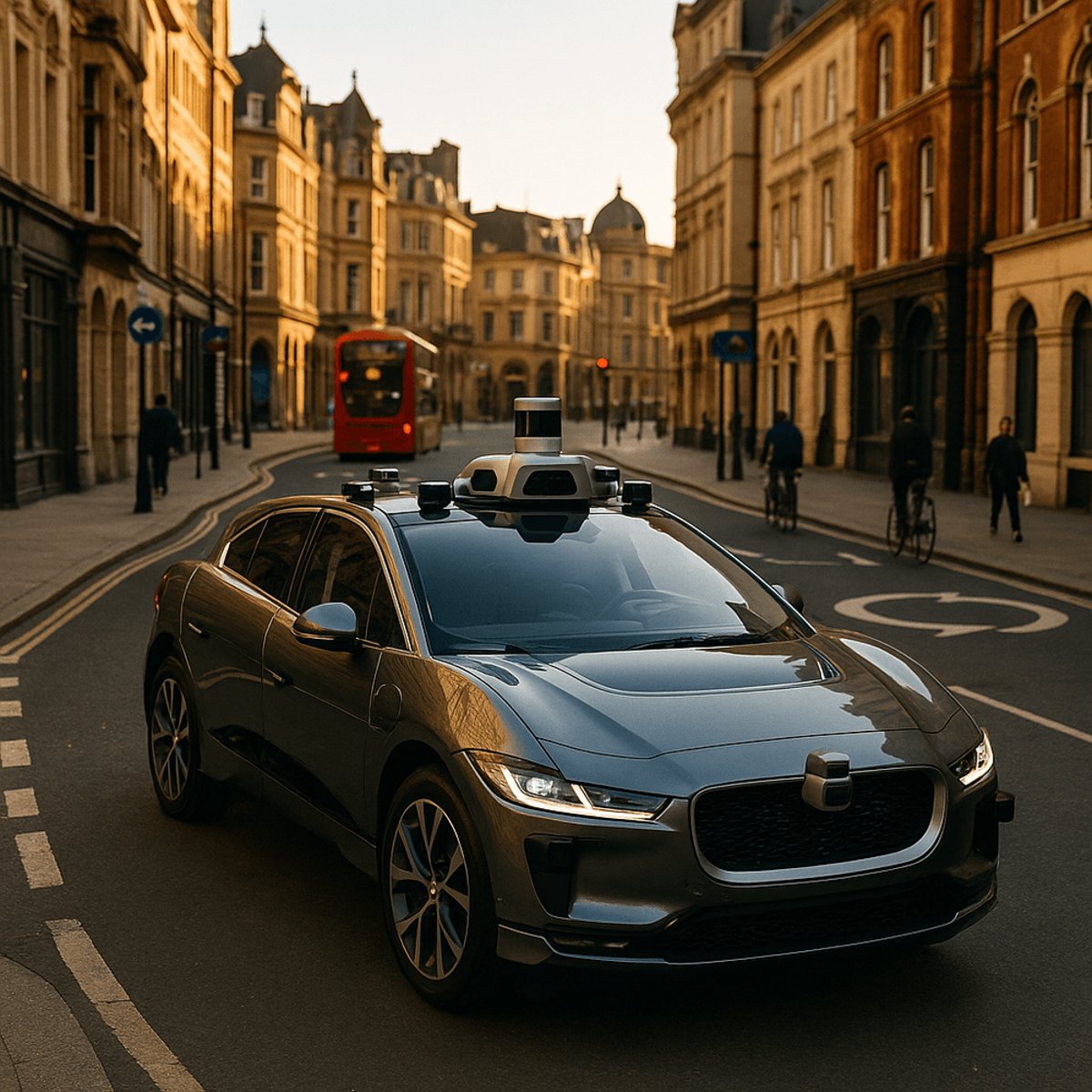
Waymo, Google's self-driving car unit, has officially begun testing its autonomous vehicles on London streets, marking a significant expansion beyond its US operations. The move positions the city to potentially become home to Europe's first major robotaxi service, pending UK government approval. This represents Waymo's boldest international bet yet as it looks to crack the notoriously complex European market with its proven autonomous technology that's already logged millions of miles across San Francisco, Phoenix, and Los Angeles.
Waymo is bringing its robotaxis across the Atlantic. The Alphabet-owned autonomous vehicle company has begun testing its self-driving cars on London's streets, according to a TechCrunch report, setting the stage for what could become Europe's first major commercial robotaxi service.
The testing phase marks a critical milestone for Waymo's international ambitions. After years of perfecting its technology across American cities, the company is now tackling one of the world's most challenging driving environments - London's maze of narrow streets, aggressive traffic patterns, and left-hand driving rules. It's a bold move that could either cement Waymo's position as the global leader in autonomous vehicles or expose vulnerabilities in technology that's been primarily trained on US roads.
Waymo hasn't disclosed the size of its London test fleet or the specific neighborhoods where it's operating, but the company's approach typically involves months or even years of mapping and validation before launching commercial service. In San Francisco and Phoenix, that methodical strategy paid off - Waymo now operates the only truly driverless ride-hailing service at scale in the United States, completing thousands of paid rides daily without safety drivers behind the wheel.
The UK government has been surprisingly receptive to autonomous vehicle testing compared to other European nations. Officials have publicly expressed interest in positioning Britain as a hub for self-driving technology, viewing it as both an economic opportunity and a way to address transportation challenges in congested urban areas. But approval for commercial operations remains uncertain, with regulatory frameworks still evolving around liability, insurance, and safety standards for vehicles operating without human oversight.
London presents unique technical hurdles that differentiate it from Waymo's existing markets. The city's roads weren't designed for cars - many streets date back centuries, creating tight corridors where vehicles, cyclists, and pedestrians mix in chaotic patterns. Roundabouts, narrow lanes, and the sheer density of traffic will test whether Waymo's sensor suite and AI systems can adapt to driving conventions fundamentally different from those in California or Arizona.
The timing of Waymo's London push comes as competition in the autonomous vehicle space intensifies globally. Tesla continues developing its Full Self-Driving system, Chinese companies like WeRide and Pony.ai are expanding aggressively, and traditional automakers are pouring billions into their own self-driving programs. By establishing a foothold in Europe now, Waymo is making a preemptive strike to claim market leadership before rivals can gain traction.
For London residents, the testing phase means encountering Waymo's distinctive Jaguar I-PACE vehicles equipped with the company's fifth-generation autonomous driving system - a spinning lidar unit on the roof, cameras arrayed around the body, and radar sensors that create a 360-degree view of the vehicle's surroundings. The cars will likely operate with safety drivers initially, ready to take control if the system encounters scenarios it can't handle.
The commercial implications extend beyond transportation. A successful London deployment would validate Waymo's technology in markets beyond North America, potentially opening pathways to Paris, Berlin, Tokyo, and other major cities. It would also demonstrate that autonomous vehicles can navigate the regulatory patchwork of different countries, each with their own rules about testing, liability, and data privacy.
What happens next depends largely on how quickly Waymo can prove its system handles London's unique challenges and whether UK regulators feel confident approving driverless operations. The company's track record suggests patience - it spent years testing in California before removing safety drivers, and it's applied the same cautious approach to each new city. But with competitors circling and pressure mounting to show return on the billions invested in autonomous technology, Waymo may be feeling the urgency to move faster than its usual pace would dictate.
Waymo's London testing represents more than just geographic expansion - it's a litmus test for whether autonomous vehicle technology developed and refined in American suburbs can translate to the dense, chaotic streets of historic European cities. If the company can navigate London's roundabouts, narrow lanes, and unpredictable traffic patterns while satisfying UK regulators, it will have proven its technology is truly ready for global deployment. But the stakes are high - failure could set back the entire autonomous vehicle industry's international ambitions and embolden critics who argue self-driving cars only work in carefully controlled environments. For now, Londoners will watch as Waymo's cars quietly gather data, building the foundation for what could become a transformative shift in how one of the world's oldest cities moves its people.