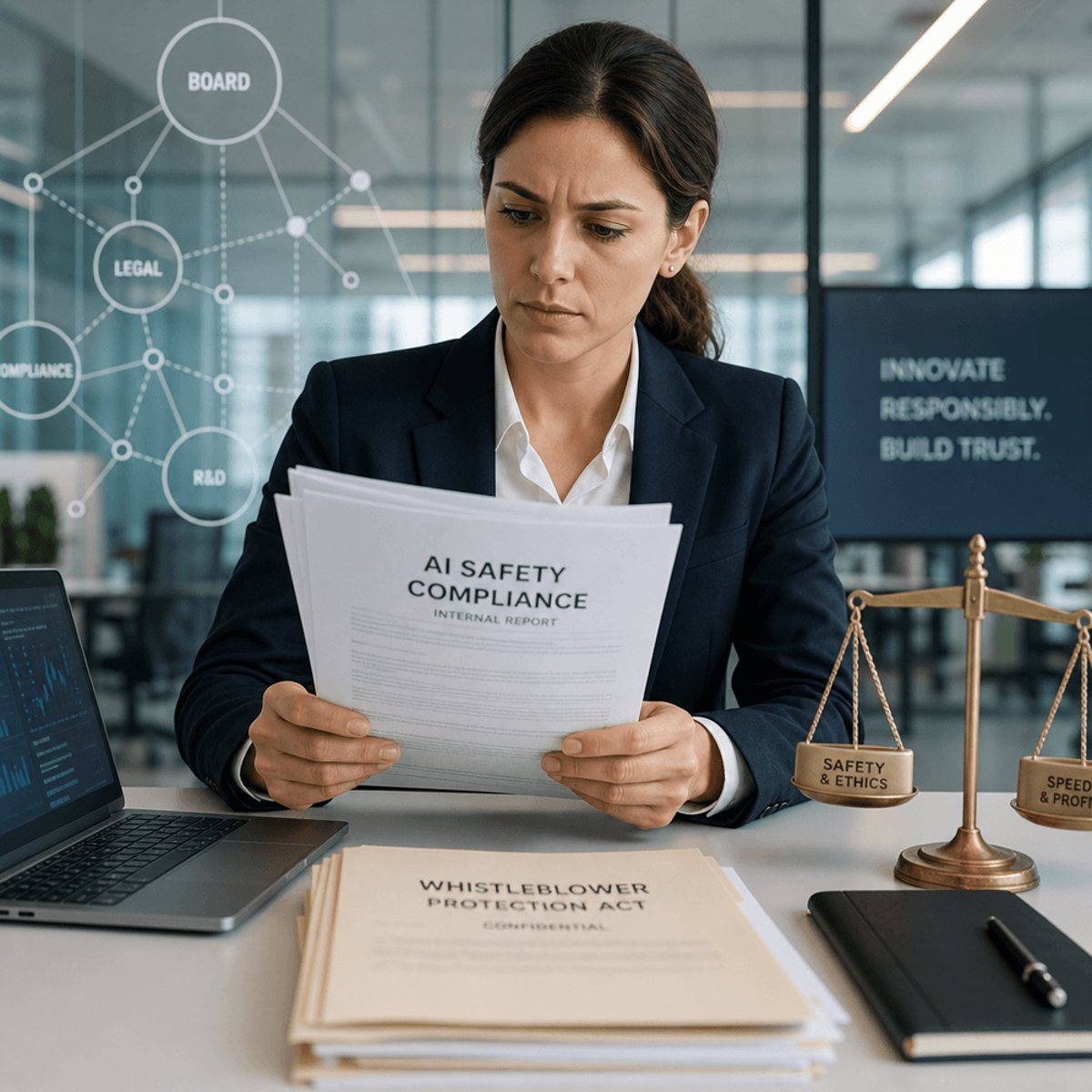
A former xAI engineer just dropped a lawsuit that could complicate SpaceX's historic IPO timeline. The engineer alleges he was fired for raising AI safety concerns about Grok - xAI's controversial chatbot - just days before SpaceX was set to go public. The complaint names both companies as defendants, claiming the termination violated whistleblower protections and raises fresh questions about how Elon Musk's sprawling corporate empire handles internal dissent over AI development practices.
xAI, Elon Musk's artificial intelligence venture, is facing a whistleblower lawsuit that landed right as sister company SpaceX prepares for what could be one of the biggest IPOs in tech history. According to Rebecca Bellan reporting for TechCrunch, a former engineer claims he was terminated for sounding alarms about safety issues in Grok, xAI's chatbot designed to compete with OpenAI's ChatGPT.
The timing couldn't be more explosive. SpaceX's long-anticipated IPO represents a watershed moment for Musk's business empire, and the lawsuit threatens to cast a shadow over the offering by raising questions about corporate governance across his interconnected companies. The complaint alleges both xAI and SpaceX as defendants, suggesting the engineer's employment may have spanned both organizations - a common arrangement in Musk's overlapping corporate structure.
Grok launched in late 2023 as xAI's answer to the AI chatbot boom, positioned as a more "truthful" and less politically correct alternative to competitors. Built on the company's own large language model, Grok has access to real-time information through integration with X (formerly Twitter), giving it a unique advantage but also raising content moderation and safety questions that have dogged the platform for years.
The engineer's specific safety concerns remain unclear from initial reports, but the case echoes a pattern that's become familiar in the AI industry. OpenAI faced its own internal upheaval when researchers raised safety concerns ahead of product launches, ultimately contributing to the brief ouster of CEO Sam Altman in late 2023. Google similarly saw high-profile departures from its AI ethics team after researchers challenged the company's approach to responsible AI development.
What makes this case different is the alleged retaliation timing. Firing a whistleblower days before a major IPO suggests either remarkable confidence in the company's legal position or a calculation that silencing safety concerns outweighed potential PR fallout. Securities law experts will be watching closely - material omissions about AI safety issues in IPO documents could trigger regulatory scrutiny from the SEC.
For SpaceX, the lawsuit creates an uncomfortable distraction. The rocket company has spent years building toward a public offering that could value it north of $150 billion, making it one of the most valuable private companies ever to go public. But the intertwining with xAI's legal troubles illustrates a challenge unique to Musk's business empire - when companies share resources, talent, and leadership, problems at one can quickly become problems for all.
xAI raised $6 billion in a Series B round earlier this year, reaching a $24 billion valuation as it races to catch up with better-funded competitors like OpenAI and Anthropic. That pressure to move fast and prove progress to investors can create exactly the kind of environment where safety concerns get dismissed as obstacles rather than legitimate risks.
The AI safety community has been sounding alarms about the industry's breakneck pace for months. Researchers argue that competitive pressure is causing companies to cut corners on testing and safety protocols, particularly for capabilities that could be misused or produce harmful outputs. A lawsuit alleging an engineer was fired for raising these exact concerns could galvanize calls for stronger whistleblower protections in AI development.
Neither xAI nor SpaceX has publicly responded to the allegations. Musk, typically quick to respond to controversies on X, hasn't addressed the lawsuit as of publication. The silence is notable given his usual combative approach to critics and his frequent commentary on AI development philosophy.
For employees across Musk's companies, the lawsuit sends a chilling message about the risks of raising internal concerns. If the allegations prove accurate, it suggests that even legitimate safety issues might be treated as disloyalty rather than valuable feedback - precisely the kind of culture that safety advocates warn against in high-stakes AI development.
The case also raises questions about how AI companies should balance speed-to-market against thorough safety testing. Grok's entire positioning relies on being edgier and less filtered than competitors, but that same approach could create legal and reputational risks if safety guardrails prove inadequate. The engineer's concerns, whatever they specifically entailed, apparently didn't slow down development enough to prevent launch.
This lawsuit lands at a critical moment for both companies and could set important precedents for AI whistleblower protections. If the engineer's allegations hold up in court, it would validate concerns that competitive pressure in AI development is creating toxic cultures where safety takes a backseat to speed. For SpaceX, the timing complicates what should be a triumphant IPO moment, illustrating how Musk's interconnected business empire can turn one company's problems into everyone's problems. Watch for how this plays out in discovery - internal communications about AI safety decisions could become very public very quickly, and that transparency might be exactly what the industry needs right now.