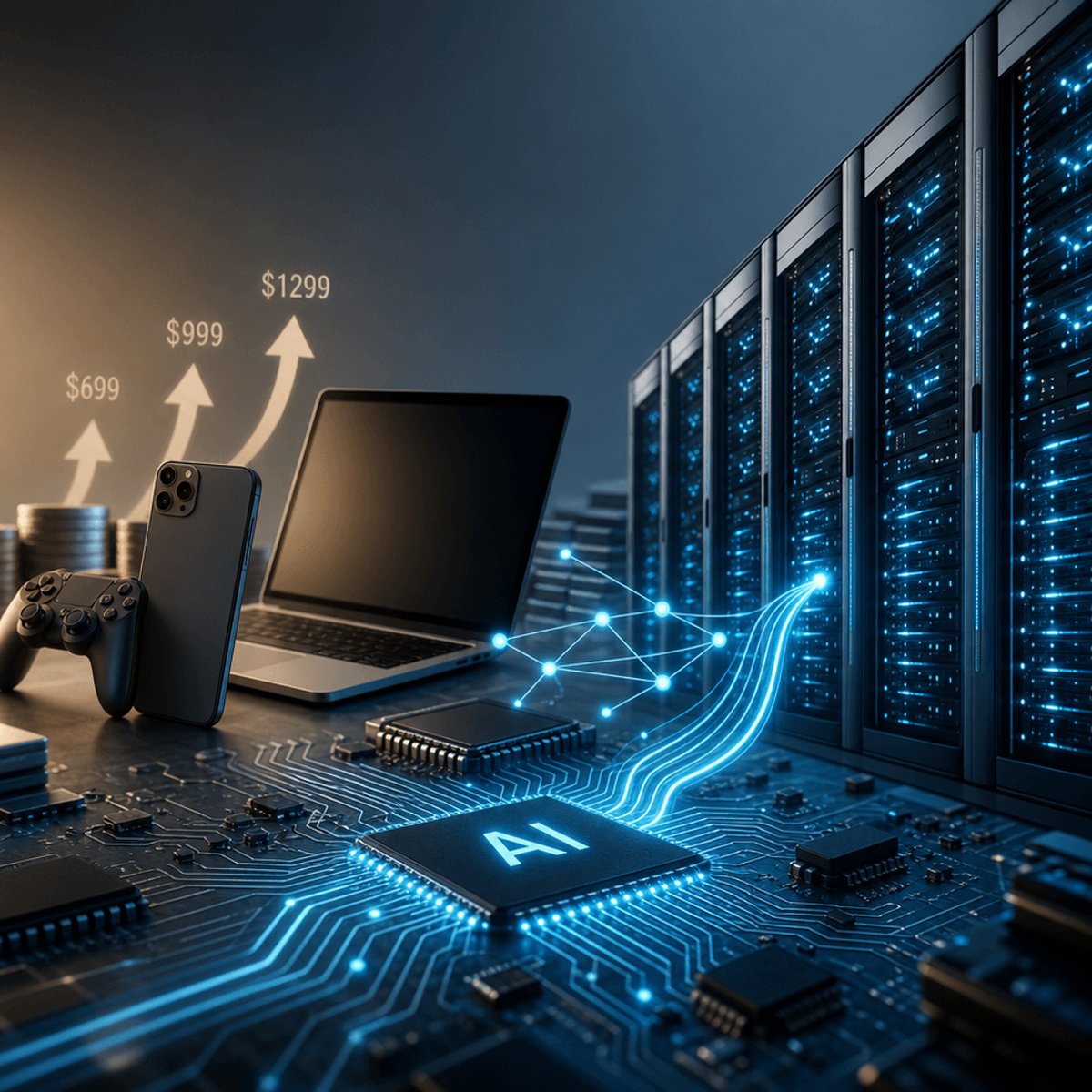
Your next phone or laptop is about to cost a lot more, and there's no relief in sight. The AI boom that's minting fortunes for chipmakers is creating a consumer nightmare - a semiconductor shortage so severe that prices for phones, computers, and gaming consoles are hitting record highs in mid-2026. What started as a supply chain hiccup has morphed into what industry insiders are calling the "knockout round" for consumer electronics pricing.
The brutal math is simple: Nvidia, TSMC, and other chipmakers can make far more money supplying AI data centers than consumer gadgets. So they are. And everyone from Apple to Samsung to Sony is left scrambling for scraps.
"We're in the knockout round of price increases for consumer electronics," according to industry sources tracking the shortage. It's a stark reversal from the cautious optimism of early 2025, when manufacturers thought they'd finally weathered the post-pandemic supply chain chaos.
The AI frenzy changed everything. OpenAI, Microsoft, Google, and Meta are burning through chips faster than fabs can produce them, building massive data centers to power the next generation of AI models. The advanced packaging and cutting-edge nodes required for these AI accelerators are the same ones needed for flagship smartphones and high-end laptops.
Apple has reportedly pushed back internal timelines for its next iPhone refresh, though the company hasn't publicly confirmed any delays. Supply chain whispers suggest Cupertino is paying premium rates to secure enough chips for a fall launch - costs that will inevitably flow downstream to consumers. The base iPhone model that started at $799 two years ago could easily crack $999 by the time it ships.
Samsung faces similar constraints for its Galaxy lineup. The Korean giant's own foundry business puts it in the awkward position of competing with its consumer electronics division for capacity. Internal priorities favor the higher-margin server and AI chips, leaving the mobile division to negotiate like any other customer.
Gaming consoles are taking an especially brutal hit. Microsoft and Sony operate on razor-thin hardware margins, counting on software and services revenue to make up the difference. But chip shortages have eliminated any pricing flexibility. The PlayStation 5 and Xbox Series X, already difficult to keep in stock at their original MSRPs, are creeping toward premium pricing that would have seemed absurd just 18 months ago.
PC manufacturers are caught in a similar vise. Nvidia's consumer GPU lineup has seen persistent stock shortages as the company prioritizes AI accelerators like the H100 and upcoming B-series chips. Gamers and content creators are stuck paying inflated prices for previous-generation cards, while laptop makers struggle to secure enough integrated graphics solutions for mainstream notebooks.
The shortage isn't just about cutting-edge chips. AI's voracious appetite has created ripple effects throughout the semiconductor supply chain. Memory manufacturers are redirecting HBM (high-bandwidth memory) production toward AI servers. Advanced packaging facilities are maxed out. Even older chip nodes are seeing capacity constraints as manufacturers try to shift some production to relieve pressure.
This isn't a repeat of the 2021-2023 chip shortage - it's potentially worse. That crisis was driven by pandemic disruptions and a sudden surge in demand. Supply eventually caught up. But the AI buildout is structural and sustained, backed by hundreds of billions in corporate spending and government incentives. Taiwan Semiconductor Manufacturing Company is building new fabs as fast as physically possible, but advanced chip factories take years to bring online.
Consumers who remember the painful price increases of recent years aren't getting a break. The 2021-2023 inflation drove up electronics costs by 15-30% depending on category. Those prices never fully retreated, and now they're climbing again. A mid-range laptop that cost $800 in 2020 and $1,000 in 2023 is pushing $1,200 in 2026.
Retailers are already adjusting inventory strategies, knowing that consumer appetite for pricey gadgets has limits. Best Buy and other big-box stores are reportedly cutting back on orders, anticipating weaker demand as sticker shock sets in. That creates a dangerous feedback loop - lower volumes mean less negotiating power with suppliers, which can push per-unit costs even higher.
The AI companies driving this shortage show no signs of slowing down. OpenAI is reportedly planning even larger training runs for its next models. Google and Microsoft are racing to deploy AI across their entire product suites. Meta is building out recommendation systems that require massive inference capacity. Every one of those initiatives needs chips - lots of them.
Manufacturers are exploring workarounds. Some are designing products around slightly older chip nodes to avoid the most constrained capacity. Others are paying premiums to secure guaranteed allocations. A few are rethinking product roadmaps entirely, stretching refresh cycles and focusing on software improvements rather than hardware upgrades.
But those strategies only go so far. Consumer electronics fundamentally depend on cutting-edge semiconductors to deliver the performance improvements that drive upgrade cycles. Without access to the latest chips, products stagnate. With access but at inflated costs, prices soar.
The situation puts pressure on chipmakers to dramatically expand capacity, but that's a multi-year proposition requiring tens of billions in investment. TSMC is building new fabs in Arizona, Japan, and Germany. Samsung is expanding in South Korea and Texas. Intel is attempting a foundry comeback with new facilities in Ohio and Arizona. None of that capacity comes online quickly enough to help 2026 product launches.
For consumers, the message is clear: if you need a new phone, laptop, or console, don't wait for prices to drop. This isn't a temporary spike that will resolve in a few months. The AI revolution that's transforming the tech industry has fundamentally altered the economics of consumer electronics, and the new math doesn't favor bargain hunters.
The collision between AI's insatiable appetite for chips and consumer electronics' need for the same scarce resources is reshaping the gadget market in real time. Prices that climbed during the pandemic never really came back down, and now they're headed higher still. For an industry built on Moore's Law delivering more power for less money, this represents a fundamental break with decades of precedent. Unless chipmakers can dramatically expand capacity - and fast - consumers should prepare for a new normal where flagship devices carry flagship price tags that would have seemed outrageous just a few years ago. The AI revolution is here, and your wallet is paying for it.