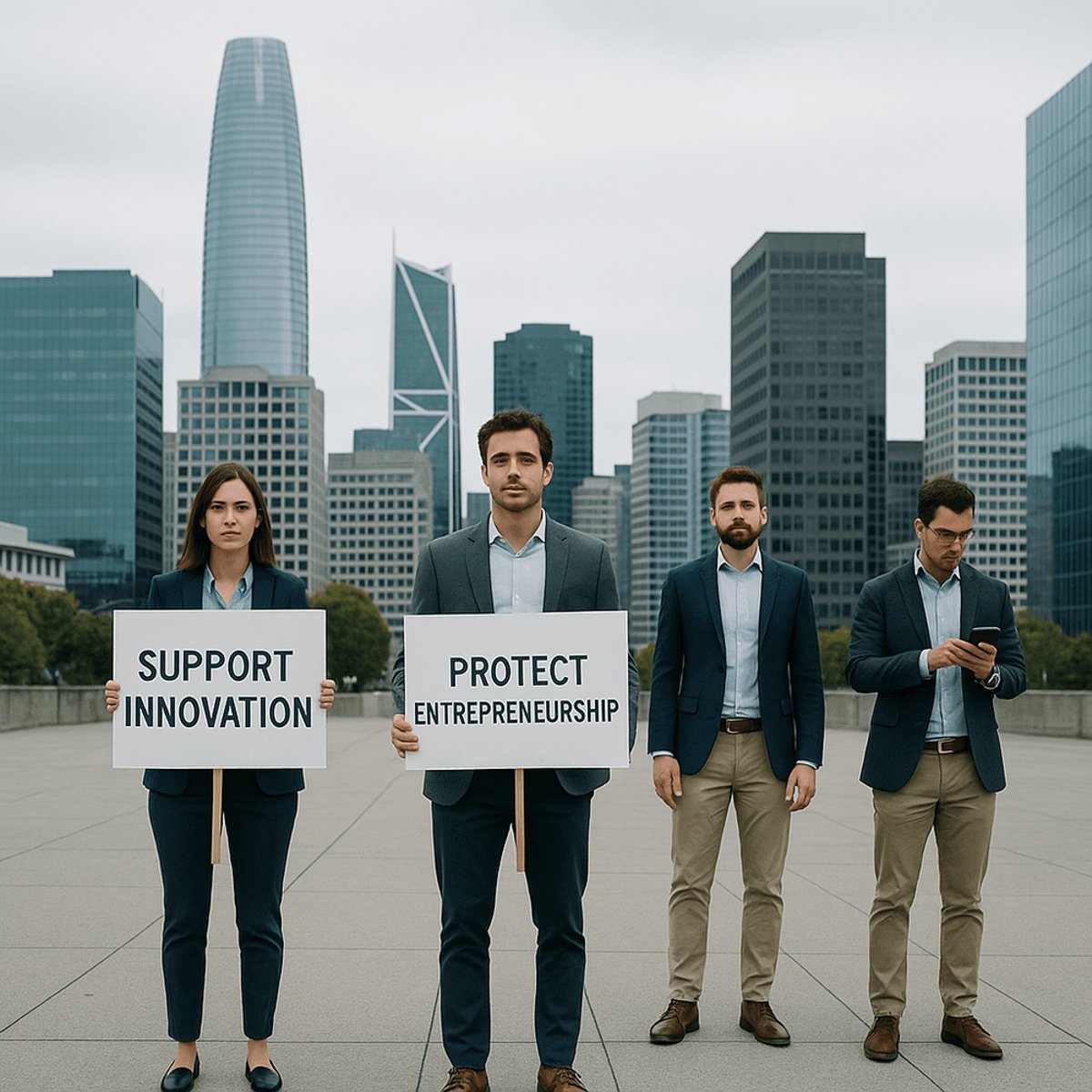
An AI startup founder is dead serious about organizing a protest march for billionaires. Derik Kaufmann, founder of Y Combinator-backed RunRL, is leading a march this Saturday in San Francisco against California's proposed wealth tax - and he insists it's not satire. The move adds a bizarre twist to the ongoing battle over the Billionaire Tax Act, which would levy a one-time 5% tax on residents worth over $1 billion. Tech elites have been up in arms over the legislation, with some threatening to leave the state entirely.
Silicon Valley's opposition to California's wealth tax just took an absurdist turn. Derik Kaufmann, founder of AI startup RunRL, is organizing what he's calling a 'March for Billionaires' in San Francisco this Saturday - and he swears it's not performance art.
The San Francisco Examiner first reported Kaufmann's identity after a mysterious website advertising the event went viral earlier this week. The site's tagline - 'Vilifying billionaires is popular. Losing them is expensive' - sparked immediate speculation that it was elaborate satire. It wasn't. Kaufmann, whose company went through Y Combinator's accelerator program, told the Examiner he's funding and organizing the entire event himself, with no backing from wealthy donors or corporate interests.
The target of Kaufmann's protest is the Billionaire Tax Act, which would require Californians worth over $1 billion to pay a one-time 5% tax on their total wealth. The legislation, introduced last year and backed by SEIU, California's healthcare union, could generate billions for public services and offset federal funding cuts. But it's become a lightning rod in the tech industry.
Kaufmann argues the tax would devastate Silicon Valley's startup ecosystem. 'This tax in particular is fatally flawed,' he told TechCrunch. 'It hits startup founders whose wealth is only on paper. They would be forced to liquidate shares on potentially unfavorable terms, incurring capital gains taxes and giving up control. Not to mention the difficulty of valuing private companies.'
He points to Sweden's experience as a cautionary tale. The Scandinavian country eliminated its wealth tax 20 years ago 'to avert capital flight and promote entrepreneurship,' Kaufmann notes, adding that Sweden now has 50% more billionaires per capita than the United States.
The bill has already triggered an exodus of sorts. Tech luminaries including Larry Page reportedly loosened business ties to California over the proposal, while others have already left the state entirely. The legislation has also unleashed intensive lobbying efforts in Sacramento to kill the bill before it gains traction.
But Kaufmann's protest strategy has drawn more mockery than sympathy. Social media erupted with disbelief when the march was announced, with users alternating between assuming it was satire and ridiculing the concept. 'I can't imagine billionaires marching in the street,' one user wrote on X.
That skepticism appears well-founded. Kaufmann admitted to TechCrunch that he doesn't know of any actual billionaires planning to attend the march organized in their defense. He expects 'a few dozen attendees' but stressed he has no clear sense of turnout. The image of a small group protesting on behalf of the ultra-wealthy has only intensified online ridicule.
Kaufmann is no longer involved with RunRL, according to his conversation with the Examiner, though details about his departure weren't provided. His current crusade appears to be a solo mission against what he sees as existential threat to entrepreneurship.
The irony underlying all this drama? The Billionaire Tax Act has virtually no chance of becoming law. California Governor Gavin Newsom has already publicly committed to vetoing the legislation if it reaches his desk. The political theater continues regardless, with Kaufmann's march representing perhaps the most literal interpretation of that phrase.
The broader debate reflects deep tensions between California's progressive political base and its tech elite. While supporters argue the tax would fund essential services and address inequality, opponents warn it could drive innovation and wealth creation out of the state permanently. According to some experts, the revenue could help stabilize state finances amid federal cutbacks.
Whether Saturday's march materializes as planned remains to be seen. But it's already accomplished one thing: putting a very public face on Silicon Valley's anxiety about California's political direction. Even if no billionaires show up, the spectacle of a founder marching on their behalf speaks volumes about the gulf between tech's self-perception and public sentiment.
Kaufmann's protest march perfectly captures the absurdity of the current moment in California tech politics. A founder with no billionaires in attendance marching against a tax that's already doomed to fail - it's political theater about political theater. But beneath the spectacle lies a genuine anxiety in Silicon Valley about the state's direction on taxation and regulation. Whether that anxiety is justified or simply reflects an industry unused to political headwinds remains the real question. Saturday's turnout may not matter much, but it'll certainly provide a vivid snapshot of how disconnected tech's self-advocacy has become from public perception.