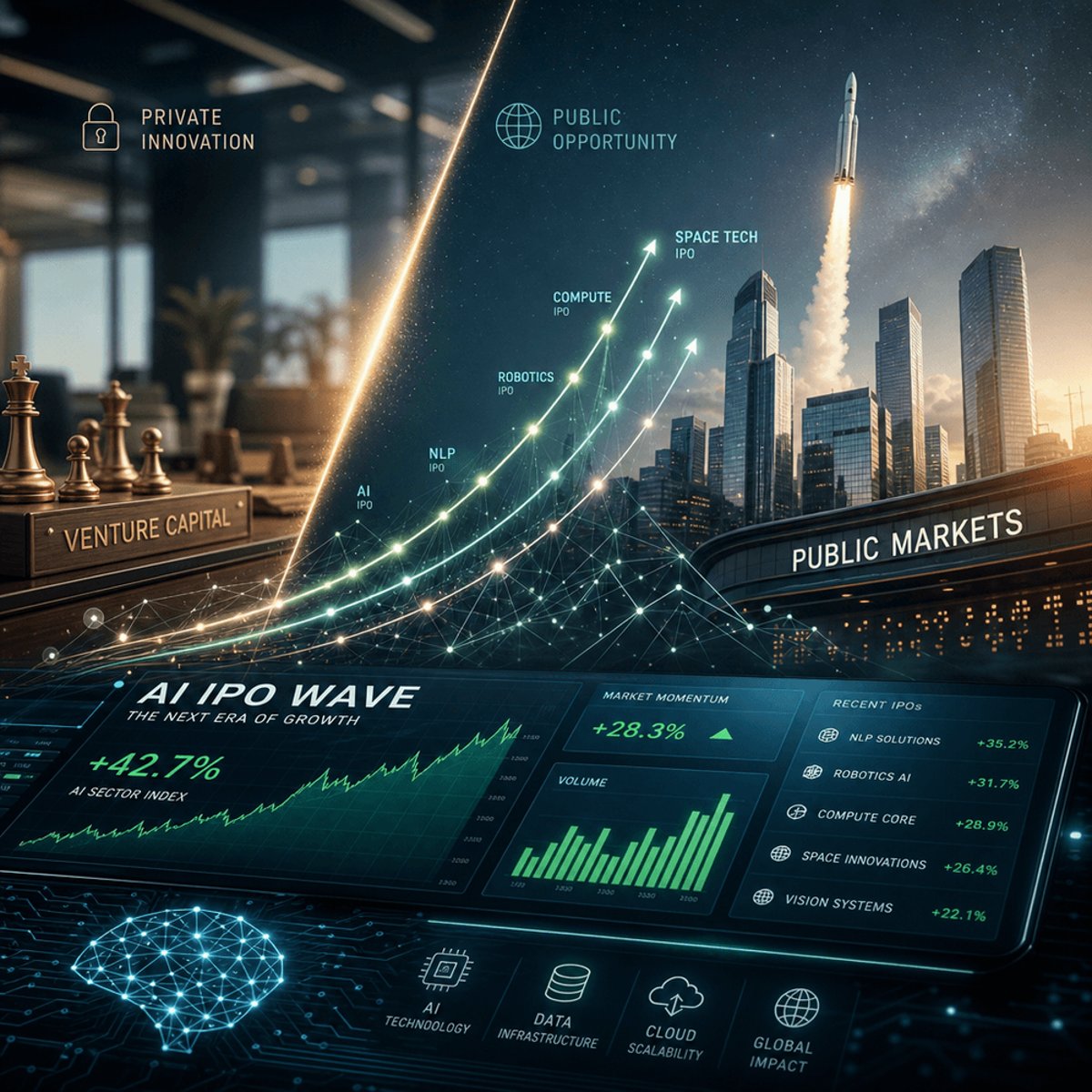
The floodgates are opening for AI companies going public, and industry leaders say we're only seeing the beginning. Razer CEO Min-Liang Tan told CNBC Thursday that blockbuster IPOs from artificial intelligence firms will become a defining feature of the tech landscape, remarks that come as SpaceX prepares what could be one of the largest public offerings in history. The timing isn't coincidental - after years of private market growth, AI companies are finally ready to face public investors.
The AI industry is about to get its public market debut in a big way. Razer CEO Min-Liang Tan made waves Thursday morning with his bold prediction that blockbuster public offerings from AI companies won't be a one-time phenomenon but rather an 'enduring feature' of the tech landscape.
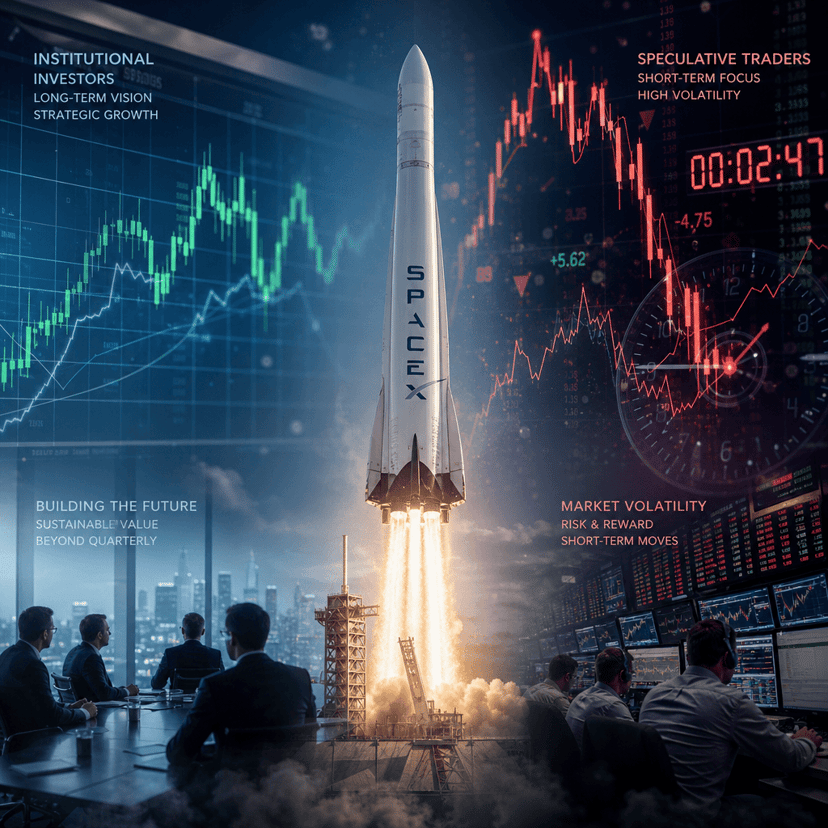
Tan's comments to CNBC land at a pivotal moment. SpaceX, while not purely an AI company, has become a bellwether for tech IPOs given its massive valuation and the AI systems embedded in its operations. The Elon Musk-led space venture's upcoming listing is being watched as a litmus test for investor appetite in high-growth tech companies that have remained private far longer than previous generations of startups.
What makes Tan's remarks particularly noteworthy is the timing. For years, AI companies have gorged on venture capital, with firms like OpenAI, Anthropic, and countless others raising billions while staying private. The calculus is now shifting. Public markets, flush with cash and hungry for the next generation of growth stocks, are finally ready to price AI businesses - and those businesses appear ready to take the plunge.
The IPO drought that defined much of 2023 and 2024 is breaking. Sources familiar with the matter say multiple AI-focused companies are in late-stage preparations for public listings, though most aren't ready to announce timing. The SpaceX IPO, expected to value the company north of $200 billion, would immediately become one of the largest tech offerings ever and could unlock a wave of pent-up demand.
But this isn't just about one mega-listing. Tan's perspective from Razer - a company that went public in Hong Kong in 2017 and has watched the IPO market evolve - carries weight. The gaming hardware and software company has increasingly integrated AI into its products, giving Tan a front-row seat to how AI economics actually work at scale.
The question investors are asking isn't whether AI companies can generate hype, but whether they can generate sustainable profits. That's the real test these IPOs will face. Unlike the previous generation of social media and mobile companies that went public with clear user metrics and advertising revenue models, AI firms are still proving out their business cases. Some are pure-play infrastructure companies selling compute and model access. Others are embedding AI into existing software categories. The diversity of approaches means the public markets will need to get comfortable pricing very different types of businesses under the AI umbrella.
Market conditions are also cooperating. Tech stocks have rebounded from their 2022 lows, and appetite for growth stories has returned. The Nvidia rally that dominated 2023 through 2025 proved investors are willing to pay premiums for AI exposure. That's created a window for companies to go public at attractive valuations.
What Tan is signaling is that this window won't close quickly. 'Just the start' suggests he sees structural reasons why AI IPOs will keep coming - not a brief window that snaps shut. That could mean the venture capital overhang in AI, where dozens of unicorns have raised at sky-high private valuations, will finally find an exit path. It could also mean the public markets are about to get a crash course in AI economics, with all the volatility that entails.
The SpaceX listing will be the test case. If it prices well and trades up, expect the calendar to fill with AI IPO announcements. If it stumbles, companies may wait for another window. But Tan's confidence suggests industry insiders believe the fundamentals are there to support sustained IPO activity, regardless of how any single offering performs.
The AI industry is entering its public market era, and if Tan's read is correct, we're about to see a fundamental shift in how these companies are funded and valued. The SpaceX IPO will set the tone, but the real story is whether dozens of AI companies can follow and prove their business models hold up under public scrutiny. For investors, it's a chance to get direct exposure to the AI boom beyond chips and cloud infrastructure. For the companies, it's a reckoning - time to show that the hype translates to sustainable economics. Either way, the IPO market is about to get a lot more interesting.