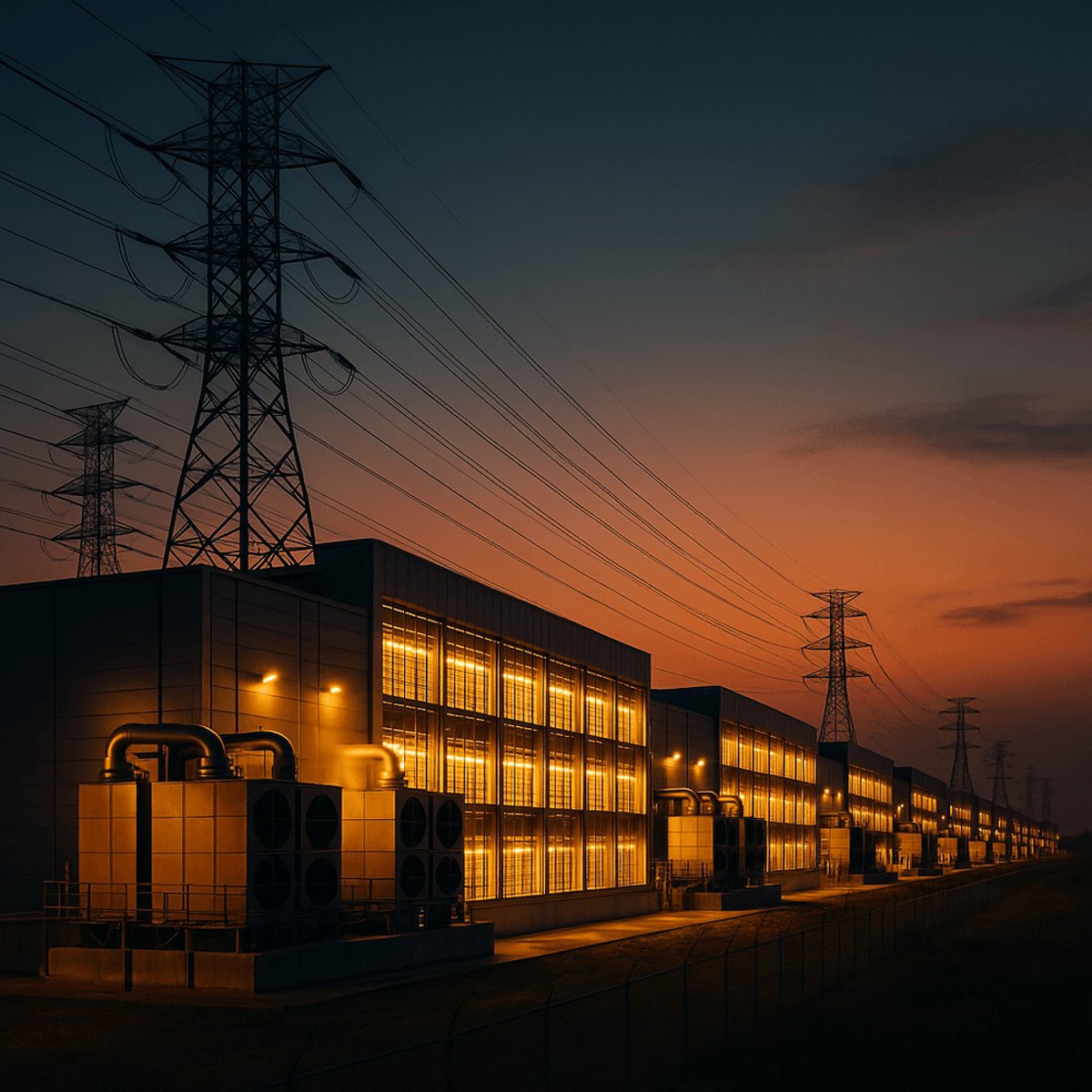
The AI revolution has a fossil fuel problem. Gas projects explicitly tied to data centers surged almost 25 times over the past two years, according to research released Wednesday by Global Energy Monitor. The explosion in demand could expand America's gas-fired power fleet by nearly 50 percent - adding enough capacity to power tens of millions of homes while threatening to derail climate goals just as the Trump administration rolls back methane regulations.
The numbers are staggering, even by Silicon Valley's standards. When Global Energy Monitor last surveyed America's gas infrastructure pipeline in early 2024, just over 4 gigawatts of new gas-fired power were earmarked for data centers. Fast forward to 2025, and that figure has exploded to more than 97 gigawatts - a nearly 25-fold increase that caught even industry watchers off guard.
"About a year and a half ago, we started to see this increase in proposals for data centers specifically," Jenny Martos, a research analyst at the San Francisco-based nonprofit, told Wired. The timing coincides perfectly with the AI boom that's pushed tech giants into a desperate scramble for power - any power, from any source.
The implications stretch far beyond electricity bills. Building out all the gas infrastructure currently in development would add almost 252 gigawatts to America's existing 565-gigawatt gas fleet, according to federal data. That's a potential 50 percent expansion of the nation's gas-fired power capacity, with more than a third explicitly linked to feeding the insatiable appetite of AI training and inference workloads.
"The implications are huge when you're talking about this size of a build-out," Jonathan Banks, a senior climate adviser at Clean Air Task Force, said in an interview. His organization wasn't involved in the research, but the findings align with what energy analysts have been quietly warning about for months - the AI revolution is colliding head-on with climate commitments.
The research comes at a particularly awkward moment. As data center developers race to secure power, the Trump administration is simultaneously encouraging the build-out while dismantling pollution controls. This includes extending deadlines for a major regulation requiring oil and gas operators to track and stop methane leaks - the invisible climate threat that makes natural gas far dirtier than its reputation suggests.
Natural gas burns cleaner than coal, releasing about 35 percent of US energy-related CO2 emissions according to federal data. But methane leaks during extraction tell a different story. The gas is 80 times more potent than CO2 over a 20-year period, and oil and gas production accounts for roughly a third of global methane emissions. The US, as the world's largest natural gas producer, sits at the center of this problem.
"If you zero out the methane, and you have a very efficient natural-gas-fired power plant, it is dramatically cleaner than a coal-fired power plant," Banks explained. "But when you layer on the methane emissions, that's when you see those gaps begin to close between coal and natural gas."
Global Energy Monitor built its dataset by combing through state regulatory filings, air quality permits, and public company announcements - the paper trail of America's energy future. The tracker includes both grid-scale power plants meant to bolster regional electricity supply and on-site gas turbines that will exclusively serve individual data centers. The latter approach is gaining traction as developers face yearslong grid connection queues in some markets.
Not all of these projects will materialize. Data center developers routinely shop multiple utilities for power, inflating projected demand. Efficiency gains in both chip design and AI training could reduce energy requirements. And there's a global shortage of gas turbines - two-thirds of the projects tracked worldwide by Global Energy Monitor don't yet have manufacturers attached.
"We're in that phase where we're seeing the explosion in proposals," Martos noted. "What materializes is yet to be determined."
But even a partial build-out would reshape America's energy landscape. Projects currently under construction - the most likely to be completed - would add just under 30 gigawatts of gas-fired power. Another 159 gigawatts sit in preconstruction, working through planning and financing. That's still a massive expansion by any measure.
The timing is particularly fraught. Coal plants that were scheduled for retirement are getting extensions, boosted by coal-friendly Trump administration policies. Utilities that had been planning transitions to renewables are now scrambling to meet data center demand with whatever power sources they can bring online quickly. Natural gas, with its established supply chains and faster build times compared to nuclear or large-scale renewables, has become the path of least resistance.
"AI is not going away - we know that," Banks said. "It's really a question of what can we do to diminish the impact of these facilities."
The AI boom is writing checks that America's energy infrastructure - and climate commitments - may struggle to cash. While not all 252 gigawatts of proposed gas capacity will come online, even the 30 gigawatts already under construction represents a significant expansion of fossil fuel dependence. The real question isn't whether AI will continue to grow, but whether the industry can find ways to power that growth without locking in decades of emissions. With turbine shortages, regulatory rollbacks, and grid constraints all in play, the next two years will determine whether data centers become a bridge to cleaner energy or an anchor dragging climate progress backward.