More than 50,000 workers lost their jobs in 2025 because of AI, or so their employers claimed. But a growing wave of skepticism suggests something else is going on. Companies from Amazon to Pinterest pointed to artificial intelligence when announcing workforce reductions, yet according to Forrester research published in January, many of these organizations don't actually have mature AI systems ready to replace those roles. The practice, dubbed "AI-washing," is raising uncomfortable questions about whether tech's favorite buzzword has become corporate America's most convenient excuse for old-fashioned cost-cutting.
The numbers tell a striking story. Throughout 2025, more than 50,000 workers found themselves on the unemployment line with artificial intelligence listed as the culprit on their termination paperwork. Amazon trimmed staff. Pinterest made cuts. Dozens of other companies followed suit, each pointing to AI's efficiency gains as the driving force behind workforce reductions.
But according to Forrester's January report, there's a problem with this narrative. "Many companies announcing A.I.-related layoffs do not have mature, vetted A.I. applications ready to fill those roles," the research firm found. The gap between rhetoric and reality has birthed a new term in the corporate lexicon: AI-washing.
The phenomenon works like this - companies announce layoffs, cite AI transformation as the catalyst, and watch their stock prices hold steady or even rise. Investors love efficiency stories. They love automation narratives. What they don't love is hearing that a business is struggling, that pandemic-era hiring sprees created bloated headcounts, or that revenue growth isn't matching expenses.
"It's a very investor-friendly message," Molly Kinder, a senior research fellow at the Brookings Institute, told The New York Times. The alternative - admitting "the business is ailing" - doesn't play nearly as well in earnings calls or press releases.
The timing of these AI-attributed cuts raises eyebrows. Many companies went on hiring binges during the pandemic boom years, adding thousands of employees as digital demand surged. When growth slowed and economic headwinds picked up, those same companies needed to trim costs. AI provided the perfect cover story, transforming what might look like management mistakes into forward-thinking digital transformation.
The disconnect between AI capabilities and workforce reality shows up in the details. While generative AI tools like ChatGPT and enterprise AI platforms have made significant strides, most organizations are still in early adoption phases. Implementing AI systems that can genuinely replace human workers at scale requires substantial infrastructure, training data, integration work, and testing. It's not a switch you flip between quarters.
Yet the AI-washing playbook has become remarkably consistent. Companies announce "strategic restructuring" or "operational efficiency initiatives." They mention AI transformation roadmaps and digital-first futures. They release employees, often in roles that AI couldn't realistically automate with current technology. Customer service positions get cut before conversational AI is fully deployed. Content roles disappear before AI writing tools are properly integrated. Marketing teams shrink ahead of any demonstrated AI replacement capability.
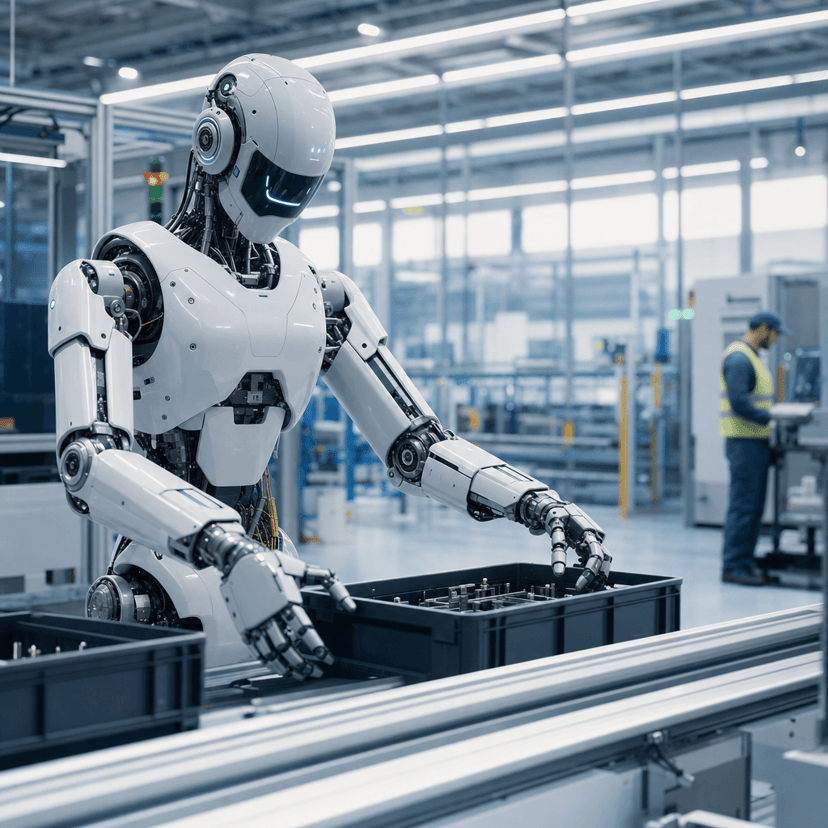
The practice creates a troubling precedent for workers trying to understand job security in an AI-driven economy. Real AI displacement is happening in certain sectors, from manufacturing automation to algorithmic trading. But when companies use AI as a blanket explanation for workforce reductions, it becomes harder to distinguish genuine technological disruption from standard cost-cutting disguised in futuristic language.
For investors, the AI-washing trend presents its own risks. If companies are overstating their AI capabilities and implementation timelines while using the technology as justification for layoffs, it suggests potential gaps between promised efficiency gains and actual operational improvements. Those gaps tend to show up in future earnings reports.
The Forrester research highlights this credibility gap across the industry. While some organizations have genuinely deployed AI systems that change how work gets done, many others are making cuts based on hypothetical future capabilities rather than current reality. The difference matters, both for workers facing pink slips and investors betting on AI-driven productivity improvements.
As 2026 unfolds, the AI-washing phenomenon forces a reckoning. Companies will need to demonstrate actual AI implementation, not just talk about it during layoff announcements. Workers and regulators are starting to ask harder questions about the legitimacy of AI-attributed job cuts. And investors may eventually demand proof that promised AI efficiencies are materializing beyond PowerPoint presentations.
The AI-washing trend reveals an uncomfortable truth about corporate transformation narratives. While artificial intelligence will undoubtedly reshape workforces over time, using it as blanket justification for immediate layoffs risks undermining both worker trust and investor confidence. The companies making genuine progress with AI implementation will eventually separate themselves from those simply using the technology as convenient cover for financially motivated cuts. For the 50,000-plus workers who lost jobs in 2025 with AI cited as the reason, that distinction matters deeply. And for an industry built on innovation, the credibility gap between AI promises and AI reality represents a challenge that extends far beyond any single round of layoffs.