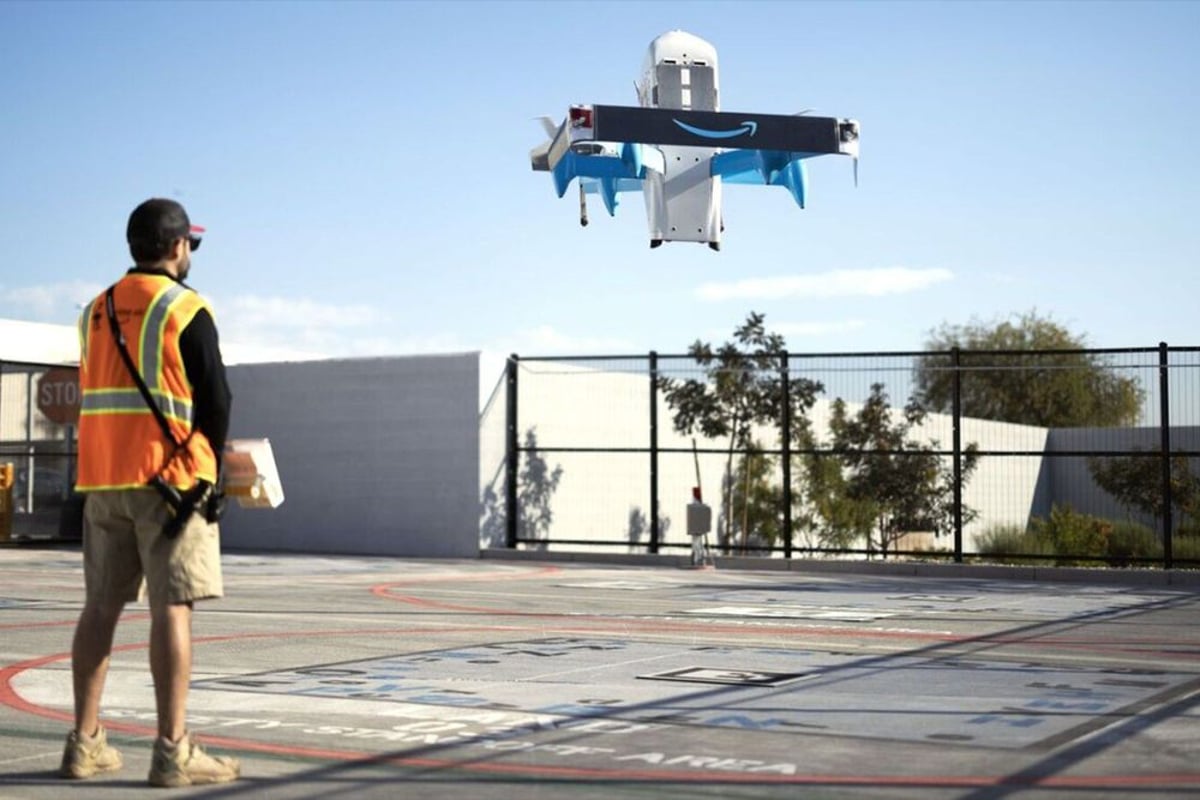
Amazon just grounded its entire drone delivery operation in Arizona after two MK30 drones crashed into a construction crane Wednesday morning, marking the second major safety incident since the service launched less than a year ago. The Federal Aviation Administration is now investigating what could become a pivotal moment for commercial drone delivery.
Amazon faces a critical test for its drone delivery ambitions after two Prime Air drones crashed into a construction crane Wednesday morning in Tolleson, Arizona. The incident has forced the company to suspend its entire West Valley Phoenix Metro Area operation while federal investigators determine what went wrong.
The crash unfolded around 10 AM local time when two MK30 drones flying in tandem clipped cables on a crane being used to lift equipment onto a nearby building. Gabriel Dahlberg, a diesel mechanic who witnessed the collision while parking his truck, told KPNX's 12 News he watched the lead drone hit the cable before both aircraft plummeted to earth. The drones landed in separate parking lots roughly 100 to 200 feet apart, according to Sergeant Erik Mendez of the Tolleson Police Department.
While no serious injuries occurred, one person required treatment for smoke inhalation from the wreckage, highlighting the real-world risks as drone deliveries scale up. The incident happened just two miles from Amazon's distribution hub where the drones launch and return - a proximity that underscores how even short flights can encounter unexpected obstacles.
"We're aware of an incident involving two Prime Air drones in Tolleson, Arizona. We're currently working with the relevant authorities to investigate," Amazon spokesperson Terrence Clark told The Verge in a carefully worded statement that reveals little about the company's internal assessment.
The Federal Aviation Administration announced it will investigate the crash with Amazon's cooperation, a process that could take months and potentially reshape regulations for commercial drone operations. The timing couldn't be worse for Amazon, which has been racing to prove drone delivery can work at scale while competitors like Alphabet's Wing and startup Zipline expand their own operations.
This marks the second time Amazon has grounded its Arizona drones since launching same-day deliveries in Tolleson last November. The MK30 aircraft, capable of carrying packages up to five pounds, were previously suspended in January so Amazon could complete software updates and FAA validations following a separate drone crash at its Oregon testing facility.
The pattern of incidents raises questions about whether Amazon's aggressive deployment timeline has outpaced its safety protocols. The company began Arizona operations less than a year ago, making it one of the newest commercial drone delivery services in the U.S. But the repeated groundings suggest the technology may not be as mature as Amazon's public messaging implies.
Industry experts worry that high-profile crashes could set back the entire commercial drone sector, which has struggled to move beyond small-scale pilot programs. The FAA has been cautious about expanding drone delivery permissions, and incidents like Wednesday's crash provide ammunition for critics who argue the technology isn't ready for widespread deployment.
The investigation will likely focus on whether the drones' collision avoidance systems failed to detect the crane cables, a scenario that could expose fundamental limitations in current sensor technology. Amazon hasn't disclosed how long the service suspension will last, but previous groundings have lasted several months while the company addresses regulatory concerns.
Amazon's drone delivery dreams hit a major turbulence with this double crash, marking the second grounding in less than a year. The FAA investigation could determine whether commercial drone delivery is ready for prime time or needs to return to the drawing board. For consumers eagerly awaiting aerial package drops, this incident serves as a reminder that the future of delivery might take longer to arrive than Amazon initially promised.