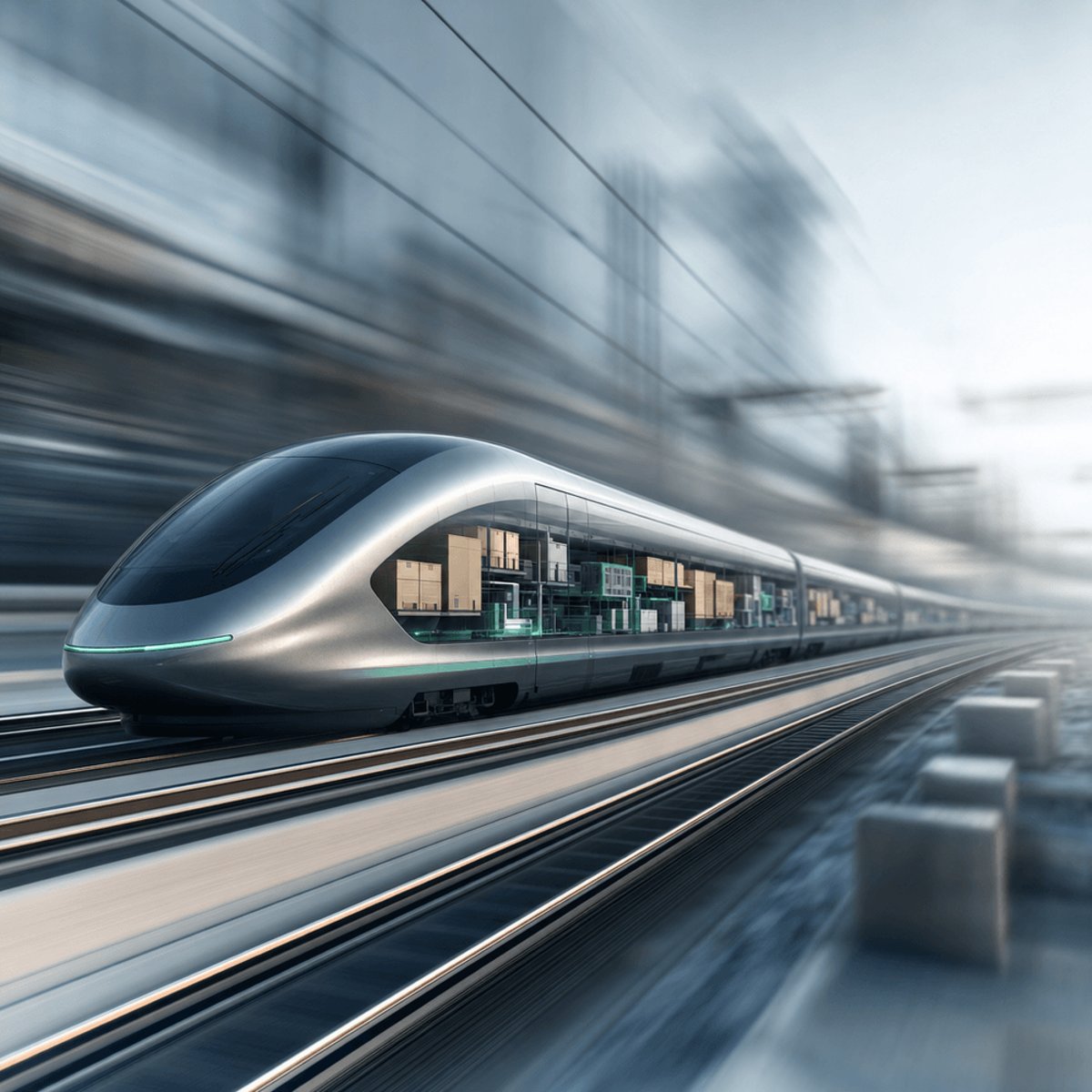
Amazon just turned one of the world's most iconic rail networks into a package delivery highway. The e-commerce giant is now using Japan's legendary Shinkansen bullet trains to move packages between cities, marking a significant shift in how the company thinks about sustainable logistics in one of its key Asian markets. It's a move that could reshape how tech giants approach carbon-intensive last-mile delivery.
Amazon is betting that the world's most punctual trains can help solve one of e-commerce's messiest problems: getting millions of packages delivered without wrecking the planet.
Starting this week, the retail giant is moving packages between Japanese cities aboard the iconic Shinkansen bullet trains, known locally as the "super express." It's a logistics experiment that transforms passenger rail infrastructure into a high-speed freight corridor, tapping into a network that's delivered passengers with 99% on-time performance for decades.
The partnership comes as Amazon faces mounting pressure to decarbonize its sprawling logistics empire. The company's transportation network currently accounts for the bulk of its carbon footprint, and traditional truck-based delivery remains stubbornly emissions-intensive. By shifting intercity package transport to electric-powered rail, Amazon is taking a page from European logistics playbooks where rail freight has long played a supporting role.
What makes the Shinkansen partnership particularly clever is the infrastructure arbitrage. Japan's bullet train network runs frequent service between major metropolitan areas like Tokyo, Osaka, and Nagoya, with trains departing every few minutes during peak hours. That frequency creates spare cargo capacity that would otherwise sit empty. According to Amazon's announcement, the company is leveraging this existing capacity rather than requiring dedicated freight runs.
The operational details reveal how Amazon is threading a complex needle. Packages travel in designated cargo areas of existing passenger trains, avoiding the need for separate freight infrastructure. The Shinkansen's electric motors draw power from Japan's grid, which has been steadily shifting toward renewables following the country's post-Fukushima energy transition. That grid mix means significantly lower emissions per package-mile compared to diesel trucks grinding through highway traffic.
Timing matters here. Amazon committed to reaching net-zero carbon by 2040 and has been scrambling to find alternatives to carbon-heavy air freight and trucking. The company's already deployed thousands of electric delivery vans in the U.S. and Europe, but intercity transport between fulfillment centers has proven harder to electrify. Rail offers a rare win: mature technology, existing infrastructure, and immediate emissions reductions.
The Japan pilot could become a template for other markets. China's sprawling high-speed rail network moves more passengers annually than any other system globally, while Europe's interconnected rail infrastructure has seen renewed investment following the EU's push for freight modal shift. If Amazon can prove the economics work in Japan, where real estate costs and delivery density create unique pressures, expansion becomes more plausible.
But there are real constraints. The Shinkansen wasn't designed for freight, and passenger comfort remains the top priority for operator JR Central. That limits how much cargo space Amazon can commandeer and creates potential conflicts during peak travel periods. The partnership also only addresses intercity movement - the notorious "last mile" from local hubs to customer doorsteps still requires trucks or vans.
Competitors are watching closely. Alibaba and JD.com have experimented with rail partnerships in China, while European retailers have long used conventional freight rail for certain routes. What's different here is the use of high-speed passenger infrastructure, which offers speed comparable to trucking without the emissions penalty.
The move also signals how Amazon thinks about its Japan business. The country represents one of the company's most important Asian markets outside of India and Singapore, with dense urban populations and sky-high delivery expectations. Japanese consumers expect same-day or next-day delivery as standard, creating intense pressure on logistics networks. Rail offers a way to maintain that speed while cutting emissions - a combination that's increasingly valuable as younger consumers factor sustainability into purchasing decisions.
Amazon's Shinkansen partnership represents more than a sustainability PR play - it's a testbed for whether high-speed passenger rail can double as logistics infrastructure at scale. If the economics pencil out in Japan's notoriously expensive operating environment, expect similar experiments in China and Europe where rail networks offer comparable speed and frequency. The bigger question is whether this marks the beginning of a genuine modal shift in e-commerce logistics, or just a niche solution for dense urban corridors. Either way, it's a signal that even the world's most delivery-obsessed company is rethinking the trucks-and-planes playbook that got it here.