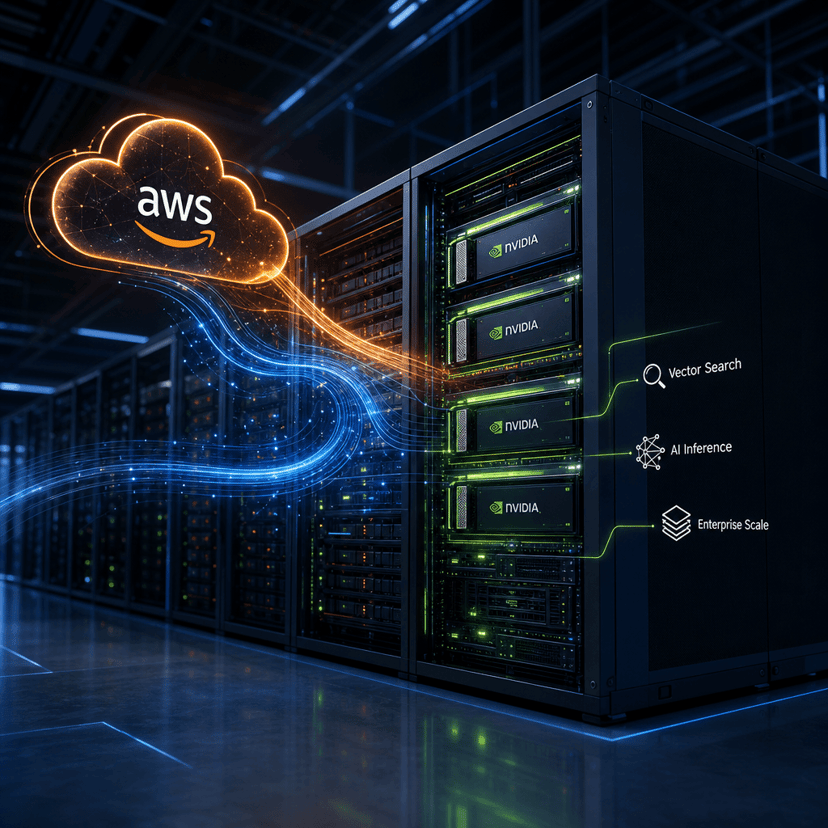
Meta CEO Mark Zuckerberg just floated a major strategic shift that could shake up the cloud computing wars. Speaking candidly about the company's massive AI infrastructure buildout, Zuckerberg said Meta entering the cloud business is "definitely on the table" if its data center spending outpaces internal needs. The comment marks a notable evolution for a company that's spent two decades focused on consumer social platforms, and it puts Meta on a potential collision course with Amazon Web Services, Google Cloud, and Microsoft Azure in the $600 billion cloud infrastructure market.
Meta might be building more than just AI chatbots with its massive data center investments. Mark Zuckerberg's latest comments suggest the social media giant is eyeing a surprising new revenue stream that could fundamentally reshape its business model.
The Meta chief told CNBC that launching a cloud computing business is "definitely on the table" if the company's AI infrastructure buildout creates excess capacity. It's a pragmatic acknowledgment of what happens when you're spending tens of billions on data centers - eventually, you might have more computing power than even Meta's sprawling social networks and AI ambitions can absorb.
"If it overspends on data centers and has excess capacity," Zuckerberg said, Meta could enter the cloud market. The comment was casual, but the implications are seismic. Meta would be stepping into a market dominated by three tech giants that have spent decades building enterprise relationships and global infrastructure networks.
Amazon Web Services currently commands about 31% of the cloud infrastructure market, followed by Microsoft Azure at 25% and Google Cloud at 11%, according to Synergy Research Group data from Q1 2026. Combined, they're sitting on a market worth more than $600 billion annually and growing at double-digit rates.
Meta's potential entry would mark a dramatic strategic pivot for a company that's historically focused on consumer-facing platforms. Unlike Amazon, Microsoft, and Google, Meta has virtually no enterprise sales infrastructure or B2B customer relationships. But it does have something increasingly valuable - cutting-edge AI infrastructure built to handle massive computational loads.
The timing makes sense when you look at Meta's capital expenditure trajectory. The company has been pouring resources into data center expansion to support its AI initiatives, from large language models powering chatbots across Instagram and WhatsApp to recommendation algorithms that drive its advertising engine. That infrastructure doesn't sit idle - but it also doesn't run at 100% capacity 24/7.
Cloud providers have long understood this math. Amazon famously launched AWS in 2006 partly to monetize excess computing capacity built for its e-commerce peaks during holiday shopping. What started as a side project now generates more operating income than Amazon's entire retail operation.
Meta could follow a similar playbook, though the competitive landscape is far more crowded now than when AWS pioneered the cloud market two decades ago. Breaking into enterprise cloud requires more than just spare servers - it demands enterprise-grade security certifications, compliance frameworks, customer support infrastructure, and sales teams that speak the language of CIOs and IT directors.
But Meta has shown it can build new businesses when motivated. Instagram and WhatsApp evolved from simple photo-sharing and messaging apps into advertising juggernauts. Reality Labs, despite burning billions, represents a long-term bet on spatial computing. A cloud division would be different - more B2B-focused, with longer sales cycles and different margin profiles than Meta's ad-driven core business.
The market is already watching how Meta's AI spending plays out. Investors have questioned whether the company's infrastructure investments will generate returns comparable to its high-margin advertising business. A cloud services arm could provide a tangible answer, creating a new revenue stream that directly monetizes those capital expenditures.
For AWS, Azure, and Google Cloud, Meta's potential entry would add another well-funded competitor to an already intense market. The company's deep pockets and technical talent could make it a formidable player, particularly if it leverages its AI capabilities to differentiate its cloud offerings.
Zuckerberg's comments also reflect a broader trend in tech - companies building AI infrastructure at such scale that selling excess capacity becomes a natural business extension. It's happening as AI workloads create unprecedented demand for specialized computing power, from GPU clusters to custom silicon designed for machine learning tasks.
Meta hasn't announced any concrete plans or timeline for a cloud business. Zuckerberg's remarks were speculative, contingent on having excess capacity. But in tech, trial balloons often precede strategic shifts. When a CEO publicly muses about entering a new market, teams are usually already exploring the feasibility behind the scenes.
Meta's potential cloud computing play represents more than just finding a use for spare servers. It signals how AI infrastructure investments are reshaping tech giants' strategic options, creating new business opportunities that didn't exist when companies were simply building capacity for their own products. Whether Meta actually launches cloud services will depend on how its AI buildout scales and whether the company wants to take on the operational complexity of serving enterprise customers. But Zuckerberg putting it on the table shows Meta is thinking beyond its social media roots, exploring how to extract maximum value from what could become one of the world's largest private computing infrastructures. For the cloud market's established players, that's a development worth watching closely.