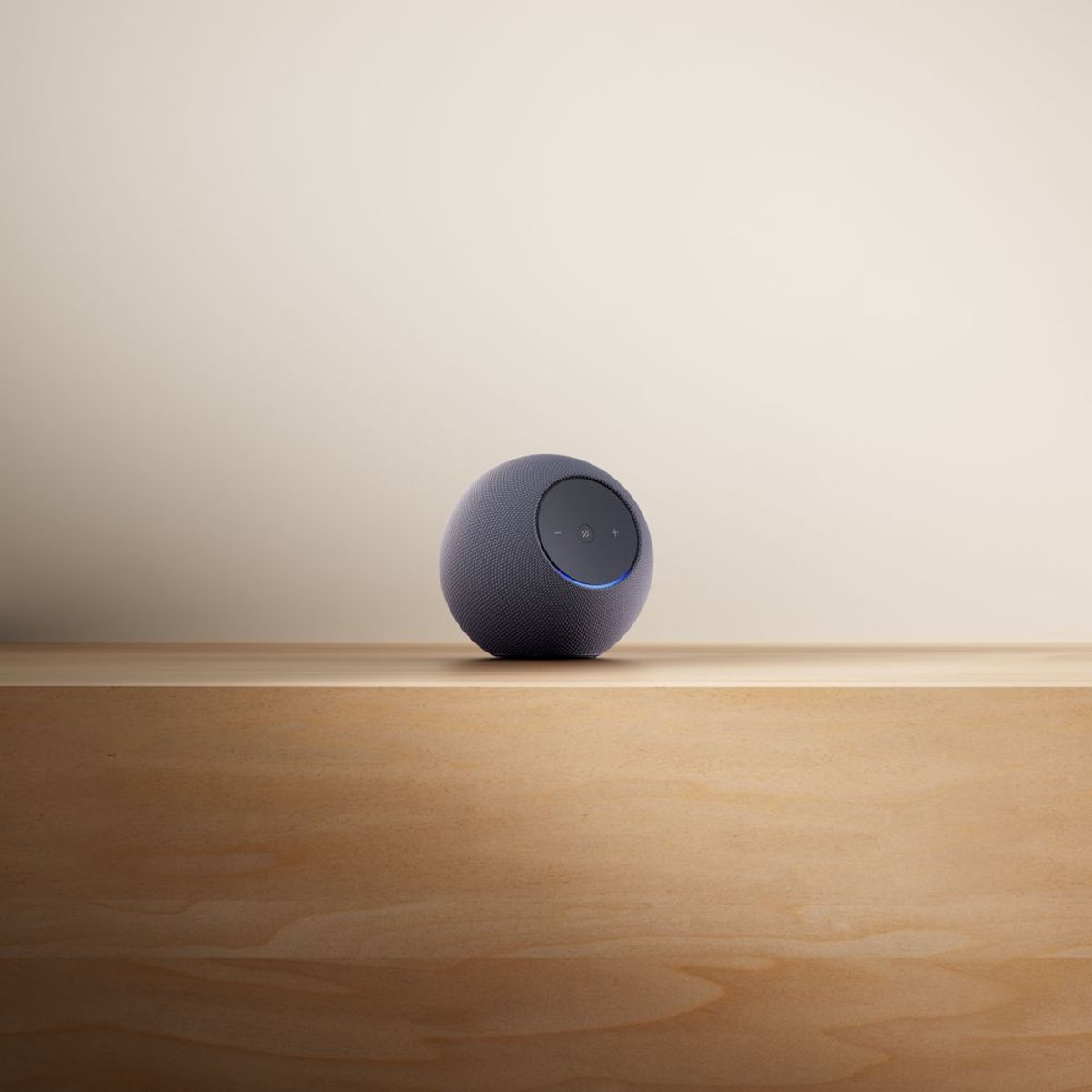
Amazon just dropped two groundbreaking speakers that defy physics. The new Echo Studio delivers the same spatial audio punch in a device 40% smaller than before, while the first-ever Echo Dot Max triples the bass output of standard Echo Dots. Both devices use AI-powered room adaptation that automatically tunes sound to any environment without manual calibration.
Amazon just pulled off what seemed impossible - cramming premium audio quality into devices that are smaller and smarter than ever before. The company's audio engineering team spent months pushing against the fundamental laws of physics to deliver two new speakers that redefine what's possible in compact audio design.
The numbers tell the story. The new Echo Studio shrinks to just 6 inches in diameter - about the size of a large grapefruit and 40% smaller than the original. Meanwhile, the debut Echo Dot Max delivers nearly three times the bass output of standard Echo Dot models while maintaining the familiar compact form factor.
"We designed these devices to really push the limits of what is physically possible," Richard Little, senior manager for audio hardware technology, told About Amazon. The challenge wasn't just engineering - it was reimagining how sound works in small spaces.
The breakthrough came through radical internal redesigns. For the Echo Dot Max, Amazon's team eliminated the traditional internal speaker module entirely, sealing components directly to the device housing. This architectural shift roughly doubled the available airspace behind the speaker, allowing for larger drivers and dramatically improved bass response.
But hardware alone couldn't solve the physics problem. When engineers hit the limits of what materials could do, custom software algorithms stepped in. "No matter what you're playing, we have an algorithm that maximizes the bass and delivers it as cleanly as possible while minimizing distortion," Little explained.
The team went through more than 30 prototypes across both devices, custom-designing most components in-house rather than relying on off-the-shelf parts. "We shrunk the size of our components to fit within a smaller, more appealing industrial design, but pushed their physical limits to output more sound and maximize performance," Little noted.
Even the fabric covering required innovation. The 3D knit material needed to be "acoustically transparent" - loose enough to let sound pass through without creating unwanted noise from air pressure, but tight enough to stay stable. Amazon developed a hidden tensioning system within the power port to keep fabric perfectly taut while meticulously tuning audio output to compensate for frequency effects.
Perhaps the most impressive feat is the speakers' spatial intelligence. Both devices continuously listen to their own audio output, analyze how room acoustics change the sound, and automatically adjust their performance. "You have to train algorithms to make that decision for you," explained Philip Hilmes, director of audio technology. "We gain insights from many real-world living rooms, including both simulated living rooms we have here in our audio labs."
This means customers don't need acoustic expertise or tedious manual calibration. Whether the speaker sits in a basement bedroom or a spacious living room with vaulted ceilings, it adapts automatically.
The advances culminate in a completely reimagined Alexa Home Theater system. Amazon expanded from supporting just two speakers and a subwoofer to configurations of up to five Echo Dot Max or Echo Studio devices. Thanks to spatial awareness technology, customers can place speakers anywhere that fits their decor - no extension cords or precise positioning required.
The engineering achievement represents Amazon's broader approach to innovation: start with customer desires, then find creative solutions even when physics seems to work against you. "We literally pushed it to the point where we were going to be breaking physics," Little said.
Both speakers integrate Amazon's next-generation AI processing and Omnisense sensor fusion platform, powering more proactive Alexa+ experiences beyond just audio playback. The result transforms how customers experience sound at home through a harmony of industrial design, acoustic engineering, and artificial intelligence.
Amazon's new Echo lineup proves that the smart speaker wars aren't just about features anymore - they're about fundamentally reimagining what's possible in compact audio design. By combining custom hardware engineering with AI-powered room adaptation, these devices deliver premium sound quality that automatically optimizes for any environment. For consumers, it means high-end audio without the complexity or space requirements that traditionally came with it.