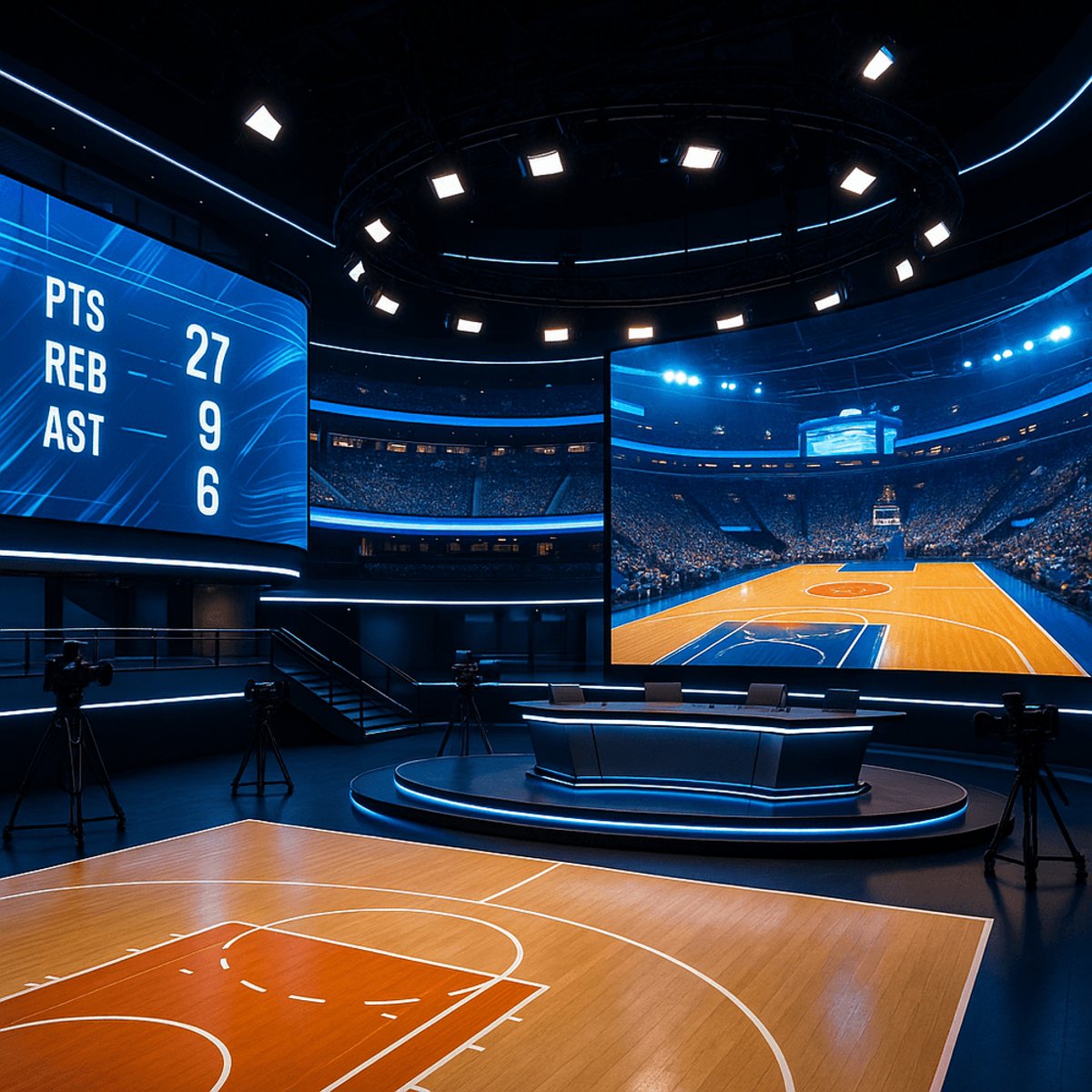
Amazon just pulled back the curtain on what might be the most technologically advanced sports broadcast facility in America. The company's new 13,000-square-foot NBA studio at MGM Studios in Culver City features over 2,300 LED screens and a regulation half-court - signaling Amazon's serious play to revolutionize sports broadcasting and compete directly with traditional networks.
Amazon just dropped a bombshell in the sports broadcasting world. The tech giant's new NBA studio at Amazon MGM Studios in Culver City isn't just big - it's a complete reimagining of how sports analysis gets delivered to viewers.
The numbers tell the story: 13,000 square feet across two floors, over 2,300 individual LED tiles containing roughly 3 billion pixels, and 22 cameras capturing every angle. For context, that's about the size of a typical big box store, but packed with more technology than most broadcast networks have in their entire facilities.
What makes this different isn't just the scale - it's the approach. Amazon's calling it the "NBA House," ditching the traditional sterile studio vibe for something that feels more like an upscale basketball hangout. The upper mezzanine hosts the main desk where Taylor Rooks will anchor pregame shows alongside analysts like Dirk Nowitzki, Blake Griffin, and Steve Nash. Below, a casual lounge setting with couches and chairs will house the NBA Nightcap postgame show.
But here's where it gets interesting - the entire environment can transform instantly. Those LED screens covering walls and floors can recreate any NBA arena, display city skylines, or showcase complex data visualizations. When Blake Griffin wants to break down a play, he can literally step onto the regulation half-court while surrounded by a virtual recreation of the arena where that play happened.
The technical specs are impressive. Amazon's using 10 cinematic-style broadcast cameras with large sensors for shallow depth of field, plus cameras positioned behind the basket and on the court itself. Everything shoots in HDR and 1080p, creating what Amazon calls a "natural viewing environment" that puts fans as close to the action as possible without leaving home.
This investment signals Amazon's serious commitment to sports content. The company already streams Thursday Night Football and has deals for WNBA games starting in 2026, plus NASCAR coverage. This studio can handle all of it, thanks to the customizable LED environment and flexible space design.
The timing isn't coincidental. Traditional sports broadcasters have dominated this space for decades, but streaming services are quickly eating into their territory. Netflix just grabbed WWE rights, Apple has MLS, and now Amazon's building infrastructure that makes traditional broadcast studios look quaint.
Prime Video's advanced camera systems at NBA arenas - including drones and high frame-rate cameras - can feed directly into the studio environment. This means analysts can break down plays with unprecedented detail, offering perspectives that were previously impossible in studio settings.
What's particularly smart is how Amazon's leveraging its existing tech infrastructure. The company's expertise in cloud computing, AI, and display technology all converge in this facility. It's not just a studio - it's a showcase of Amazon's broader technological capabilities applied to entertainment.
The broader implications extend beyond basketball. This facility represents a new model for sports broadcasting, where the line between live sports and studio analysis blurs through technology. Viewers get immersive experiences that traditional broadcasters simply can't match with their legacy infrastructure.
Industry analysts are taking notice. The investment in physical infrastructure shows Amazon's long-term commitment to sports content, even as streaming costs continue rising. While competitors focus on acquiring rights, Amazon's building the foundation for entirely new viewing experiences.
Amazon's NBA studio represents more than just a broadcasting facility - it's a statement about the future of sports media. By combining massive infrastructure investment with cutting-edge display technology, Amazon isn't just competing with traditional broadcasters; it's redefining what sports analysis can be. As streaming services continue grabbing sports rights from legacy networks, facilities like this show how tech companies plan to deliver experiences that cable TV simply can't match. The real test will be whether viewers embrace this new model when NBA on Prime launches.