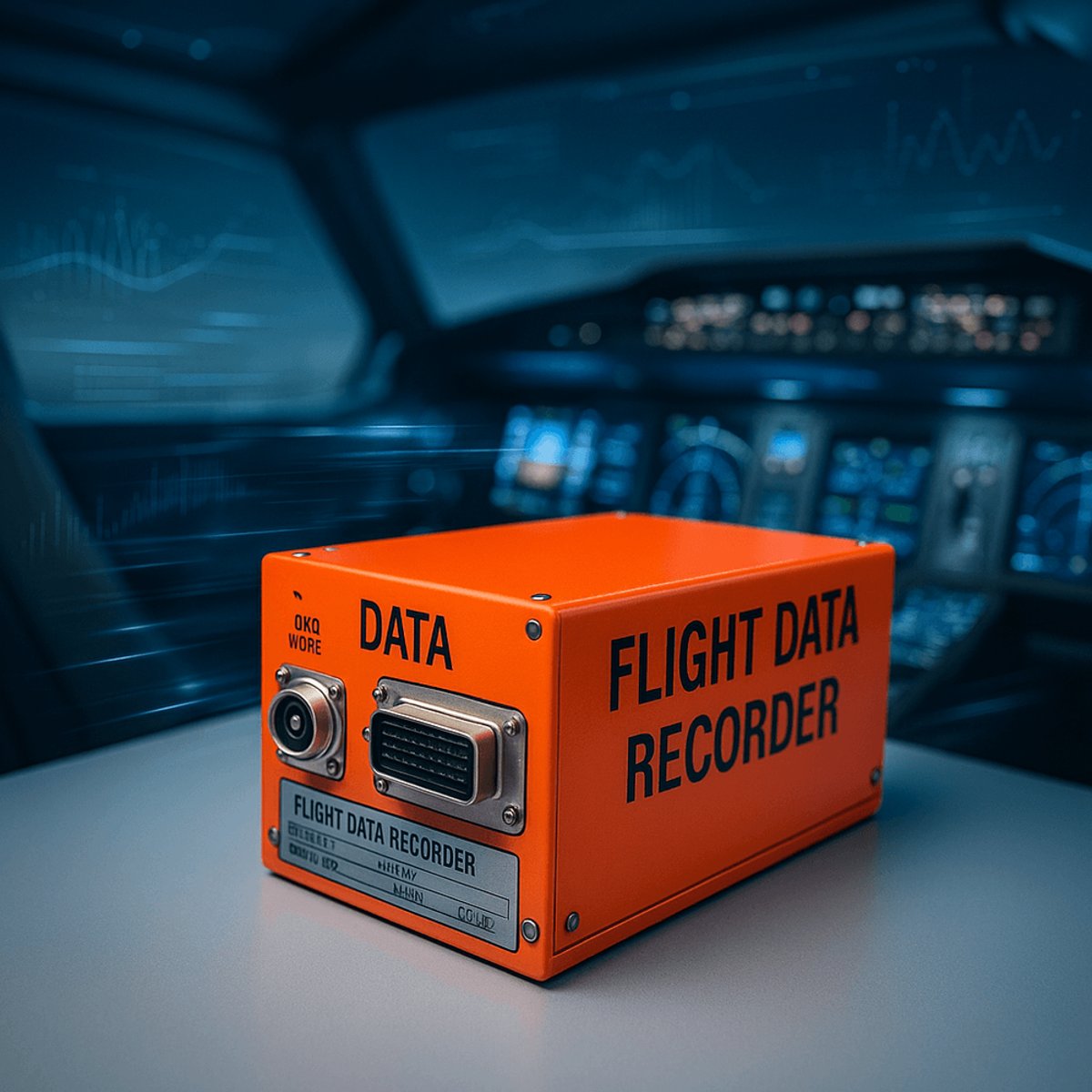
The aviation industry's most critical piece of safety technology is getting a major upgrade. Aerospace giants GE Aerospace and Honeywell are designing increasingly sophisticated black box systems that capture thousands of data points from modern aircraft like the Boeing 787 Dreamliner, while investigators push for real-time streaming capabilities and cockpit video integration to prevent future tragedies.
The race to build bulletproof aircraft safety technology just got more intense. Following last month's UPS cargo plane crash at Louisville Muhammad Ali International Airport, the aviation industry's spotlight has turned to the companies building the nearly indestructible "black boxes" that investigators rely on to solve aviation mysteries.
GE Aerospace and Honeywell lead a small but critical market designing flight data recorders that must survive catastrophic impacts, extreme temperatures, and deep-sea pressure. These devices have become the digital forensics backbone of modern aviation safety, capturing everything from engine performance to pilot conversations in the final moments before disaster strikes.
"They're very crucial because it's one of the few sources of information that tells us what happened leading up to the accident," Chris Babcock, branch chief of the vehicle recorder division at the National Transportation Safety Board, told CNBC. The technology challenge is immense - build something that can withstand forces that destroy entire aircraft while preserving gigabytes of critical data.
Modern aircraft have transformed these systems from simple flight parameter recorders into comprehensive data collection platforms. A single Boeing 787 Dreamliner now captures thousands of different data points, creating a complete digital picture of the aircraft's final moments. This data proved crucial in the recent Air India crash investigation, where recordings revealed both engine fuel switches were cut off within one second of each other, while cockpit voice recordings captured pilots discussing the emergency in real-time.
But the current technology has limits that concern safety experts. "All of those parameters today can have a very huge impact on the investigation," said former NTSB member John Goglia. The problem? Sometimes black boxes are destroyed completely or lost forever in ocean crashes, leaving investigators with incomplete pictures of what went wrong.
That's driving demand for next-generation capabilities like real-time data streaming and cockpit video recorders. The technology already exists - crash-worthy video systems are being installed in helicopters and smaller aircraft. But commercial aviation hasn't embraced these upgrades due to cost concerns and pilot privacy issues.
"The technology is there. Crash worthy cockpit video recorders are already being installed in a lot of helicopters and other types of airplanes, but they're not required," said Jeff Guzzetti, aviation analyst and former accident investigator for the Federal Aviation Administration and NTSB. "There's privacy and cost issues involving cockpit video recorders but the NTSB has been recommending that the FAA require them for years now."
The business case for improved safety technology is massive. A single commercial aviation accident can cost airlines or manufacturers hundreds of millions of dollars in legal settlements, aircraft replacement, and reputation damage. Boeing faced billions in costs following the 737 MAX crashes, while families deal with irreplaceable losses.
For tech companies like GE Aerospace and Honeywell, the challenge is building systems that bridge the gap between current black box technology and the real-time monitoring capabilities that could prevent accidents before they happen. The aviation industry moves slowly on safety changes, but recent high-profile crashes are creating pressure for faster adoption of advanced recording systems.
The future of aviation safety lies in the hands of tech companies pushing beyond traditional black box limitations. While GE Aerospace and Honeywell continue advancing crash-survivable recording technology, the industry faces a choice: embrace real-time monitoring and video capabilities now, or wait for the next tragedy to force regulatory change. With the technology already proven in other aircraft categories, the question isn't whether these upgrades will happen, but how quickly airlines and regulators will require them.