WIRED's editorial leadership gathered in San Francisco to tackle tech journalism's biggest question - whether Silicon Valley remains the center of the tech universe. Their answer? Despite predictions of decline, the Bay Area has reasserted its dominance through the AI revolution, with companies like OpenAI proving that breakthrough innovation still happens here first.
Wired just delivered its verdict on Silicon Valley's future - and it's not what many expected. In a live recording of their Uncanny Valley podcast at San Francisco's KQED, the publication's top editors offered a surprisingly bullish take on the Bay Area's continued dominance in tech.
Editorial Director Katie Drummond, speaking from New York where she's stubbornly remained despite pressure to relocate, admitted her views have evolved dramatically. "I actually think that that strongly held view that I had when I started the job... was wrong," she told the San Francisco audience. "I have had to moderate that view because it is undeniable, especially in the context of AI, that it all points back here."
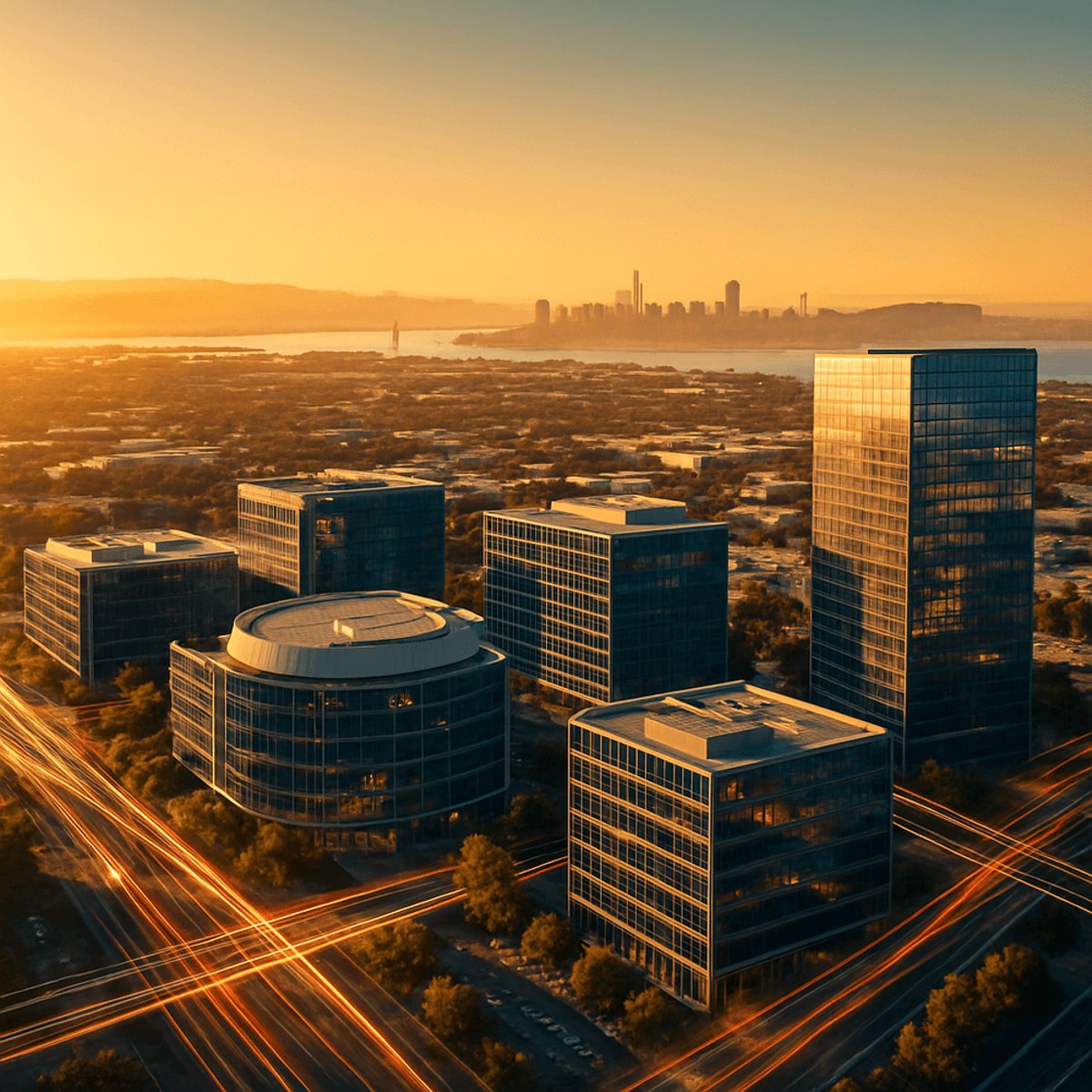
The admission comes as Silicon Valley weathered years of existential questioning. During the pandemic, Miami and Austin positioned themselves as tech havens. San Francisco's commercial real estate sat empty. The "doom loop" narrative dominated headlines. But OpenAI's ChatGPT launch changed everything.
"When OpenAI did launch ChatGPT, I remember being very proud to say the mission was the beginning of the AI revolution. It started down the street," said Features Editor Jason Kehe, who's lived in San Francisco for 13 years. "San Francisco's still got it. I don't think it had ever lost it."
The data backs up their optimism. Lauren Goode, WIRED's senior correspondent, noted that bankers at this week's Goldman Sachs Communacopia Conference reported East Coast clients moving west specifically for AI opportunities. Even local bartenders are cashing in - the crew hit Bar Gemini before the show, where staff confirmed OpenAI employees have become reliable customers who "drink a lot."
But WIRED's evolution tells a bigger story about tech journalism's reckoning. Drummond, who launched the publication's politics desk in 2023, faced criticism from Silicon Valley insiders who complained the coverage had become "too political." Her response was unequivocal: "We have an obligation to look at what is happening in this country and around the world."
The shift reflects tech's political awakening. "There are millions and millions and millions of dollars funneling from Silicon Valley to DC," Drummond explained, referencing the public lobbying records that show tech companies outspending traditional industries. "Whether it's Trump or Biden or Harris in office, that is what is happening."
Kehe traced this back to WIRED's founding insight that "technology is culture," adding that Drummond's contribution was recognizing "technology is politics as well." The publication's original 1993 manifesto criticized mainstream media for "groping for the snooze button" while missing profound social changes. Today, they're applying that same critical lens to political power.
The conversation revealed Silicon Valley stereotypes are alive and well. Drummond, staying in Mission Bay during her visit, described it as "a fake neighborhood" of boutique fitness classes and SweetGreen outlets populated by "associate to mid-level worker[s] at tech companies." She contrasted this with San Francisco's "eclectic and weird and creative" neighborhoods that represent the city's authentic character.
Still, even WIRED isn't immune to AI's disruption. Drummond revealed the publication recently discovered and retracted a story pitched by a non-existent writer using AI-generated content. "If it can happen to WIRED, it can happen to anyone," she warned, describing new fact-checking protocols for first-time contributors.
The discussion touched on gender gaps in AI adoption, with audience members noting studies showing women use tools like ChatGPT less than men. Drummond acknowledged this reflects broader patterns: "Men tend to jump much more quickly into trying new tech than women," despite WIRED's audience now skewing slightly female.
Looking ahead, the editors expressed cautious optimism about AI's integration into daily life, rejecting both dystopian and utopian narratives. "The smartest thing you can say about [AI] is that there isn't really anything that smart to say about it," Kehe argued, advocating for measured coverage that avoids feeding CEO egos through sensationalism.
Their verdict on Silicon Valley was unanimous: reports of its death were greatly exaggerated. As Kehe put it, "I really do believe that California does have an almost metaphysical power, and it's not Austin or Florida or even New York. It's here and I think it will always be here."
WIRED's live discussion crystallized a key moment in tech journalism - the recognition that Silicon Valley's tech dominance has only strengthened through the AI boom, even as the industry faces unprecedented political scrutiny. Their message is clear: while the Valley has problems, from housing costs to cultural homogenization, it remains the epicenter of technological innovation. For readers trying to understand where tech is heading, the answer isn't Austin or Miami - it's still very much here in the Bay Area, where the next breakthrough is likely brewing just down the street.