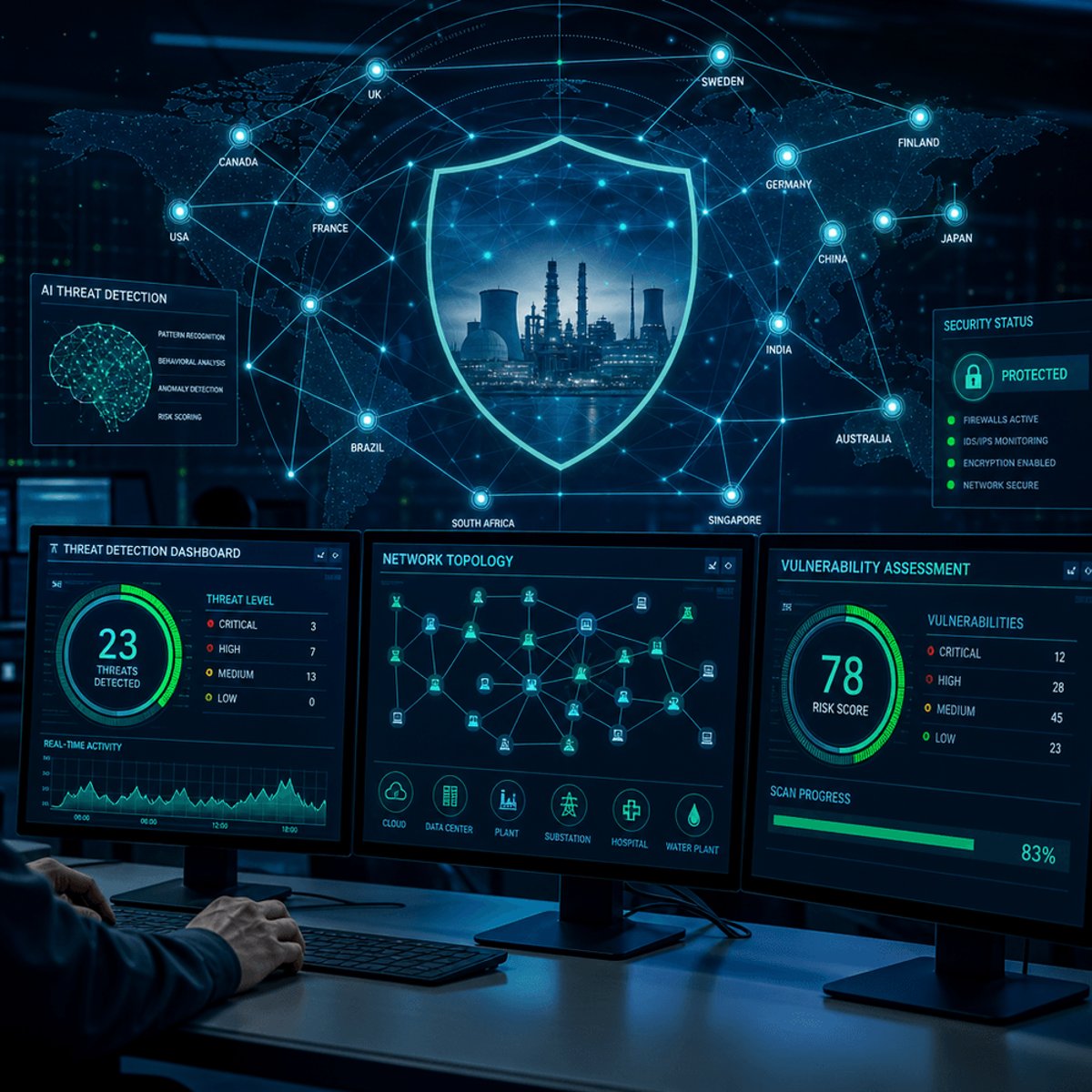
Anthropic is deploying its Claude Mythos AI security system to 150 organizations across 15 countries, targeting the world's most vulnerable digital chokepoints. The expansion of Project Glasswing puts AI-powered vulnerability detection into power grids, water systems, hospitals, and communications networks where a single cyberattack could impact over 100 million people. The move marks the first time a frontier AI lab has systematically embedded its technology into critical infrastructure defense, turning its most advanced model into a 24/7 security sentinel for systems that keep modern civilization running.
Anthropic just made its biggest bet yet that AI can protect the physical world from digital threats. The company announced it's expanding Project Glasswing - its security vulnerability detection program - and Claude Mythos access to 150 organizations spanning 15 countries, with a laser focus on the infrastructure that keeps lights on, water flowing, and hospitals running.
The stakes couldn't be higher. According to TechCrunch, these targeted systems collectively serve over 100 million people, meaning a successful breach could trigger cascading failures across entire regions. We're talking power grids that supply major metro areas, water treatment facilities serving millions, hospital networks managing life-support systems, and telecommunications backbones that emergency services depend on.
Project Glasswing leverages Claude's advanced reasoning capabilities to hunt for security holes before malicious actors find them. Unlike traditional vulnerability scanners that check for known exploit patterns, Claude Mythos can reason about system architectures, identify novel attack vectors, and flag weaknesses that might only become obvious when multiple systems interact. It's the difference between a checklist and a security researcher who understands how hackers actually think.
The timing isn't coincidental. Critical infrastructure has become ground zero for state-sponsored attacks and ransomware gangs looking for maximum leverage. Anthropic is essentially embedding its most powerful AI model - the same technology companies use for coding assistance and analysis - into the defensive perimeter of systems where failure means people don't get electricity, clean water, or medical care.
What makes this deployment different from typical enterprise security rollouts is the human-life calculus. A data breach at a retailer means stolen credit cards. A breach in these systems could mean blackouts during heat waves, contaminated water supplies, or hospitals losing access to patient records during emergencies. Anthropic is positioning Claude as infrastructure defense, not just corporate security.
The 15-country footprint suggests Anthropic is coordinating with governments and international agencies, though the company hasn't disclosed which nations are involved. Critical infrastructure protection typically requires regulatory approval and often involves partnerships with defense or homeland security agencies. The fact that 150 organizations signed on indicates this went through rigorous vetting processes across multiple jurisdictions.
Claude Mythos runs continuous security assessments, scanning for misconfigurations, outdated protocols, and potential entry points that could be chained together for sophisticated attacks. The AI doesn't just flag individual vulnerabilities - it maps out how an attacker might pivot through interconnected systems, the kind of multi-step reasoning that separates advanced persistent threats from script kiddies.
This also represents a major strategic shift for Anthropic. While competitors like OpenAI have focused heavily on consumer products and enterprise productivity tools, Anthropic is carving out territory in high-stakes, mission-critical applications where safety and reliability matter more than speed or flashy features. It's a bet that constitutional AI and careful deployment beats moving fast and breaking things when infrastructure is on the line.
The expansion comes as AI security capabilities are advancing faster than most organizations can keep up with. Traditional security teams struggle to defend against AI-powered attacks, creating an asymmetry where attackers have better tools than defenders. Project Glasswing aims to flip that equation by putting frontier AI capabilities on the defense side, evening the playing field for organizations protecting essential services.
For the 150 organizations now plugging Claude into their security operations, the calculus is clear: the risk of not using cutting-edge AI for defense now exceeds the risk of adopting it. That's a remarkable shift in just two years, from AI being seen as a potential vulnerability to becoming the primary defense against threats too sophisticated for human analysts to catch in time.
Anthropic's deployment of Claude Mythos into critical infrastructure marks the moment AI transitions from enterprise novelty to civilization-scale necessity. When 100 million people depend on systems that an AI is now helping defend, we've crossed into new territory where the technology isn't just augmenting human work - it's becoming essential to keeping modern society functioning. The question isn't whether other AI labs will follow Anthropic into critical infrastructure defense, but how quickly they can catch up before the gap between attacker capabilities and defender tools becomes unbridgeable.