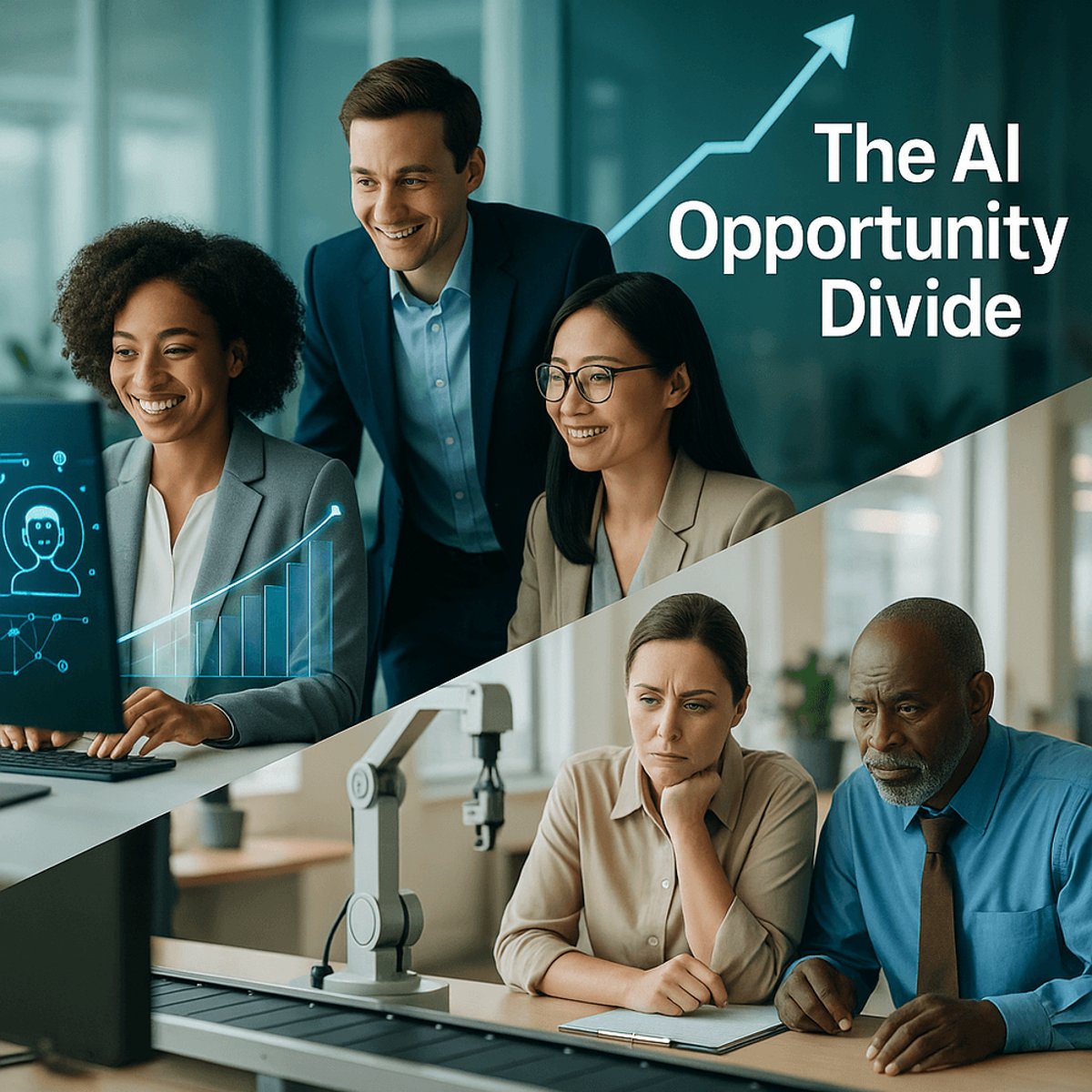
Economic opportunity is driving AI enthusiasm, but not everyone's invited to the party. Anthropic, the AI safety company behind Claude, just released research revealing a sharp divide in who expects to benefit from the AI revolution - and the findings expose uncomfortable truths about how differently people view the technology's economic promise. While some groups see AI as a wealth-generation engine, others worry they'll be left holding the bag as automation reshapes the workforce.
Anthropic just put numbers to what many in Silicon Valley didn't want to admit - the AI revolution has a serious perception problem. The company's latest research reveals that while economic gains dominate people's hopes for artificial intelligence, there's a massive gap between who expects to win and who's bracing for disruption.
The timing couldn't be more critical. As OpenAI, Google, and Microsoft race to embed AI into everything from spreadsheets to surgery, the question of who actually benefits from these tools is shifting from academic debate to kitchen table anxiety. Anthropic's data suggests that optimism about AI's economic potential isn't evenly distributed - it clusters around education levels, income brackets, and access to technology.
According to the research highlighted by CNBC, economic aspirations sit at the top of what people want from AI. But analysts who reviewed the findings were quick to sound the alarm - the gains won't flow equally. Workers in knowledge sectors with AI augmentation potential tend to view the technology as a productivity multiplier, while those in roles vulnerable to full automation see it as an existential threat.
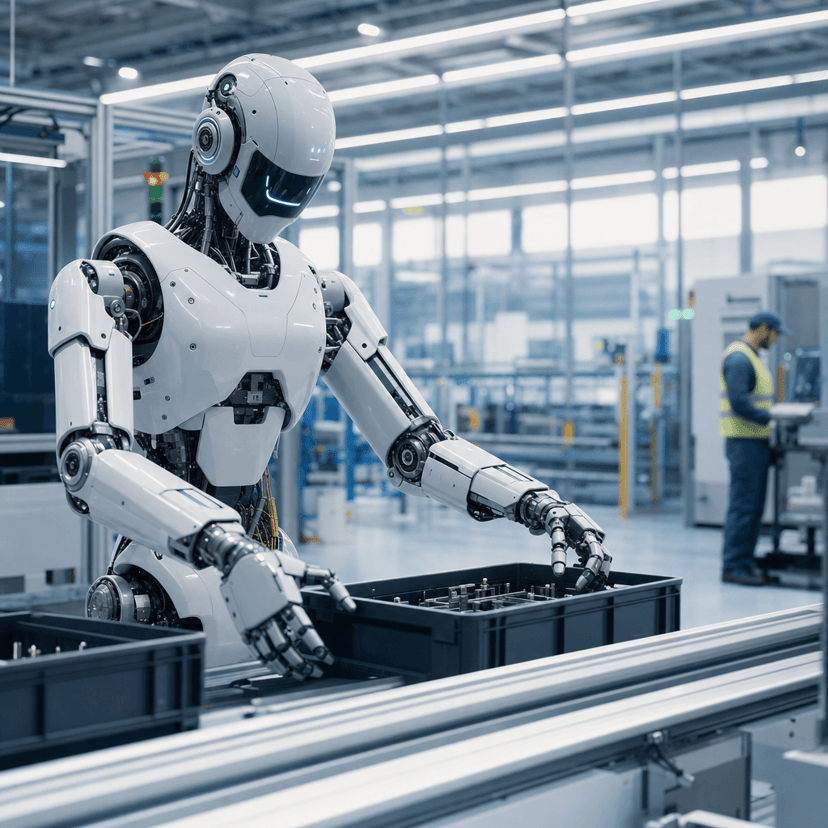
This isn't just about sentiment - it's about market reality. Meta recently reported that AI-powered advertising tools boosted revenue per employee by double digits, rewarding shareholders and technical staff while reducing headcount in creative and analytics roles. Amazon continues expanding its AI-driven logistics network, improving margins while reshuffling warehouse employment. The pattern repeats across industries: AI creates value, but captures it unevenly.
The research adds weight to growing concerns from economists and policy experts who've warned that AI could accelerate wealth concentration if deployment outpaces adaptation. Unlike previous technological shifts that took decades to reshape labor markets, AI tools are being adopted at unprecedented speed - Microsoft reported that Copilot reached 1 million paid enterprise seats faster than any product in the company's history.
What makes Anthropic's research particularly noteworthy is the source. The company has positioned itself as the AI safety-focused alternative to move-fast-and-break-things competitors, with backing from Google and a reputation for careful deployment. When a company known for caution starts flagging equity concerns in its own research, it signals that the optimism gap isn't just a PR problem - it's a structural challenge the industry can't ignore.
The findings arrive as governments worldwide grapple with AI regulation. The European Union's AI Act includes provisions for high-risk system oversight, while U.S. lawmakers debate whether current frameworks adequately address algorithmic bias and job displacement. Anthropic's data gives policymakers ammunition to push for guardrails, even as tech giants lobby for lighter touch approaches.
For enterprise buyers, the research creates a new calculation. Companies deploying AI aren't just managing technology risk anymore - they're navigating employee sentiment and public perception. A workforce that views AI as a threat rather than a tool is less likely to adopt it effectively, potentially negating productivity gains. Forward-thinking organizations are already pairing AI rollouts with reskilling programs, trying to shift the narrative from replacement to augmentation.
The split in AI optimism also reflects a deeper truth about innovation access. High-income professionals with technical skills can leverage tools like Claude, ChatGPT, and Copilot to multiply their output. Meanwhile, workers without digital literacy or in roles where AI substitutes rather than complements find themselves competing against algorithms that don't need health insurance or vacation days.
Anthropichasn't released the full methodology or demographic breakdowns yet, but the core message is clear: if the AI industry wants broad-based support for continued development, it needs to solve the distribution problem. Technology that concentrates benefits while spreading disruption doesn't just create economic inequality - it creates political backlash and regulatory headwinds.
The research also complicates the narrative that AI will universally boost productivity and living standards. While aggregate economic gains may be real, they matter less if most people experience AI as a force that devalues their skills rather than enhances them. This perception gap could slow adoption, fragment markets, and ultimately limit AI's transformative potential.
Anthropic's research lands at a pivotal moment for the AI industry. As deployment accelerates and capabilities expand, the gap between optimists and skeptics isn't just about technology - it's about who gets to participate in the upside. The companies that figure out how to broaden AI's benefits beyond knowledge workers and shareholders won't just avoid regulatory blowback; they'll unlock larger markets and more sustainable growth. For now, the data suggests the industry has a trust problem that can't be coded away. The question is whether tech leaders will treat equity concerns as a feature to build or a bug to ignore.