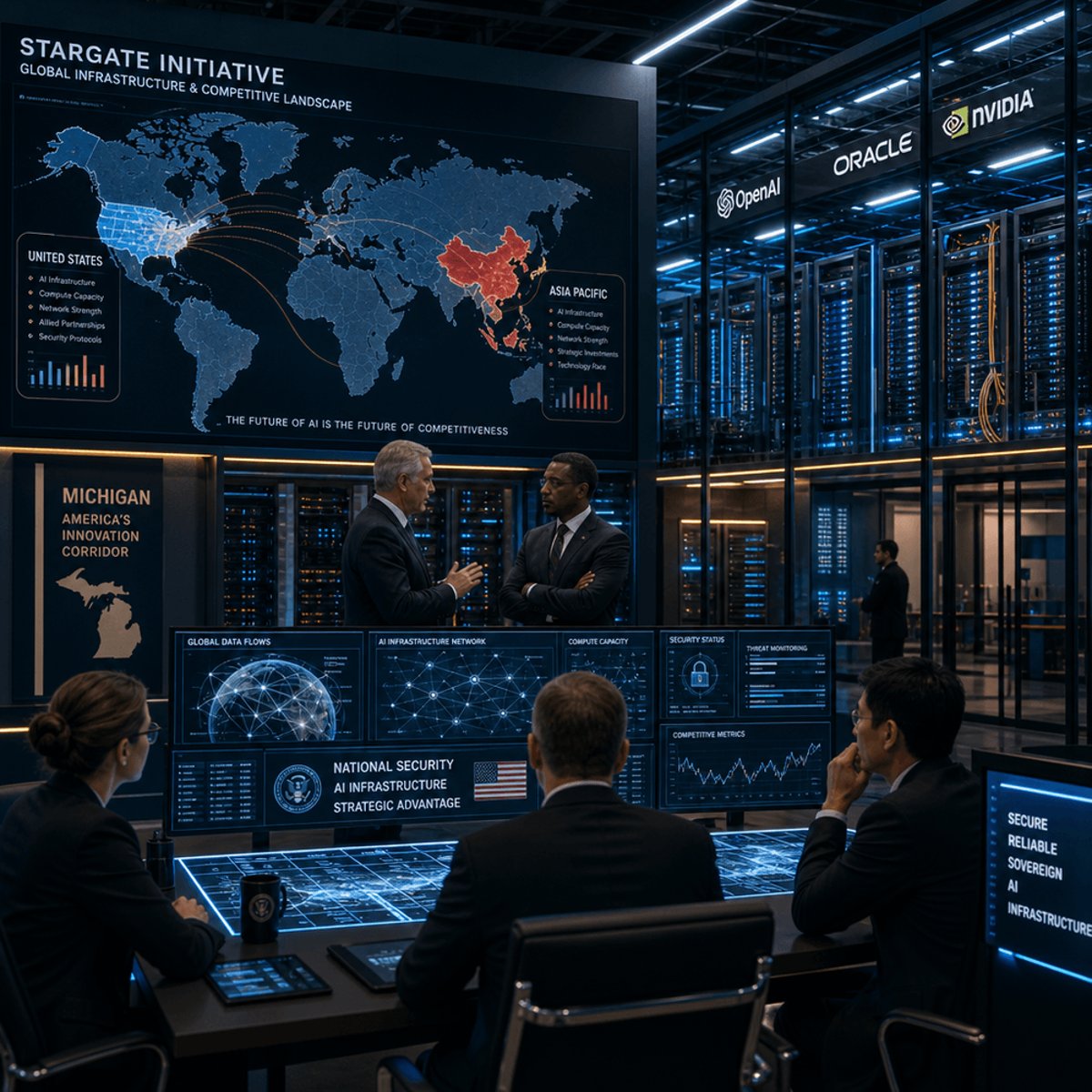
A bombshell allegation is rocking the Stargate project rollout in Michigan. Developers behind the massive AI infrastructure initiative involving OpenAI and Oracle claim paid protesters opposing the data center buildout have ties to China, injecting a sharp geopolitical edge into what's already one of the most watched AI investments of 2026. The accusation comes as the joint venture prepares to break ground on facilities expected to power next-generation AI workloads.
OpenAI and Oracle are facing unexpected headwinds as their ambitious Stargate data center project in Michigan encounters what developers are calling foreign interference. In a stunning claim made during community discussions, representatives from Related Digital suggested that organized protests against the facility have financial backing from Chinese interests seeking to slow American AI infrastructure development.
The allegation adds a national security dimension to what had been framed as a local land-use dispute. Stargate, the joint infrastructure venture announced earlier this year, aims to build massive computing facilities to support the next wave of AI model training and deployment. Michigan emerged as a strategic location due to power availability and proximity to industrial manufacturing corridors, but the project has sparked fierce debate in communities where data centers would rise.
Oracle executive leadership emphasized during Monday's live briefing that the infrastructure is critical for maintaining U.S. competitiveness in artificial intelligence. The company is providing the cloud backbone and data center architecture, while OpenAI will leverage the facilities to train increasingly sophisticated models beyond the current GPT series. Related Digital is handling real estate development and community integration.
But integration has proven rocky. Local opposition groups have raised concerns about water usage, electricity demands on aging grids, and environmental impacts from cooling systems required for AI chips running at full capacity. Public meetings have grown heated, with some attendees arriving in coordinated groups carrying professionally printed signs opposing the development. It's this organized resistance that triggered the foreign influence allegations.
Developers haven't provided concrete evidence of Chinese funding, but pointed to the sophistication of opposition campaigns and timing that coincides with similar protests at AI infrastructure sites across the country. The FBI has previously warned about foreign efforts to disrupt critical technology infrastructure projects through proxy organizations and grassroots-appearing movements.
The geopolitical subtext is hard to ignore. China is racing to build its own AI capabilities while facing U.S. chip export restrictions designed to limit access to cutting-edge semiconductors. Slowing American data center construction would provide Beijing with time to close the infrastructure gap that currently gives U.S. companies like OpenAI a significant advantage in training frontier models.
Stargate represents billions in planned investment across multiple Michigan sites. The project promises thousands of construction jobs and hundreds of permanent positions operating facilities that will house Nvidia H100 and next-generation accelerators. Oracle is positioning the infrastructure as enterprise-ready, not just for OpenAI but for corporate clients deploying AI at scale.
Community leaders remain divided. Economic development officials point to tax revenue and employment opportunities, while environmental groups question whether aging power infrastructure can handle the load without brownouts or requiring new fossil fuel generation. The China accusation has further polarized discussions, with some residents feeling their legitimate concerns are being dismissed as foreign manipulation.
Industry observers note that data center opposition has become increasingly common as AI infrastructure needs collide with local resources. Similar battles are playing out in Virginia, Oregon, and Arizona, where hyperscale facilities face pushback over water and energy consumption. What makes the Michigan situation unique is the explicit claim of foreign interference in a domestic zoning matter.
The project is moving forward regardless, with construction timelines targeting late 2026 groundbreaking. OpenAI needs the capacity to train models that CEO Sam Altman has hinted will require 10x current computing resources. Oracle is betting that enterprise AI demand will justify the massive capital expenditure even if OpenAI scales back usage.
Federal authorities haven't publicly commented on the Chinese interference allegations, but the Department of Energy has flagged AI data centers as critical infrastructure requiring protection from both cyber and physical threats. If foreign actors are indeed funding opposition campaigns, it would represent a new front in technology competition between Washington and Beijing.
The Stargate controversy illustrates how AI infrastructure has become inseparable from geopolitics and national security. Whether or not Chinese interests are actually funding Michigan protesters, the allegation itself reveals how high the stakes have become in the race to build computing capacity for next-generation AI. As OpenAI, Oracle, and competitors pour billions into American data centers, expect more friction at the intersection of local concerns, environmental impact, and great power competition. The resolution in Michigan could set precedents for dozens of similar projects waiting in development pipelines across the country.