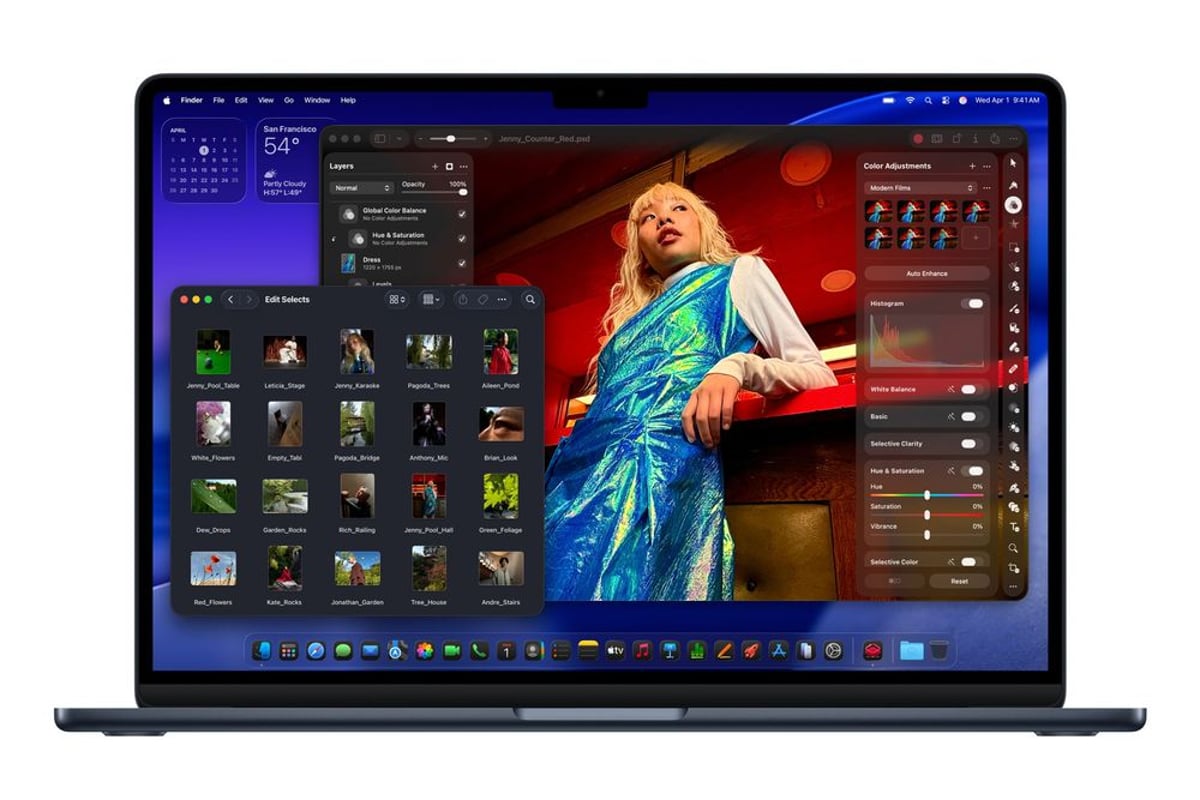
Apple just dropped its entire M5 MacBook lineup, and the company's doubling down on storage in a big way. The new MacBook Air gets Apple's latest M5 chip along with 512GB of base storage - double what the M4 version shipped with - while the MacBook Pro lineup jumps to M5 Pro and M5 Max configurations. Pre-orders kick off March 4th with store availability hitting March 11th, marking Apple's fastest Mac refresh cycle in recent memory.
Apple is making its boldest Mac move in years. The company announced Tuesday it's launching a complete M5-powered MacBook lineup, headlined by a significantly upgraded MacBook Air that addresses one of the most consistent complaints about Apple's consumer laptops: stingy base storage.
The M5 MacBook Air now ships with 512GB of storage standard, double the 256GB that came with the M4 version. But Apple didn't stop there - maximum storage jumps to 4TB from 2TB, and the company claims the SSD itself delivers "2x faster read/write performance compared to the previous generation," according to Apple's official announcement. That's a meaningful upgrade for a machine that's become Apple's best-selling laptop.
The timing tells you everything about where Apple sees the market heading. Pre-orders open March 4th with store availability just seven days later on March 11th. That's an unusually compressed timeline for Apple, which typically spaces out announcements and availability by weeks. The speed suggests the company's feeling pressure from Windows PC makers who've been aggressively pushing AI-capable laptops with Qualcomm's Snapdragon X chips and Intel's latest processors.
On the pro side, Apple's rolling out MacBook Pro models with M5 Pro and M5 Max chips, continuing the tiered approach that's worked well since the M1 transition. These machines target creative professionals and developers who need maximum performance for tasks like video editing, 3D rendering, and machine learning workflows. The M5 Pro and Max chips represent Apple's answer to Nvidia's dominance in the professional workstation market.
The M5 Air also adds Wi-Fi 7 support, future-proofing the machine for the next generation of wireless connectivity. That's particularly important as Apple pushes deeper into spatial computing with Vision Pro and needs seamless, high-bandwidth connections between devices. Wi-Fi 7's improved speeds and lower latency could enable new workflows that weren't practical with previous standards.
What's notable here is Apple's willingness to double base storage without apparently raising prices, though official pricing wasn't included in the initial announcement. The company's been criticized for years about charging premium prices while shipping entry-level Macs with storage that felt dated even at launch. If Apple holds the line on pricing, it puts real pressure on Windows laptop makers who've used better value propositions as a key selling point.
The storage bump also suggests Apple's confident in its supply chain and margin structure. SSDs have gotten cheaper, but doubling capacity across an entire product line still represents significant cost. Apple's apparently decided that customer satisfaction and competitive positioning are worth eating some margin, or the company's negotiated favorable enough terms with suppliers to make the math work.
For consumers, this is the Mac update many have been waiting for. The M4 MacBook Air was already a strong machine, but 256GB of storage in 2025 felt constraining for anyone who works with photos, videos, or large applications. At 512GB, the base model becomes genuinely usable for a much wider range of customers without needing to immediately jump to a pricier configuration.
The M5 chip itself brings Apple's latest silicon advances, though detailed specs weren't included in the announcement. Based on Apple's typical cadence, expect modest CPU improvements but more significant gains in GPU performance and neural engine capabilities. That pattern has held across the M-series evolution, with each generation getting better at the AI and machine learning tasks that increasingly define modern computing.
What remains to be seen is how this plays in international markets where Apple's pricing has been less competitive. The US market might see aggressive positioning, but regions like Europe and Asia could still face the premium pricing that's limited Mac adoption. Apple's historically been willing to accept lower market share in exchange for maintaining margins, but the competitive landscape is shifting fast enough that old strategies might not hold.
The March 11th launch date also puts these machines in customers' hands well before the spring refresh cycle most PC makers follow. Apple's essentially setting the benchmark for what a premium laptop should deliver in 2026, forcing competitors to respond. That's the advantage of controlling your entire stack from silicon to software to retail.
For developers and creative professionals, the combination of M5 performance, doubled storage, and improved connectivity creates a compelling upgrade path. The question is whether Apple's kept pricing aggressive enough to pull people off M3 and even M2 machines, or if this is primarily aimed at Windows switchers and first-time Mac buyers.
Apple's M5 MacBook launch represents more than just a chip upgrade - it's a strategic repositioning that addresses real customer pain points while accelerating the competitive pressure on Windows PC makers. The doubled storage at base configurations shows Apple's willing to invest in customer satisfaction even if it means tighter margins, while the compressed launch timeline suggests urgency around maintaining momentum in a market where AI-capable PCs are becoming table stakes. For consumers, this is the Mac update that finally makes the entry-level configuration genuinely usable without immediate costly upgrades. The question now is whether Apple's priced these aggressively enough to grab meaningful market share, or if this is primarily about keeping existing customers happy while maintaining the premium positioning that's defined the Mac for decades.