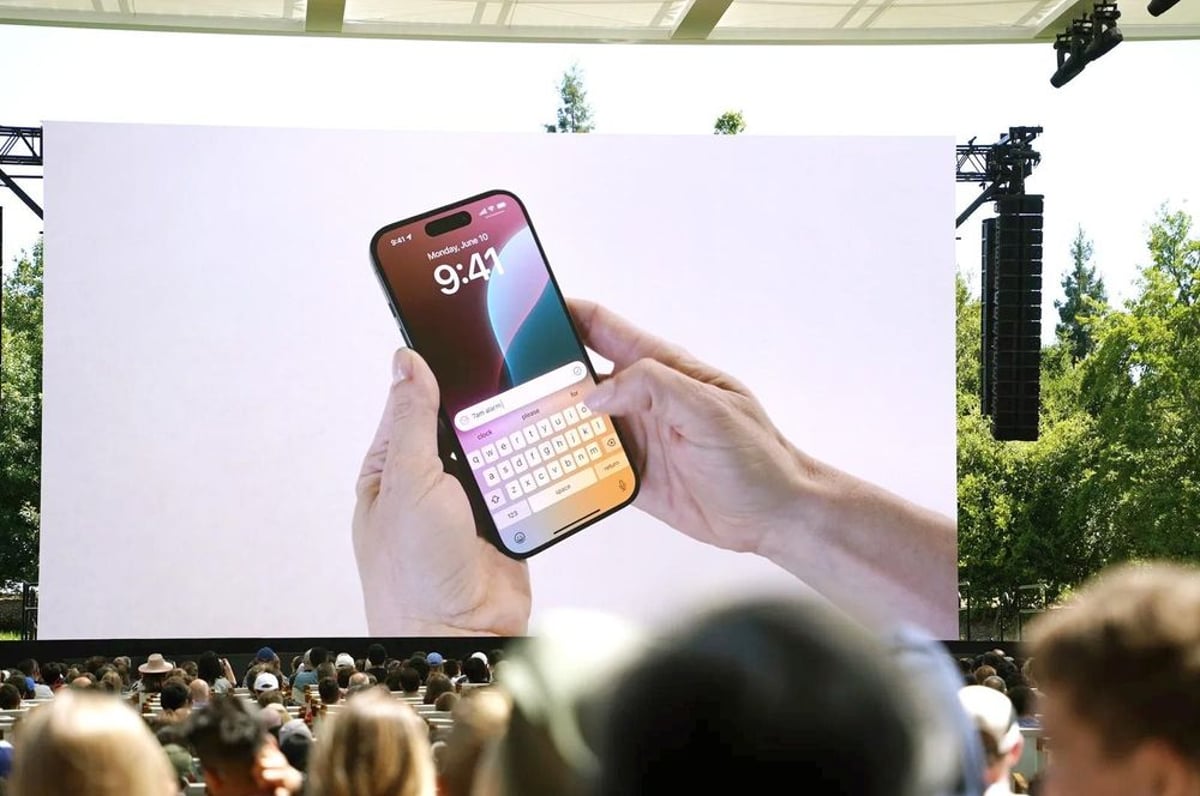
Apple is taking another swing at relaunching Siri as a true AI assistant at WWDC on Monday, two years after the company's disastrous Apple Intelligence debut landed it in legal hot water. The iPhone maker is preparing to reintroduce the redesigned voice assistant with what appears to be Google Gemini integration, according to reports from The Verge. It's a remarkable do-over for a company that's been playing catch-up in AI while rivals like OpenAI and Google race ahead.
Apple finds itself in an unusual position this week - getting a second chance to make a first impression with AI-powered Siri. At WWDC on Monday, the company appears ready to unveil what it promised back in 2024 but never delivered, this time with Google Gemini reportedly baked in.
The backstory is messy. Apple first showed off its "new" Siri at WWDC 2024, complete with a glowing border interface, fresh voice options, and the ability to hand off queries to ChatGPT. The company called it Apple Intelligence and made bold promises about upcoming AI capabilities. Those features never materialized. According to The Verge, Apple's promotion around Apple Intelligence was so misleading that the company ended up settling a class-action lawsuit over the debacle.
That lawsuit settlement hangs over Monday's event like a dark cloud. But in a weird twist, Apple's position as the AI underdog might actually work in its favor. While OpenAI has dealt with ChatGPT hallucinations and Google faced backlash over Bard's accuracy issues, Apple's been watching from the sidelines, taking notes on what not to do.
The reported Gemini integration marks a significant shift in Apple's AI strategy. After initially partnering with OpenAI to power ChatGPT handoffs in the 2024 version, bringing Google into the mix suggests Apple's pursuing a multi-model approach rather than betting everything on one AI partner. It's a pragmatic move that mirrors how Apple typically operates - hedging bets and maintaining optionality.
Industry watchers have been harsh on Apple's AI delays. The company that revolutionized smartphones and tablets has stumbled badly in the voice assistant wars. While Google Assistant and Amazon Alexa evolved into increasingly capable AI helpers, Siri became the butt of jokes about setting timers and botching simple queries. Apple's market position in AI has eroded steadily since 2022, with the company lagging in both consumer perception and actual functionality.
But playing from behind isn't always fatal in tech. Apple famously wasn't first to smartphones, tablets, or smartwatches. The company's playbook involves watching others stumble, then entering markets with polished, integrated experiences. Whether that strategy can work with AI remains the billion-dollar question, especially given how quickly the technology is advancing.
The stakes couldn't be higher. Voice assistants are becoming the primary interface for AI interaction across billions of devices. Apple's installed base of over 2 billion active devices represents enormous potential if Siri can actually become useful. But that same user base has learned to ignore Siri after years of disappointment. Winning back trust after the 2024 Apple Intelligence fiasco won't be easy.
What Monday's announcement needs to deliver is proof, not promises. Developers and users want to see actual AI capabilities running on actual devices, not vague commitments about features "coming soon." The Gemini integration, if real, should demonstrate tangible improvements in how Siri handles complex queries, maintains context across conversations, and integrates with third-party apps.
Apple's also racing against time as competitors push forward. OpenAI continues iterating on ChatGPT with new capabilities rolling out regularly. Google is embedding Gemini deeper into Android and search. Microsoft has made AI a central part of Windows and Office. The AI assistant market isn't waiting for Apple to figure things out.
The developer community will be watching closely too. WWDC is fundamentally about giving developers tools to build the next generation of apps. If Apple can't provide robust AI APIs and clear privacy guidelines for how Siri processes data, the ecosystem won't embrace whatever gets announced. And without developer support, even the best AI features will languish.
One advantage Apple still holds is privacy positioning. While Google and OpenAI have faced scrutiny over data practices, Apple's maintained its privacy-focused brand. If the company can deliver genuinely useful AI that processes more data on-device rather than in the cloud, it could differentiate Siri in a meaningful way. But that's a massive technical challenge given how resource-intensive large language models remain.
Monday's WWDC keynote represents a critical inflection point for Apple's AI ambitions. The company burned through credibility with the botched 2024 Apple Intelligence launch and subsequent lawsuit settlement. Now it gets a rare second chance to prove it can compete in the AI assistant race. Whether the reported Gemini integration and two years of development time translate into a genuinely useful Siri remains to be seen. But one thing's certain - Apple can't afford another round of empty promises. The iPhone maker needs to ship real AI capabilities that work today, not tease features coming "soon." The tech world is watching, and this time the stakes are even higher.