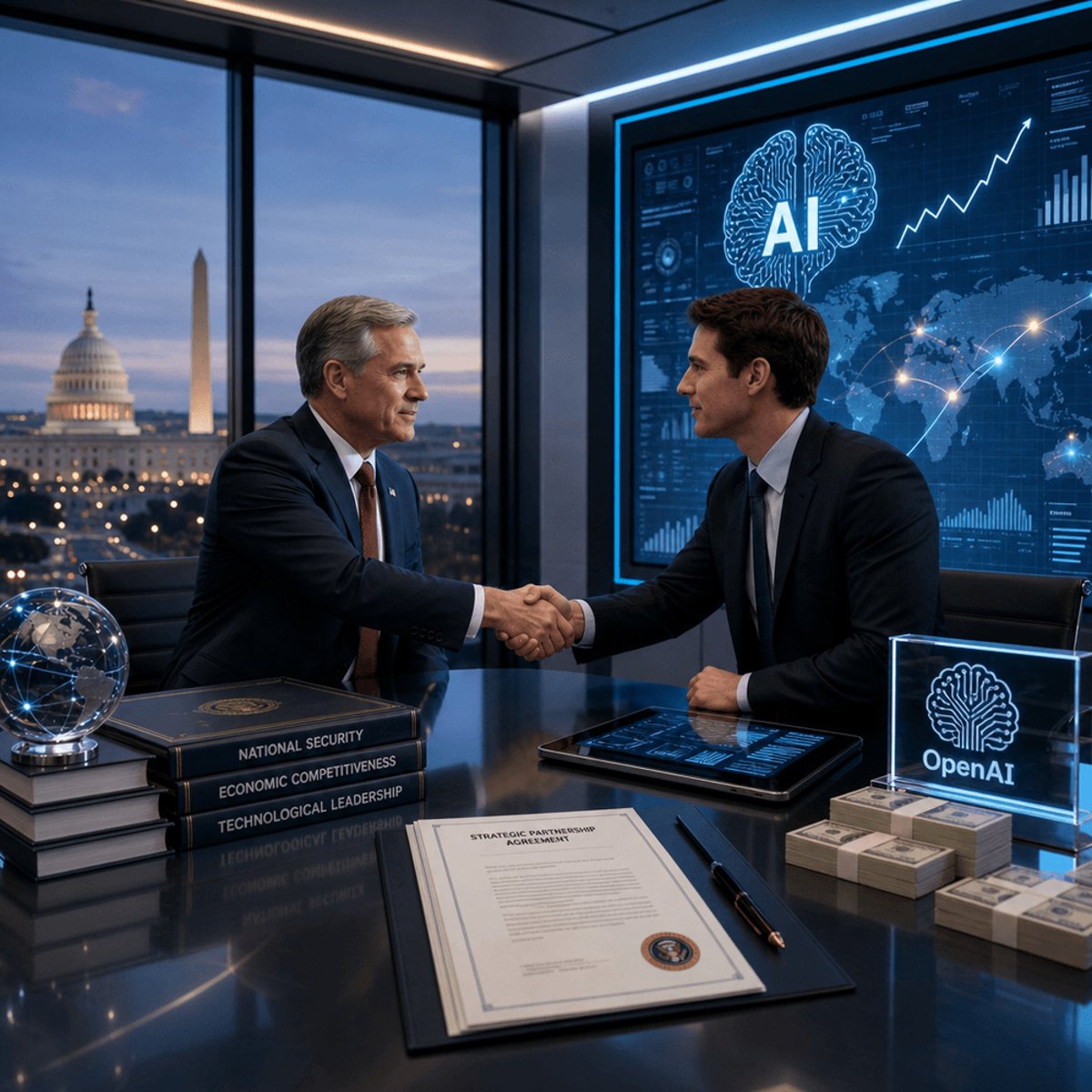
The Trump administration is in active discussions to take an equity stake in OpenAI, a move that would mark an unprecedented fusion of government power and cutting-edge AI development. OpenAI CEO Sam Altman first floated the idea to the administration in 2025, according to sources familiar with the matter speaking to CNBC. If it happens, it would represent the most significant direct government investment in private AI infrastructure in U.S. history and could fundamentally reshape how America approaches the global AI race.
OpenAI CEO Sam Altman has been quietly pushing one of the boldest ideas in tech policy - getting the U.S. government to become a direct investor in his company. According to sources who spoke with CNBC, Altman first presented the concept to Trump administration officials sometime in 2025, and those discussions are now entering a serious phase.
The proposal would give Washington an ownership position in the company behind ChatGPT, making taxpayers de facto shareholders in one of the world's most valuable AI startups. It's a radical departure from the traditional arms-length relationship between government and Silicon Valley, and it comes as both parties increasingly view AI dominance as a matter of national security.
For OpenAI, the upside is obvious. A government stake could bring regulatory cover, massive capital infusions, and the kind of institutional backing that would make the company nearly untouchable in the global AI race. The startup has been burning through billions in compute costs while racing to develop artificial general intelligence, and Altman has made no secret of needing new funding sources beyond traditional venture capital.
But the arrangement also raises thorny questions about conflicts of interest and market distortion. If the government owns a piece of OpenAI, how does it regulate the company fairly? What happens to competitors like Anthropic and Google's DeepMind? And does this set a precedent where the government picks winners and losers in emerging technology sectors?
The timing aligns with growing anxiety in Washington about China's AI capabilities. Beijing has poured state resources into developing its own large language models and AI infrastructure, operating under a fundamentally different model where the line between government and private enterprise barely exists. Some national security hawks argue the U.S. needs to adopt similar strategies if it wants to maintain its technological edge.
OpenAI has already been moving closer to the government orbit. The company has been in talks with defense agencies about potential applications of its technology, and Altman has positioned himself as a key adviser to policymakers trying to understand AI's implications. A direct equity relationship would formalize that partnership in ways that would have been unthinkable just a few years ago.
The structure of any potential deal remains unclear. Would it be a direct Treasury investment? A special purpose vehicle? Would taxpayers get board representation? The sources speaking to CNBC didn't provide details on those mechanics, and neither OpenAI nor the White House has commented publicly on the discussions.
What's clear is that this represents a fundamental rethinking of how America approaches strategic technology development. Previous government investments in computing - from ARPA funding that created the internet to DARPA projects that seeded GPS - were grants and contracts, not equity stakes. This would be something entirely different, with all the complications that come with it.
Industry observers are split on whether it's brilliant or reckless. Proponents argue it's the only way to ensure American AI leadership while maintaining some democratic control over potentially world-altering technology. Critics worry it would entrench OpenAI's dominance, stifle competition, and create a model where tech giants can socialize their risks while privatizing their gains.
The discussions also come as OpenAI navigates its own complex transition from nonprofit research lab to for-profit powerhouse. The company's unusual corporate structure - with a nonprofit parent overseeing a capped-profit subsidiary - has already drawn scrutiny. Adding government ownership to that mix would create unprecedented governance challenges.
For Altman, who has consistently pushed the boundaries of conventional startup playbooks, this is perhaps his most audacious move yet. He's betting that the government sees AI as important enough to break all the old rules about how Washington engages with private industry.
The Trump administration's consideration of an equity stake in OpenAI represents more than just an unusual investment opportunity - it's a potential inflection point in how democratic governments engage with transformative technology. If the deal goes through, it would validate a new model where national security concerns justify direct government ownership in private AI companies, with profound implications for competition, innovation, and the balance of power between Silicon Valley and Washington. Whatever happens, Altman's pitch has already succeeded in forcing a conversation about whether the old rules still apply when the technology at stake could reshape global power dynamics. The next few months will reveal whether America is ready to cross that line.