Apple just posted the most successful iPhone quarter in its history, with the device pulling in $85.3 billion in revenue. The milestone caps off a blockbuster Q1 2026 that saw total company revenue hit $143.8 billion, up 16 percent year-over-year. The surge comes despite lingering delays to Apple's AI-powered Siri upgrade and concerns about the ultra-thin iPhone Air's reception. CEO Tim Cook credits "unprecedented demand" across every geographic segment, while the Services division notched its own all-time revenue record.
Apple just rewrote the record books. The company's Q1 2026 earnings dropped today with a headline number that turns the industry narrative on its head - iPhone revenue of $85.3 billion, the highest quarterly haul in the product's 19-year history. Total company revenue clocked in at $143.8 billion, a 16 percent jump from the same period last year, according to the official earnings release.
The results crush analyst expectations and arrive at a curious moment for Apple. The company's been battling questions about whether its AI strategy can match rivals, whether consumers still care about incremental iPhone upgrades, and whether the razor-thin iPhone Air was a miscalculation. Today's numbers suggest none of that mattered.
"iPhone had its best-ever quarter driven by unprecedented demand, with all-time records across every geographic segment," CEO Tim Cook said in the earnings statement. That's not typical corporate hedging - Apple set records in every single region, from the Americas to Greater China, where the company's faced mounting pressure from local rivals like Huawei and Xiaomi.
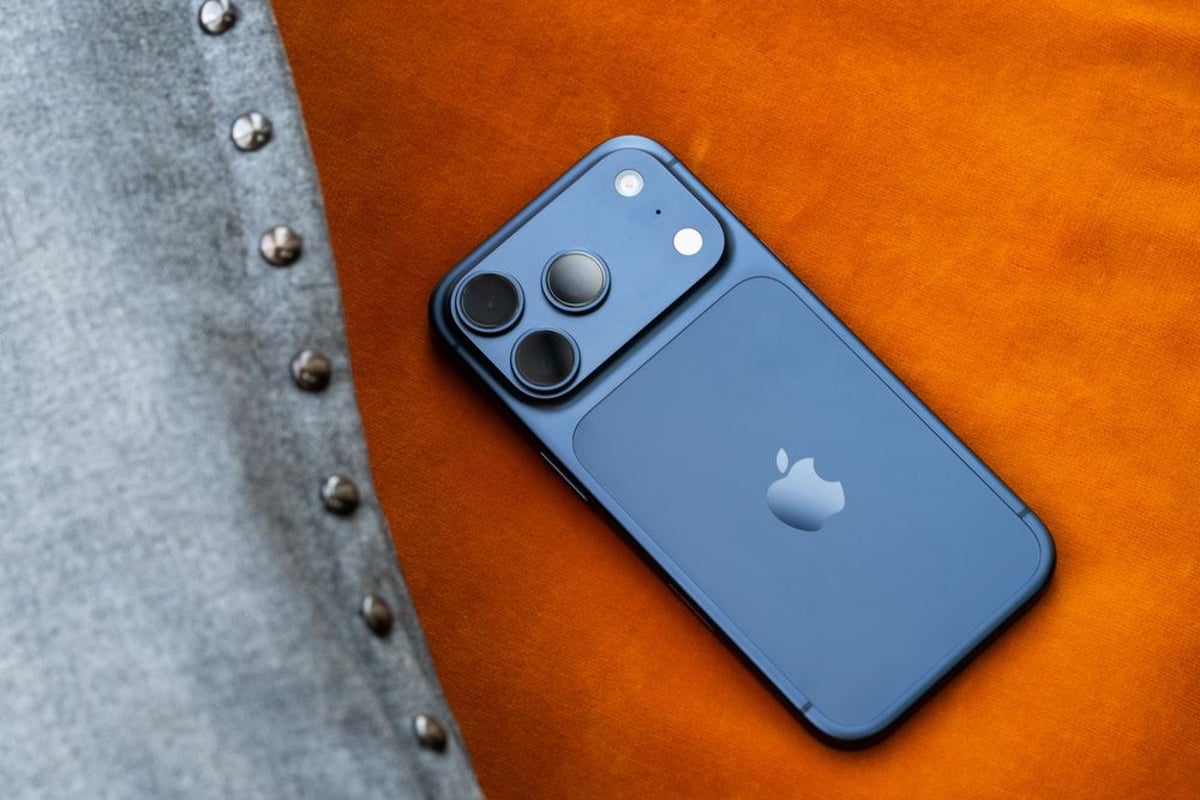
The iPhone 17 lineup deserves much of the credit. Apple's decision to democratize premium features paid off in a big way. The base iPhone 17 shipped with an always-on display and high refresh rate screen, specs previously locked behind the "Pro" paywall. That move apparently convinced upgraders who'd been sitting on older models that this was finally the year to jump. Even rumors that iPhone Air sales missed internal targets didn't dent the overall momentum.
What's more remarkable is what Apple achieved despite what it's still missing. The company's AI-upgraded Siri remains in beta, with key personalization features delayed beyond initial timelines. That hasn't stopped Google from becoming Apple's unlikely AI partner - the companies are working together on a custom Gemini implementation that'll power Siri's next evolution in the coming months.
Apple's Services business continued its march upward, notching an all-time revenue record with 14 percent year-over-year growth. That division - spanning Apple Music, iCloud storage, Apple TV+, and the App Store cut - now represents one of the company's most reliable growth engines. It's also incredibly profitable, with margins that make hardware look pedestrian by comparison.
But not everything sparkled in the earnings. Mac revenue declined from last year's comparable quarter, while the wearables category (Apple Watch, AirPods, and related accessories) also posted drops. Those declines hint at potential product refresh fatigue in categories where Apple hasn't delivered breakthrough updates recently.
The company's making aggressive moves to shore up its AI credentials. Financial Times reported Apple is acquiring Q.ai, an AI startup, for $2 billion. Details remain scarce, but patents filed by Q.ai point to technology that reads "facial skin micro movements" for hands-free communication - potentially a play for Apple's rumored AR glasses project. Separately, Bloomberg's Mark Gurman reports Apple plans to transform Siri into a full-fledged AI chatbot built directly into iOS and macOS, plus an AI-powered web search tool that could challenge Google's search dominance.
The timing couldn't be better for Apple. Microsoft, Google, and Meta have spent billions positioning themselves as AI-first companies, while Apple took heat for appearing slow to respond. These earnings suggest consumers aren't waiting for Apple to catch up before buying iPhones - they're buying anyway, trusting the AI features will arrive eventually.
Wall Street will now recalibrate expectations for the rest of fiscal 2026. If Apple can sustain this momentum through subsequent quarters, especially as AI features fully roll out, the company's market cap could push toward new heights. The bigger question is whether competitors can respond. Samsung just launched its Galaxy S26 lineup with on-device AI, while Chinese manufacturers are racing to match Apple's premium positioning.
For now, Apple's proven something crucial - that brand loyalty, ecosystem lock-in, and well-timed hardware refreshes still trump the AI arms race in consumers' minds. The iPhone remains the most profitable product in consumer electronics, and this quarter just reinforced that reality.
Apple's Q1 2026 blowout proves the iPhone's staying power in an era when every tech giant claims AI is the only thing that matters. With $85.3 billion in iPhone revenue alone and Services hitting all-time highs, the company's shown it can dominate without having the flashiest AI features on day one. But the real test comes next - as Apple rolls out its Google-powered Siri upgrades, launches AI chatbot functionality, and potentially debuts that $2 billion Q.ai acquisition, the pressure's on to prove this quarter wasn't just pent-up demand for hardware refreshes. Competitors aren't standing still, and Chinese rivals are snapping at Apple's heels in key markets. The record books are rewritten for now, but staying on top means Apple's AI gamble has to pay off before consumers start looking elsewhere.