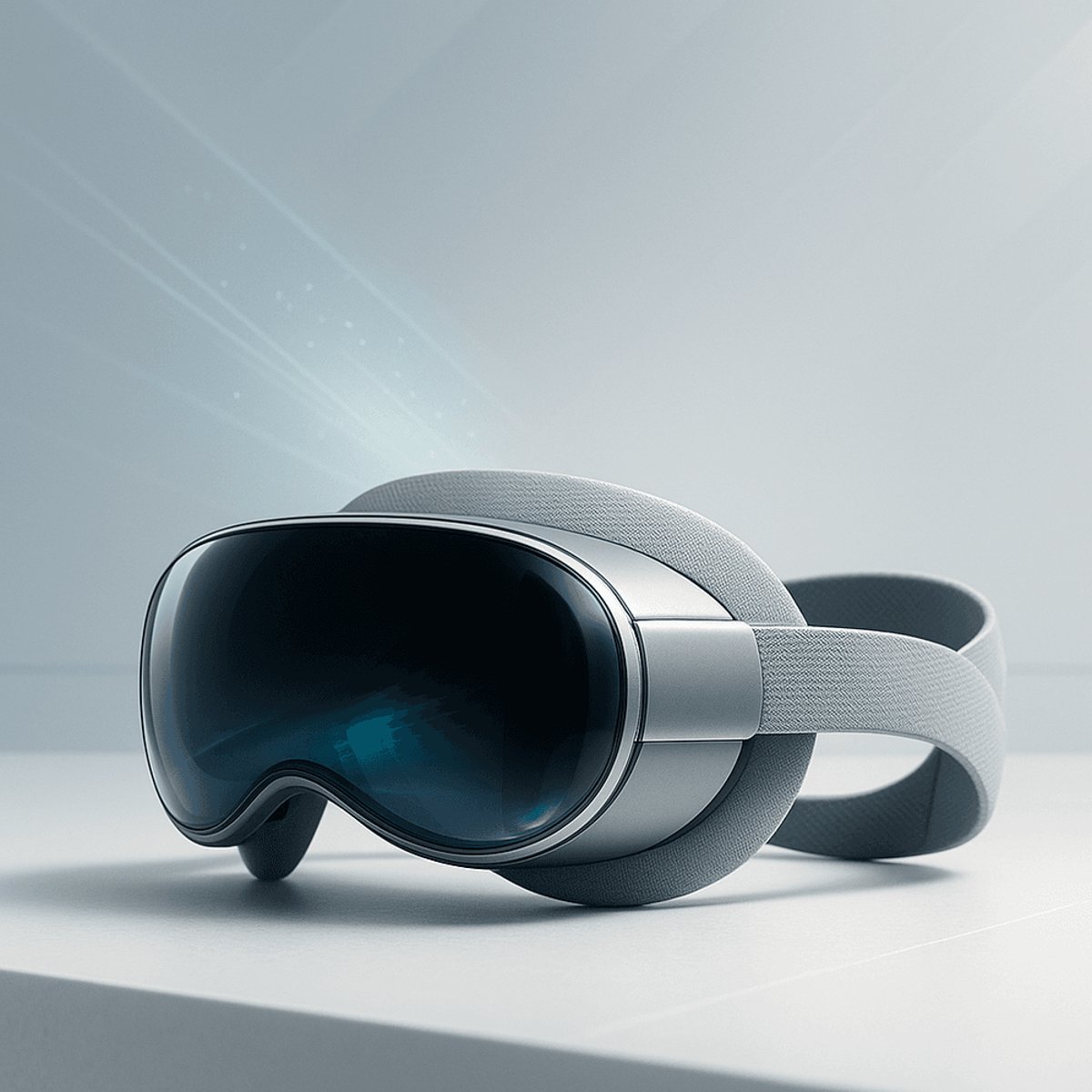
Apple just dropped a major upgrade to its Vision Pro headset, packing the new M5 chip that delivers 10% more pixels and up to 2.5 hours of battery life. The company's also addressing the biggest complaint about the original - comfort - with a redesigned Dual Knit Band that uses tungsten counterweights for better balance. Pre-orders start today at $3,499.
Apple is betting big on spatial computing's future with a surprisingly fast refresh of its Vision Pro headset. Just over a year after the original launch, the company's rolling out a significantly upgraded model powered by the M5 chip - the same silicon that's powering the latest MacBooks and iPads.
The M5 upgrade isn't just about raw performance. Apple says the new chip renders 10% more pixels on those custom micro-OLED displays, creating noticeably sharper text and more detailed visuals. The headset can now push refresh rates up to 120Hz when users are looking at their physical surroundings, reducing motion blur significantly. According to Apple's internal testing, battery life jumps to 2.5 hours for general use and three hours for video playback.
"With the breakthrough performance of M5, the latest Apple Vision Pro delivers faster performance, sharper details throughout the system, and even more battery life, setting a new standard for what's possible in spatial computing," Bob Borchers, Apple's vice president of Worldwide Product Marketing, told reporters during the announcement.
But the real story here might be comfort. The original Vision Pro faced criticism for being front-heavy and uncomfortable during extended use. Apple's response is the Dual Knit Band, a completely redesigned headstrap that uses tungsten inserts in the lower strap as counterweights. The band is 3D-knitted as a single piece, creating what the company calls a "dual-rib structure" that provides cushioning and breathability.
The timing feels strategic. While competitors like Meta continue pushing cheaper, lighter headsets, Apple is doubling down on premium hardware. The M5 chip brings AI performance improvements that enable new features in visionOS 26, including spatial scenes that use generative AI to add depth to photos and enhanced Personas for more natural FaceTime calls.
visionOS 26 also introduces spatial widgets that integrate into users' physical spaces and reappear each time they put the headset on. ChatGPT integration means users can access AI assistance directly within their spatial environment. The update supports 180-degree and 360-degree video playback from action cameras, plus an upcoming Apple Vision Pro app for iPad launching with iPadOS 26.1.
Gaming gets a boost with PlayStation VR2 Sense controller support, bringing six degrees of freedom motion tracking and haptic feedback to spatial games. New titles like Elu Legend and Spatial Rifts are launching alongside controller support, while iPad games like Where Winds Meet and Sniper Elite 4 join the platform.
The enterprise angle remains strong. Companies like CAE are using Vision Pro for pilot training simulations, while Porsche showrooms let customers visualize custom vehicles before delivery. UC San Diego Health is implementing Visage's 3D medical imaging system for improved patient care.
Apple is maintaining the $3,499 starting price despite the significant hardware upgrades. The Dual Knit Band sells separately for $99 and works with original Vision Pro units. Pre-orders begin today in nine countries including the US, UK, and Japan, with retail availability starting October 22.
The company's also expanding Apple Immersive content with live NBA Lakers games coming to users in the broadcast territory, plus new content from the Audi F1 Project, BBC, and Red Bull launching in coming months. The Apple TV app now hosts hundreds of 3D movies including recent releases like Superman and Wicked.
What's notable is Apple's confidence in pricing. While the VR market struggles with adoption, Apple is treating Vision Pro like a premium laptop - regular spec bumps at the same price point rather than racing to the bottom on cost.
Apple's Vision Pro refresh signals the company isn't backing down from its spatial computing vision despite mixed market reception. The M5 upgrade and comfort improvements address real user complaints while maintaining premium positioning. With enterprise adoption growing and content library expanding, Apple seems confident this technology will eventually find its mainstream moment - even if that means continuing to sell a $3,500 headset while competitors chase budget consumers.