Google just pushed another round of TikTok-inspired features to YouTube Shorts, signaling the platform's ongoing battle for short-form video dominance. The company announced Thursday it's swapping the thumbs-up button for a heart icon, introducing a "clear screen" mode that hides all UI elements, and adding 2x playback speed controls. The updates mark YouTube's latest attempt to close the feature gap with TikTok as competition for creator attention and ad dollars intensifies across short-form video platforms.
YouTube is making Shorts look more like TikTok than ever. The Google-owned platform rolled out a trio of interface updates Thursday that wouldn't look out of place on its biggest short-form video competitor.
The most visible change swaps YouTube's traditional thumbs-up button for a heart icon, mimicking the engagement mechanic TikTok popularized. According to the company's support post, the heart replaces the like button across all Shorts content, bringing the interaction model in line with what users experience on TikTok and Instagram Reels.
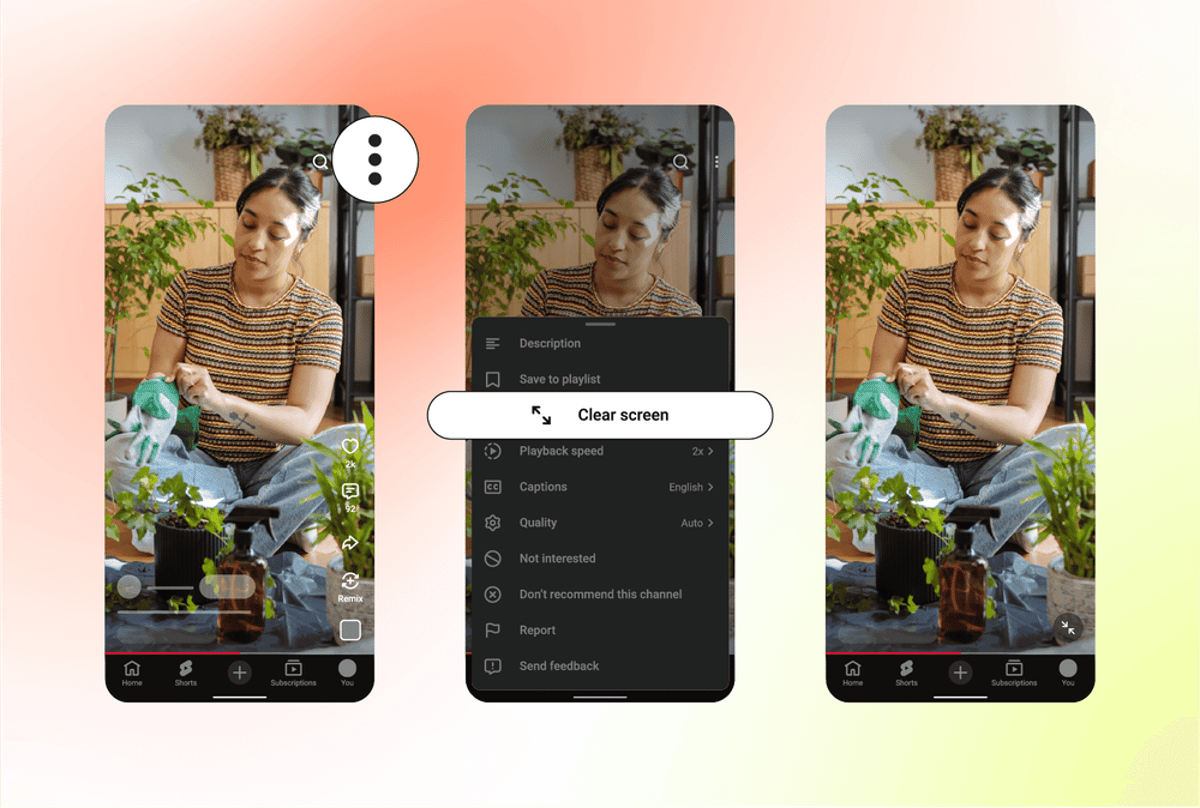
YouTube's also introducing a "clear screen" mode that removes all on-screen text, icons, and UI elements when activated. The feature lets viewers focus exclusively on video content without visual clutter - another page borrowed directly from TikTok's interface design philosophy. Users can toggle the mode on and off by tapping the screen, similar to how full-screen video players work across most platforms.
The third update adds variable playback speed to Shorts. Users can now speed up videos to 2x by pressing and holding the edge of their screen, lifting their finger to return to normal speed. Swiping down while holding locks the playback at 2x speed. It's a control mechanism that doesn't exist on TikTok, giving YouTube a minor differentiation point in an otherwise copycat release.
The timing isn't coincidental. Short-form video has become the fastest-growing content format across social platforms, with creators and advertisers following audience attention to wherever the engagement happens. YouTube Shorts crossed 70 billion daily views earlier this year, but TikTok still commands stronger engagement metrics and creator loyalty in key demographics.
Google's been methodically reverse-engineering TikTok's interface since launching Shorts in 2020. The platform started with the vertical video format, then added remix features, green screen effects, and audio libraries. Each update chips away at the friction of switching between platforms for creators who cross-post content.
But interface parity doesn't guarantee audience migration. TikTok's recommendation algorithm and creator community remain its strongest moats, even as competitors match features. YouTube's advantage lies in its existing creator base and established monetization infrastructure - Shorts creators can earn through the YouTube Partner Program, something TikTok's still building out in most markets.
The heart icon switch also signals YouTube's willingness to abandon its own design language for borrowed familiarity. The thumbs-up has been YouTube's signature engagement mechanic since 2005, appearing across regular videos, comments, and community posts. Replacing it on Shorts acknowledges that users trained on TikTok expect hearts, not thumbs.
What's interesting is what YouTube didn't copy. The platform hasn't replicated TikTok's duet layout, stitch mechanics, or live streaming gifts system. Those features drive significant engagement and revenue on TikTok but would require deeper integration with YouTube's existing infrastructure.
The updates roll out globally starting this week across iOS and Android. No word yet on whether the changes extend to YouTube's desktop experience or remain mobile-only, though Shorts consumption skews heavily toward phones.
For creators, the interface changes mean adjusting calls-to-action in content. "Smash that like button" doesn't hit the same when it's a heart. Expect creator education content explaining the new gestures to flood the platform as users discover the speed controls and clear screen mode.
The bigger question is whether feature parity translates to competitive advantage. Instagram copied Stories from Snapchat and won. But Reels hasn't overtaken TikTok despite Meta's massive distribution advantage. YouTube Shorts faces the same challenge - matching features is the baseline, not the victory condition.
YouTube's latest Shorts updates confirm what's been obvious for years - the platform's treating TikTok as a product roadmap rather than a competitor. The heart icon, clear screen mode, and speed controls bring feature parity but don't address the fundamental challenge: TikTok owns the cultural moment in short-form video. Google's betting that interface familiarity plus superior creator monetization eventually tips the scales. Whether that's enough depends on how long creators and audiences tolerate cross-posting to multiple platforms before consolidating around one. For now, the feature arms race continues, with YouTube playing catch-up one UI element at a time.