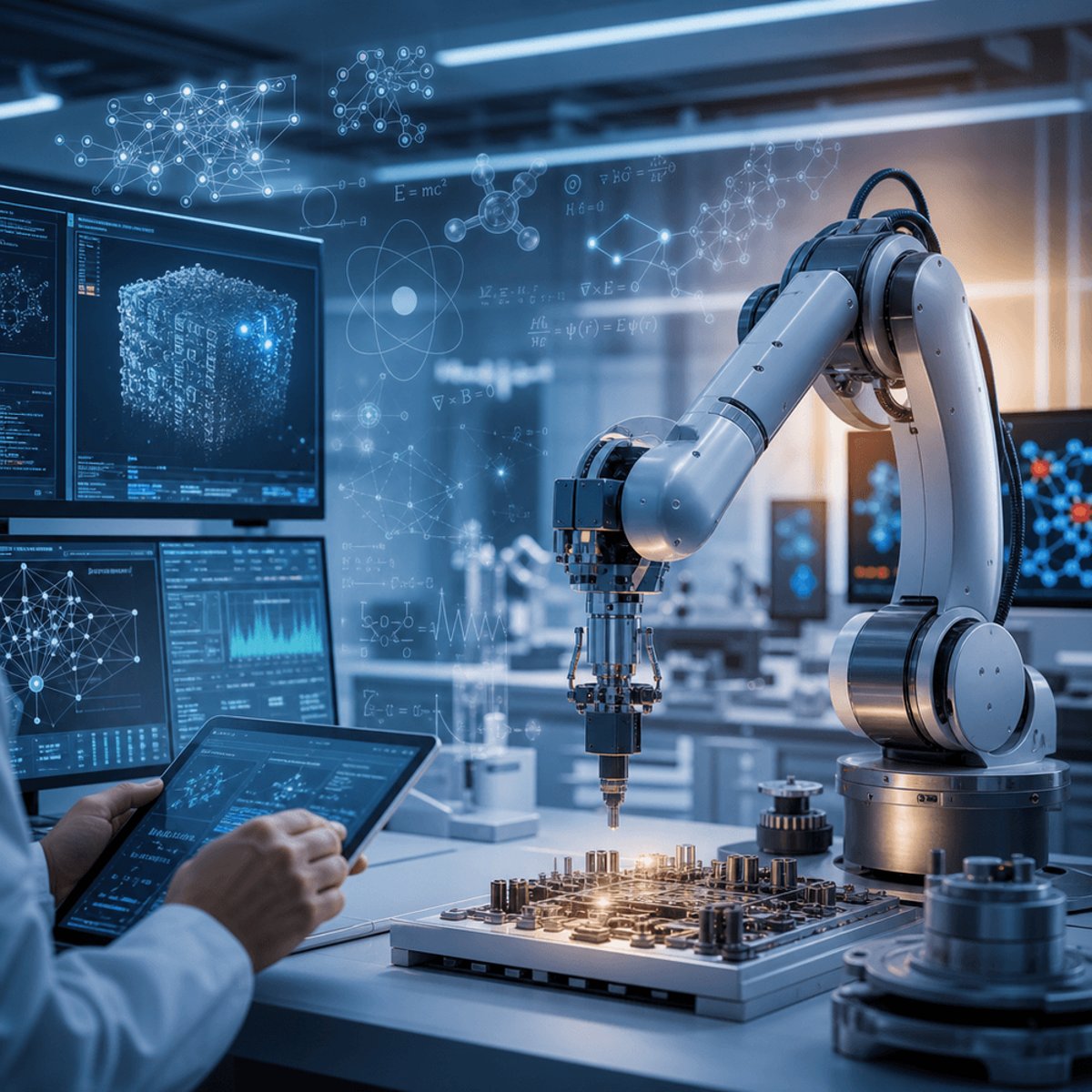
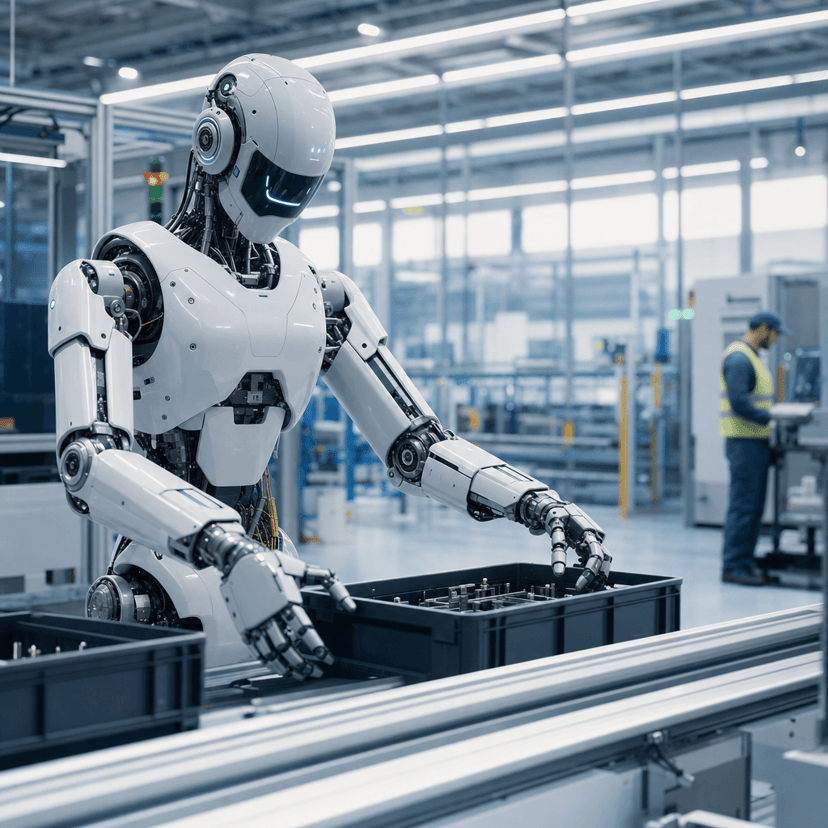
Jeff Bezos is making his biggest bet yet on AI that operates in the physical world. Prometheus, a stealth startup building what it calls an 'artificial general engineer,' just closed a massive $12 billion funding round that values the company at $41 billion - putting it in the same league as established AI giants. The company's ambitious mission: automate complex engineering and drug design using AI systems that understand and manipulate the physical world, not just digital information.
Prometheus just pulled off one of the largest AI funding rounds in history, and it's not building another chatbot. The Jeff Bezos-backed startup raised $12 billion in fresh capital at a staggering $41 billion valuation, according to TechCrunch. While most AI companies chase digital automation, Prometheus is going after something far more ambitious: teaching machines to engineer in the physical world.
The company describes its goal as creating an 'artificial general engineer' - AI systems capable of tackling heavy engineering challenges and drug design with the same versatility a human engineer brings to complex problems. It's a significant departure from the language models and image generators dominating today's AI landscape. Instead of processing text or pixels, Prometheus is building AI that understands physics, materials science, and molecular interactions.
Bezos's involvement signals confidence in a new frontier for AI applications. The Amazon founder has increasingly focused his investment dollars on moonshot technologies since stepping back from day-to-day operations at the e-commerce giant. Physical AI represents one of the industry's most challenging frontiers - bridging the gap between digital intelligence and real-world constraints like gravity, thermodynamics, and material properties.
The $41 billion valuation puts Prometheus in rarefied air for a startup. That's higher than most publicly traded engineering firms and rivals the valuations of established AI players. For context, OpenAI was valued at around $86 billion in its most recent funding round, while Anthropic reached roughly $18 billion. Prometheus is now firmly in the top tier, despite operating largely in stealth mode.
What makes physical AI so compelling - and so difficult - is the stakes involved. Digital AI can be rolled back with a software update. Physical AI operating heavy machinery or designing pharmaceuticals needs to get things right the first time. The engineering challenges span robotics, simulation, materials science, and safety systems. A mistake in drug design or structural engineering doesn't just crash a program; it can have real-world consequences.
The pharmaceutical angle is particularly intriguing. Drug design remains one of the most expensive, time-consuming processes in science. It typically takes over a decade and costs billions to bring a new drug to market. AI systems that can predict molecular interactions, simulate biological responses, and optimize compound structures could compress that timeline dramatically. Several startups are already exploring this space, but none with the capital firepower Prometheus now commands.
On the heavy engineering side, the potential applications span infrastructure, aerospace, automotive design, and manufacturing. Traditional engineering relies heavily on iterative prototyping and testing - expensive, slow processes that AI could potentially streamline. An 'artificial general engineer' that can run thousands of simulations, optimize designs for multiple constraints simultaneously, and learn from each iteration could revolutionize how we build everything from bridges to spacecraft.
The funding environment for AI startups has been frothy, but $12 billion in a single round is exceptional even by 2026 standards. It suggests Prometheus convinced investors it's not just incrementally improving existing processes, but potentially replacing entire categories of human expertise. That's the promise - and the controversy - surrounding artificial general intelligence applied to specialized domains.
Competitors are already circling the space. Google DeepMind has explored protein folding and materials discovery. Microsoft is investing heavily in AI for scientific research. But Prometheus appears to be taking a more unified approach, building a general-purpose engineering AI rather than point solutions for specific problems.
The capital gives Prometheus runway to tackle problems that require massive computational resources and years of development. Training AI systems to understand physical laws and engineering principles at a deep level isn't cheap. The company will need to build or access enormous simulation capabilities, gather vast datasets of engineering knowledge, and attract top talent from both AI research and traditional engineering disciplines.
What remains unclear is Prometheus's go-to-market strategy. Will it license its AI systems to existing engineering firms and pharmaceutical companies? Build its own products and services? Or pursue some hybrid model? At a $41 billion valuation, investors are betting on a massive addressable market - likely spanning multiple industries rather than a single vertical.
The timing is notable too. As digital AI approaches certain limitations - how much better can language models really get at writing emails? - investors are hunting for the next frontier. Physical AI, embodied AI, and AI for scientific discovery represent areas where we're still in the early innings. Prometheus is positioning itself at the center of that shift.
Prometheus's $12 billion raise marks a turning point in AI investment, shifting focus from digital automation to physical world applications. With Jeff Bezos's backing and a valuation that rivals established players, the startup is betting it can build AI systems that don't just process information but actually engineer solutions to complex real-world problems. Whether it can deliver on the promise of an 'artificial general engineer' remains to be seen, but the capital and ambition are now in place. For industries from pharmaceuticals to heavy engineering, the implications could be transformative - or just another case of AI hype outpacing reality. The next few years will tell which.