Voodoo Scientific just cracked the code on what makes alcohol burn - and it's not ethanol. The biotech startup's enzyme technology removes nine specific fermentation compounds that trigger pain receptors, potentially transforming how spirits are made. With distilleries worldwide testing their Viriato product and a fresh US patent in hand, they're betting the industry is ready to ditch chemical additives for a cleaner approach.
The burning question that launched a biotech revolution started during Covid lockdown when husband-wife team Martin Enriquez and Joana Montenegro wondered why alcohol burns your throat. What they discovered wasn't just academic curiosity - it was the foundation for a technology that could reshape the spirits industry.
Turns out, ethanol isn't the culprit. After months of research guided by UCSF's David Julius, the Voodoo Scientific founders identified TRPA1, a pain receptor that gets triggered by nine specific compounds created during fermentation. These aren't ethanol molecules but oxidized byproducts expelled by aging yeast cells during the brewing process.
"Nobody could describe the compounds that make that harsh, painful bite," Enriquez told Wired. "No one could really identify what it is that attacks you and creates pain."
Montenegro, a veteran food scientist from General Mills and Land O'Lakes, explains the receptor's unique challenge: "This receptor has a very unique property called reversible bonding. It'll bond to a thing, it'll give you a jolt, and it'll let it go - and then it'll bond to another one." Traditional masking agents don't work because the receptor keeps firing with each sip.
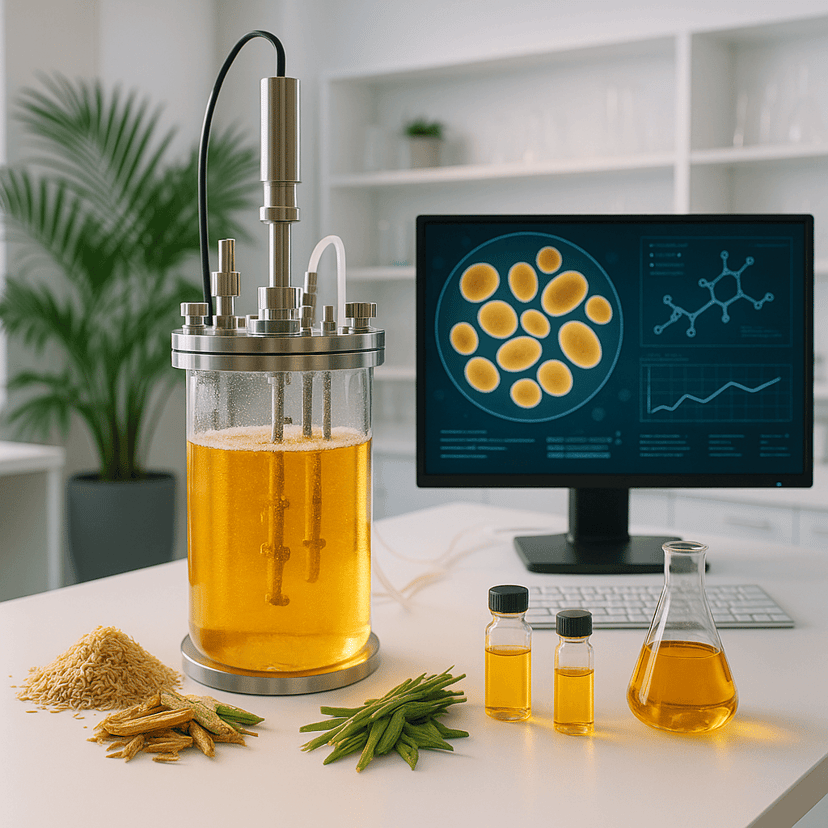
The breakthrough came through enzyme technology. The team identified dehydrogenase family enzymes that naturally convert these offensive compounds into neutral organic acids during fermentation. "The beauty of nature is, when you have an irritant, nature tends to have a way of detoxifying it," Montenegro says. The enzymes scavenge for the nine target compounds and neutralize them before distillation.
Voodoo Scientific received US patent #12359150 in July 2025 for their "Enzymatic smoothing of beverages" method. The patent covers using any broad class of enzymes during fermentation to reduce oral pain response, not just their specific enzyme blend.
Their product Viriato - named after a Portuguese warrior - is being tested by distillery R&D teams worldwide. Pete Barger, CEO of Southern Distilling in North Carolina, has been working with Voodoo for five years and sees game-changing potential. "If you can have a better, cleaner distillate going into a barrel, we don't have to ask that barrel to atone for the sins of production," he says.
Independent testing by the Beverage Testing Institute in January 2025 showed dramatic results. Tasters noted treated samples were not only less harsh but transformed - one moonshine sample "tasted more like rum," according to BTI president Jerald O'Kennard. "It has this transformational aspect. It's almost like it could create a new product category."
But the technology raises concerns among medical professionals. Nicole Avena, a neuroscience researcher at Mount Sinai School of Medicine, warns: "This is basically removing the biological barrier to overconsuming alcohol. People could definitely run a risk of becoming highly intoxicated rather quickly."
Enriquez and Montenegro counter that distilleries already mask harshness with sugar and glycerin additives. Their enzyme approach eliminates the need for these adulterants entirely. "Consumers are becoming increasingly concerned with the fact that there are all these secret things that are getting added to their liquid that aren't on a label," Montenegro notes.
Wired's Christopher Null tested Viriato-treated vodka and moonshine samples, finding the technology didn't just remove burn but revealed underlying flavors previously masked by harsh compounds. Sugar additions became easily detectable, as did the grain base in vodka samples.
The couple estimates they're one to two years from commercial-scale production. If Southern Distilling moves forward as planned, Barger says it's "all or nothing" - they'd integrate Viriato across their entire production line.
For an industry built on tradition, enzyme-smoothed spirits represent a fundamental shift. Instead of aging whiskey 15 years or dumping in chemical additives to achieve smoothness, distillers could eliminate harshness at the molecular level during fermentation itself.
Voodoo Scientific's enzyme technology represents more than just smoother spirits - it's a potential paradigm shift toward cleaner, less adulterated alcohol production. With distilleries worldwide testing Viriato and early results showing dramatic improvements, the company could eliminate the industry's reliance on chemical masking agents. But as medical professionals warn about removing natural consumption barriers, the real test will be whether consumers and regulators embrace this biotechnology revolution in their glass.