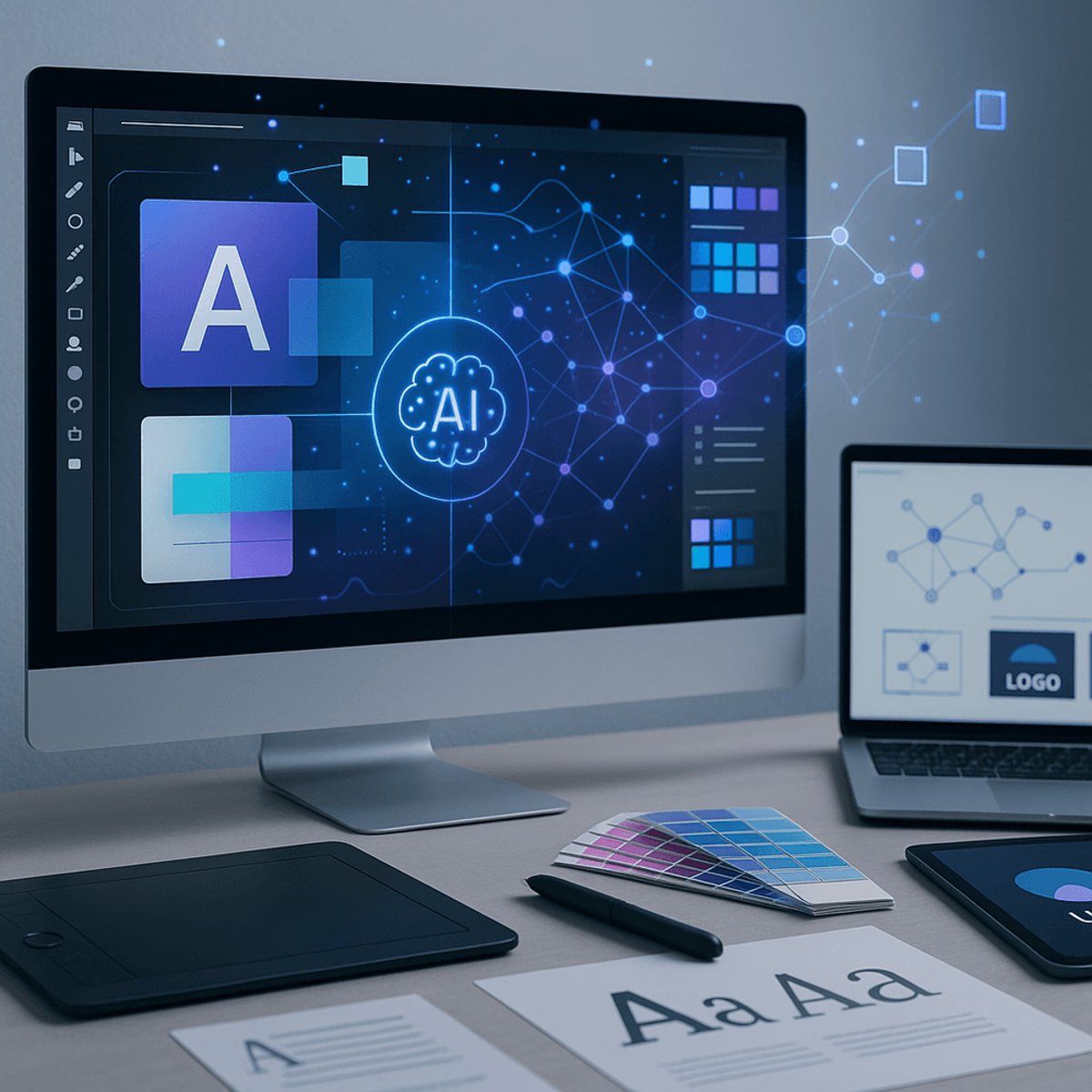
Canva just dropped its biggest AI play yet - a proprietary foundational design model that generates editable, layered designs instead of flat images. The Australian design giant also made its pro tool Affinity permanently free and rolled out email design tools, Forms, and expanded AI capabilities across its platform. This positions Canva to challenge Adobe's creative dominance with a fully integrated AI-first design ecosystem.
Canva just rewrote the rules of AI design generation. The company's new proprietary foundational model doesn't just spit out flat images like other AI tools - it creates designs with editable layers and objects that designers can actually work with. This is a massive shift from the prompt-heavy approach that's dominated AI design tools until now.
"We started by creating flat images with diffusion models. Omni models have taken that a step further, where you're able to edit those flat images with a lot of sophistication through prompting. But the tools have made you prompt your way to the final result, which, for a visual medium, is challenging," Canva's global head of product, Robert Kawalsky, told TechCrunch. "What we've found is that where people want to be is the ability to really marry this idea of starting with a prompt and getting far, but also being able to iterate directly themselves."
The timing couldn't be more strategic. While competitors like Adobe focus on subscription-heavy creative suites, Canva just made a bold counter-move by making its entire Affinity toolkit permanently free. The pro design suite, which Canva acquired last year to better compete with Adobe's creative tools, now costs users nothing - a direct shot at Adobe's Creative Cloud pricing model.
But it's not just about free tools. Canva's redesigning the entire Affinity interface to merge vector, pixel, and layout capabilities under one unified experience. Designers can now create objects in the professional tool and seamlessly move them into Canva's broader ecosystem. The integration goes deeper with Canva AI now generating images and designs directly within Affinity.
The company's AI assistant, launched earlier this year with a chat-like interface for generating media, is expanding everywhere. Users can now access it across design and elements tabs, mention it in comments for collaborative projects, and use it to generate 3D objects or copy art styles from existing designs.
Canva's also making aggressive moves into territory dominated by other platforms. Its new Forms feature takes direct aim at Google Forms, while email design capabilities challenge dedicated email marketing tools. The company's connecting its spreadsheet product with its coding tool, letting users create data-driven widgets for recurring insights.
Perhaps most telling is Canva Grow, the company's new full-stack marketing platform powered by its MagicBrief acquisition earlier this year. This isn't just about design creation anymore - it's about the entire marketing workflow, from AI-generated assets to analytics and direct publishing to platforms like Meta.
The foundational model represents a fundamental shift in how AI handles design. Instead of forcing users to prompt their way to perfect results, Canva's approach gives designers AI-generated starting points they can actually edit and refine using traditional design tools. This bridges the gap between AI efficiency and human creativity in ways that flat image generators simply can't match.
For Adobe, this creates a serious competitive pressure point. While Creative Cloud users pay hundreds annually for professional tools, Canva's offering comparable functionality for free, backed by AI that understands design structure rather than just visual output. The Australian company's bet is that democratizing professional design tools while adding superior AI capabilities will pull users away from Adobe's ecosystem.
The integration strategy shows Canva thinking beyond individual tools toward a unified creative platform. Whether you're designing social posts, building presentations, creating forms, or running marketing campaigns, everything flows through the same AI-powered ecosystem with consistent branding and shared assets.
Canva's latest moves signal an all-out war for the creative software market. By combining a proprietary AI model that generates truly editable designs with permanently free professional tools, the company is betting it can pull users away from Adobe's expensive ecosystem. The real test will be whether designers embrace this AI-first approach to creation, or if the professional market still demands the deep feature sets that traditional creative suites provide. Either way, Adobe now faces its most serious competitive threat in years.