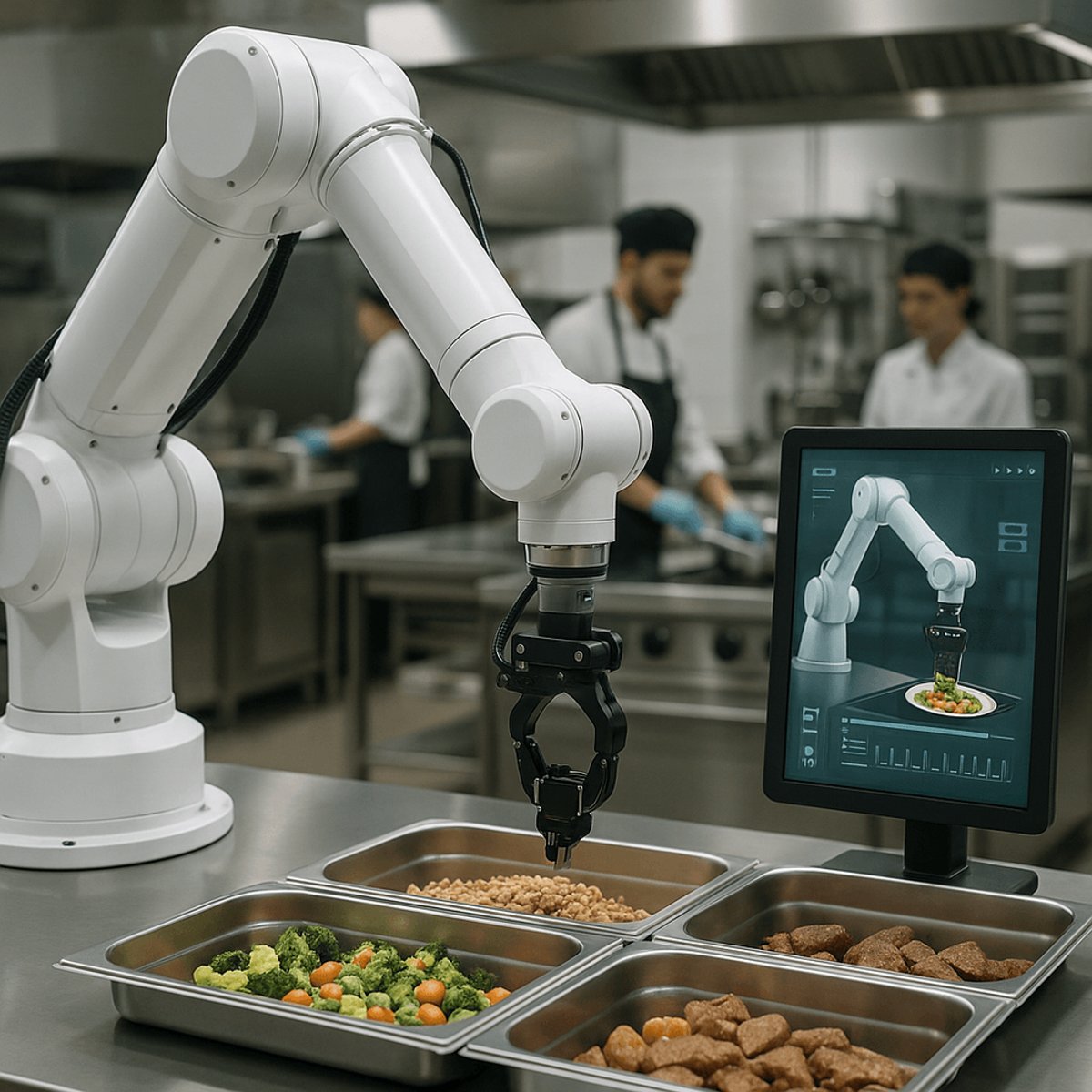
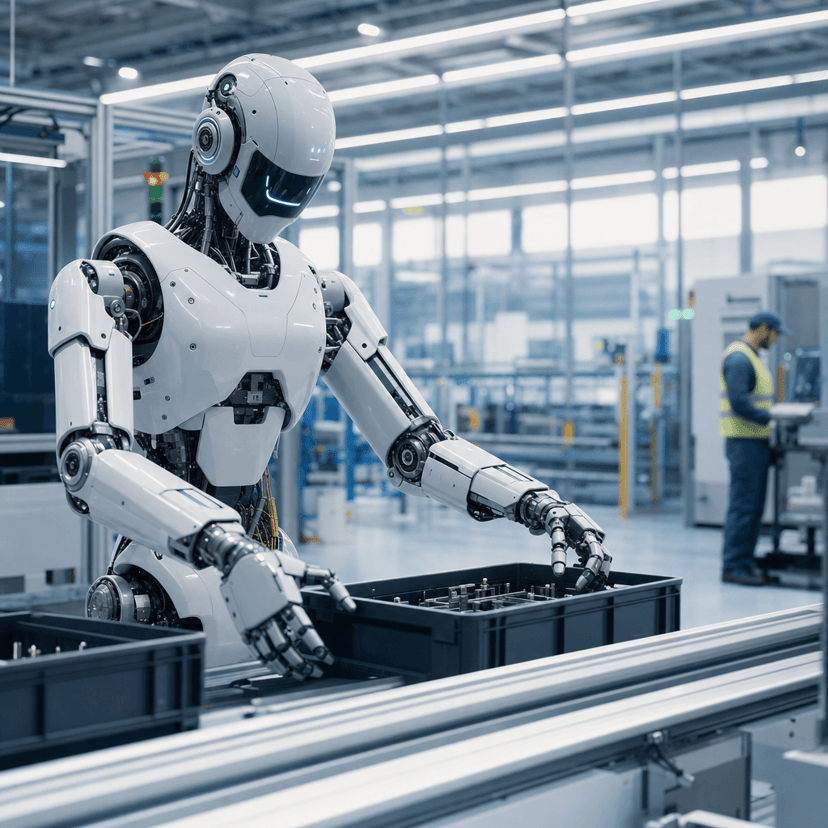
While the kitchen robotics graveyard fills with failed startups, Chef Robotics is beating the odds. The San Francisco company deploying AI-guided robotic arms for commercial food production says it's not just surviving but thriving, and now it's planning to expand beyond its current customer base. In an industry where high-profile failures from Zume Pizza to Spyce have become cautionary tales, Chef Robotics' continued growth signals that practical, focused automation might finally be cracking the code on food production at scale.
Chef Robotics is charting a different course in the treacherous landscape of food automation. While robotics graveyard fills with ambitious names like Zume Pizza, Spyce, and Creator, the San Francisco startup says it's found the recipe for success: focusing on the unglamorous but essential work of commercial food assembly rather than flashy consumer-facing restaurants.
The company deploys AI-powered robotic arms that handle repetitive plating and portioning tasks in commercial kitchens and food production facilities. These aren't the burger-flipping showpieces that captured headlines before flaming out. Instead, they're working behind the scenes at meal prep companies, contract food manufacturers, and large-scale catering operations.
"We're seeing real traction because we solve an actual problem," the company indicates in recent statements to TechCrunch. That problem is the chronic labor shortage plaguing commercial food production, where repetitive portioning and assembly tasks are both physically demanding and difficult to staff.
Chef Robotics' system uses machine learning models trained on thousands of food handling scenarios to adapt to different ingredients, textures, and portion requirements. The AI can recognize when it's scooping sticky rice versus leafy greens and adjust grip strength and movement patterns accordingly. This adaptability sets it apart from earlier generations of food robots that struggled with the inherent variability of working with organic materials.
The timing of Chef Robotics' expansion plans coincides with growing demand from food delivery platforms and ghost kitchen operators. Companies like DoorDash have invested heavily in delivery infrastructure, but the kitchen side of the equation remains a bottleneck. Automated food assembly could help scale production to meet delivery demand without proportionally scaling headcount.
What killed previous food robotics ventures was often a mismatch between ambitious consumer-facing concepts and practical execution. Zume Pizza raised hundreds of millions to put pizza-making robots in delivery trucks, but the complexity proved insurmountable. Spyce built automated restaurants with celebrity chef Daniel Boulud's backing, only to be acquired by Sweetgreen and quietly shut down. Creator's burger-making robot drew crowds in San Francisco before closing permanently.
Chef Robotics learned from these failures. Rather than trying to replace chefs or reimagine restaurants, it targets specific, repetitive tasks in existing commercial workflows. The robots don't need to master the full complexity of cooking - they just need to consistently portion ingredients and assemble components that human cooks have already prepared.
The broader array of customers Chef Robotics now seeks includes food manufacturers producing ready-to-eat meals for retail, institutional cafeterias, and potentially even restaurants handling high-volume prep work. The company's robotics-as-a-service model reduces upfront costs for customers, charging based on usage rather than requiring massive capital investments in equipment.
Industry analysts have been skeptical of food robotics for years, burned by repeated failures and overhyped promises. But the labor economics have shifted dramatically. Commercial kitchens face sustained worker shortages and rising wages, making automation more economically viable than when earlier ventures launched. The technology has also matured - computer vision and machine learning models can now handle the variability that stumped previous generations of robots.
The company's AI approach continuously improves as robots encounter new foods and scenarios. Each robotic arm feeds data back to central models, creating a growing knowledge base of how to handle different ingredients. This network effect means the system gets smarter with scale, unlike traditional industrial robots programmed for single tasks.
Chef Robotics' survival and expansion plans suggest the food automation market may finally be reaching practical viability. The key difference appears to be focusing on B2B applications where consistency and efficiency matter more than novelty, and where customers judge success by labor costs saved rather than Instagram-worthy innovation.
Chef Robotics' expansion plans signal a potential turning point for food automation. By avoiding the mistakes that buried competitors and focusing on practical B2B applications rather than consumer spectacle, the company seems to have found sustainable product-market fit. Whether this approach can scale to the broader customer base it's targeting remains to be seen, but for now, Chef Robotics stands as proof that food robotics isn't dead - it just needed to get out of the spotlight and into the production line where the real work happens. Watch whether traditional food manufacturers and institutional kitchens adopt the technology at scale, which would validate the thesis that automation's time in commercial food has finally arrived.