The cybersecurity threat from China just got more personal. As the AI race between Washington and Beijing hits a fever pitch, Chinese state-linked actors are expanding their playbook beyond stealing code and models—they're now targeting startup employees, investors, and entire supply chains, according to new warnings from security analysts. The shift marks a dangerous escalation in what's becoming the defining technology conflict of the decade.
The warning signs have been building for months, but security researchers are now sounding the alarm: Chinese cyber espionage campaigns targeting the U.S. artificial intelligence sector have evolved into something far more sophisticated than garden-variety intellectual property theft.
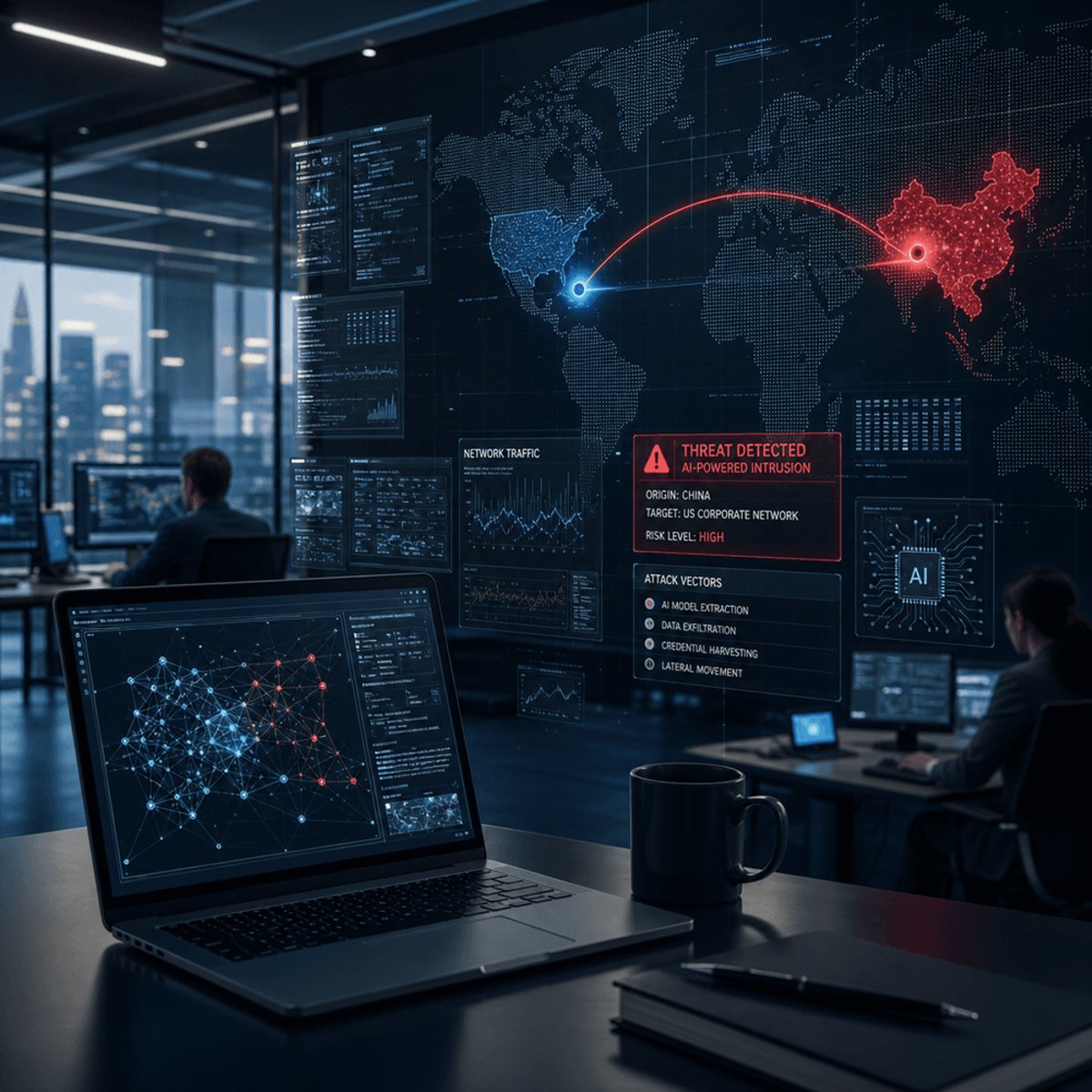
Cyberattacks attributed to China-linked entities are spiking across the AI ecosystem, but what's catching analysts off guard isn't the volume—it's the scope. According to cybersecurity experts tracking the campaigns, threat actors are no longer just probing OpenAI or Microsoft for model weights and training data. They're targeting startup founders, venture capital partners, research scientists, and even the semiconductor supply chain that powers AI development.
"We're seeing a fundamental shift in tradecraft," one security analyst told industry observers, noting that the attacks now aim to build comprehensive intelligence pictures of entire AI companies rather than simply exfiltrating specific technologies. The campaigns reportedly combine traditional network intrusions with social engineering, insider recruitment attempts, and persistent surveillance of key personnel.
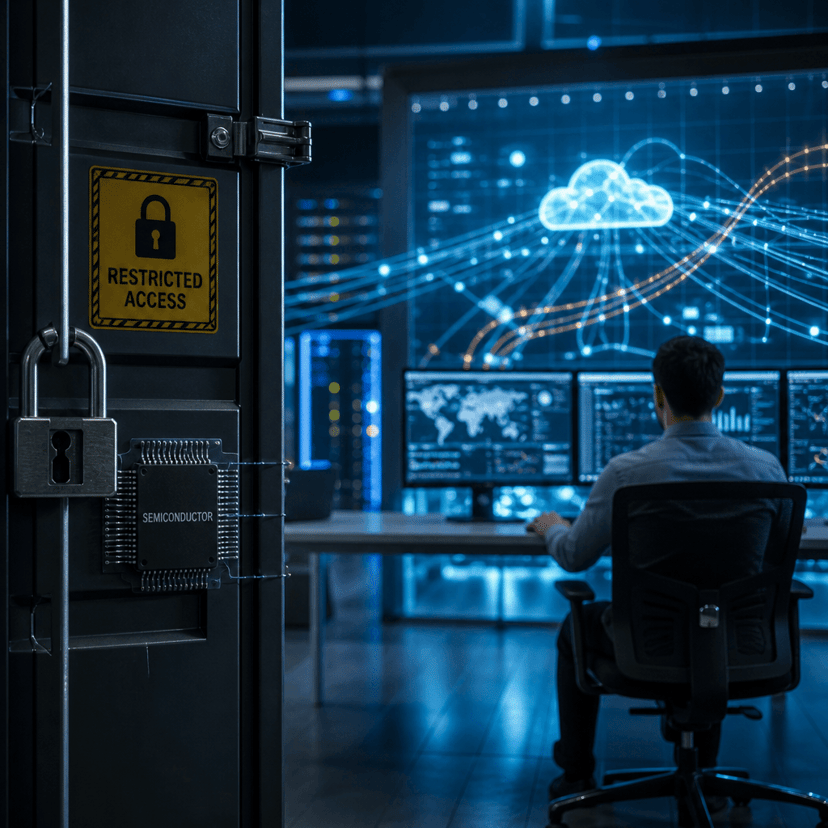
The timing couldn't be more significant. As Washington tightens export controls on advanced chips to China and Beijing pours hundreds of billions into domestic AI development, the technological cold war is spilling into corporate networks and startup offices across Silicon Valley and beyond. Chinese entities, facing growing restrictions on accessing cutting-edge AI chips from Nvidia and other U.S. manufacturers, appear to be compensating through aggressive intelligence gathering.
AI startups present particularly attractive targets. Unlike tech giants with mature security operations, early-stage companies often lack robust defenses even as they develop breakthrough technologies. A Series A startup working on novel transformer architectures or multimodal AI systems might have world-changing IP but only a skeleton IT team. Security experts warn this gap is being systematically exploited.
The attacks reportedly employ a mix of techniques. Spear-phishing campaigns target researchers with fake collaboration offers or conference invitations. Supply chain compromises hit vendors and service providers that startups rely on. And in some cases, analysts have observed what appear to be long-term efforts to cultivate relationships with people who have access to sensitive AI research or business intelligence.
Venture capital firms aren't immune either. Investors evaluating AI deals often review confidential technical documentation, business plans, and strategic roadmaps from multiple startups—making them high-value targets for adversaries seeking a panoramic view of where U.S. AI innovation is headed. Security researchers note that compromising a single VC partner's email account could yield intelligence on dozens of AI companies simultaneously.
The insider threat dimension adds another layer of complexity. While details remain limited, analysts indicate that some campaigns show hallmarks of recruitment operations aimed at individuals with access to sensitive AI systems or data. This isn't just hacking—it's human intelligence work adapted for the AI age.
For Google, Meta, and other tech giants, the threat is serious but manageable given their security resources. For a 20-person AI startup burning through a seed round, it's potentially existential. And that asymmetry may be precisely the point. By forcing U.S. AI companies to divert resources toward security and counterintelligence, Chinese campaigns could slow American innovation even without successfully stealing every secret they target.
The U.S. government has been escalating its response. Export controls on AI chips keep tightening, and intelligence agencies are increasingly briefing tech companies on specific threats. But the reactive nature of these efforts highlights a strategic challenge: in a competition moving at the speed of AI development, defense always lags offense.
What makes this moment particularly precarious is the concentration of AI talent and investment in the United States. American companies and researchers have pioneered most breakthrough AI technologies over the past decade, from large language models to diffusion-based image generation. That lead isn't guaranteed to last, and adversaries racing to close the gap have every incentive to use any means available—legal or otherwise.
Security experts emphasize that awareness is the first step. Startups need to treat security as a core function from day one, not an afterthought. VCs evaluating deals should factor in cybersecurity posture alongside market size and technical merit. And anyone working on frontier AI systems needs to operate with the assumption that determined adversaries are watching.
The AI race with China was always going to be defining. It's now clear it'll also be fought one phishing email, one compromised laptop, and one recruited insider at a time.
The expansion of China-linked cyber operations beyond pure technology theft signals that the U.S.-China AI competition has entered a more complex and dangerous phase. For American AI companies—especially startups racing to build breakthrough technologies on shoestring budgets—the message is clear: innovation alone won't be enough. Security, operational discipline, and counterintelligence awareness are now as critical as technical prowess. As billions of dollars and national strategic interests flow into AI development, the sector should expect adversarial pressure to only intensify. The question isn't whether Chinese espionage campaigns will continue targeting U.S. AI—it's whether American companies and policymakers can adapt their defenses fast enough to protect what may be the most consequential technology of the century.