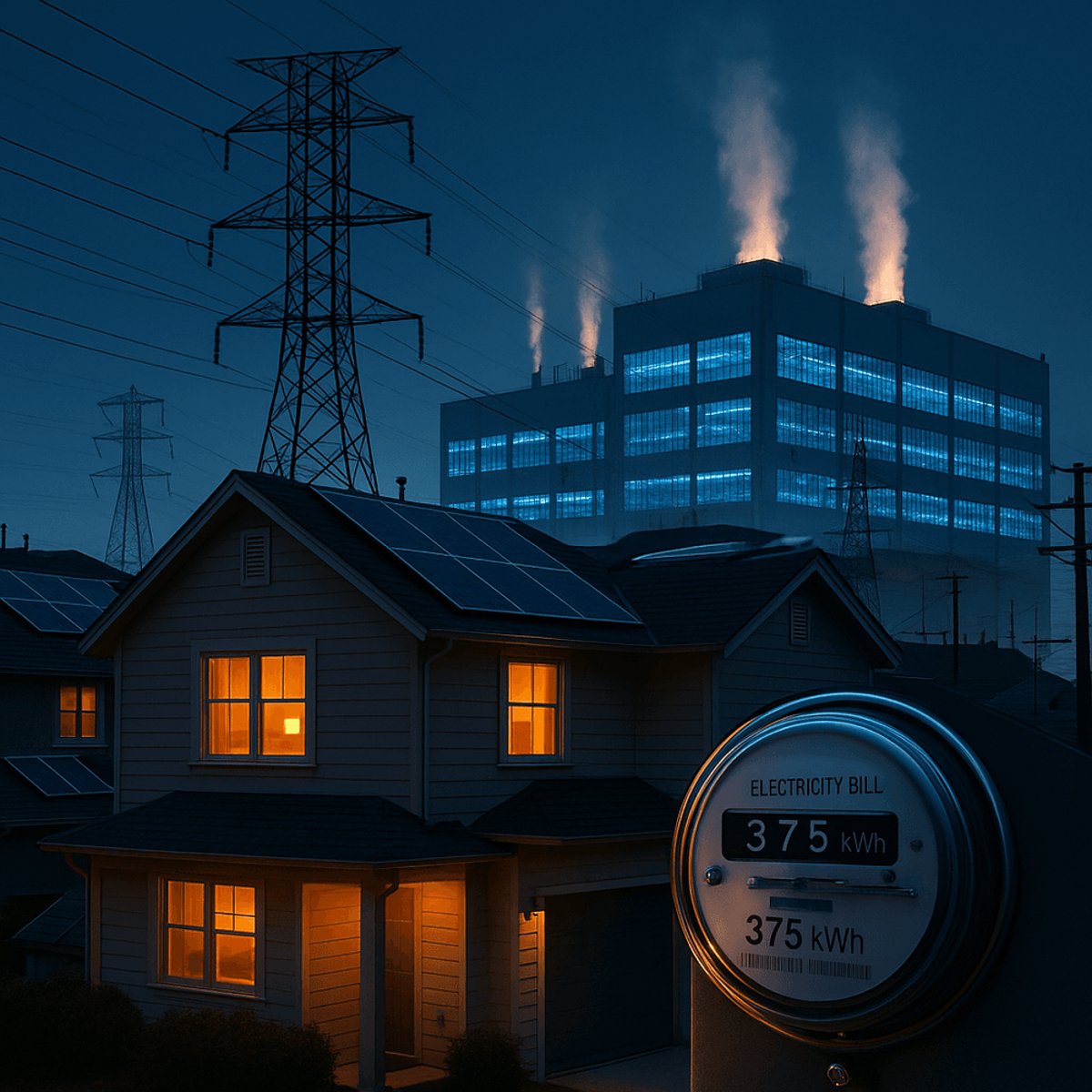
The AI revolution is hitting consumers where it hurts most - their wallets. A new Sunrun survey reveals 80% of Americans fear data centers will drive up their electricity bills, setting the stage for a potential public backlash against the industry's massive power appetite. With data centers poised to consume up to 12% of U.S. electricity by 2028, the tension between AI progress and household budgets is reaching a breaking point.
The numbers tell a stark story that's about to collide with American household budgets. Data centers have quietly doubled their share of U.S. electricity consumption since 2018, now gulping down 4% of everything the grid produces. By 2028, Lawrence Berkeley National Laboratory forecasts that figure could triple to 12% as AI workloads explode across the industry.
The Sunrun survey commissioned by the solar installer captures what utility executives have been whispering about for months - consumers are waking up to the connection between Silicon Valley's AI dreams and their monthly electric bills. The 80% concern rate reflects a growing awareness that someone has to pay for all those server farms humming 24/7 to power ChatGPT queries and image generators.
But the supply side tells an even more troubling story. While tech giants like Amazon, Google, and Microsoft have been inking massive solar deals to power their data centers, the broader energy infrastructure isn't keeping pace with skyrocketing demand. Commercial electricity use has surged 2.6% annually over the past five years while residential consumption crawled ahead at just 0.7%, according to U.S. Energy Information Administration data.
The crunch gets worse when you look at what's actually available to fill the gap. Natural gas, the go-to backup for data center operators, faces a perfect storm of constraints. Most new production is getting shipped overseas as LNG exports consumed 140% more gas between 2019 and 2024, while domestic electricity generators only increased consumption by 20%.
Even if utilities wanted to build more gas plants, they're looking at seven-year wait times for turbines as manufacturers struggle with massive backlogs. The International Energy Agency says new gas plants take around four years to complete anyway, meaning relief won't come until the early 2030s at best.
Renewables should be filling the void - solar farms can start delivering power to data centers in just 18 months and costs keep dropping. The problem is political. Industry experts predict a Republican sweep could gut key parts of the Inflation Reduction Act, potentially kneecapping the renewable build-out just when it's needed most.
This energy crunch isn't happening in a vacuum. Pew Research found more Americans are concerned about AI than excited by it, especially as companies use the technology to justify mass layoffs rather than boost productivity. That skepticism creates fertile ground for backlash when utility bills start climbing.
Data center developers know they're walking into a potential firestorm. While industrial users have been nearly as power-hungry, AI gets the headlines and the blame. The industry's response so far has been to accelerate renewable partnerships and efficiency improvements, but those solutions take years to meaningfully impact the grid.
The real test comes this winter as heating costs rise alongside baseline electricity demand from data centers. If consumers start connecting their higher bills to the server farms powering their Netflix recommendations and work video calls, the political pressure could mount quickly. State utility commissions, already grappling with rate increase requests, may find themselves caught between keeping the lights on and keeping voters happy.
The collision between AI's power hunger and consumer pocketbooks represents more than just an infrastructure challenge - it's a test of public support for the technology revolution. As data centers consume an ever-larger slice of America's electricity pie, the industry faces a choice: find ways to decouple AI growth from grid strain, or risk a consumer revolt that could reshape how we think about artificial intelligence's true costs.