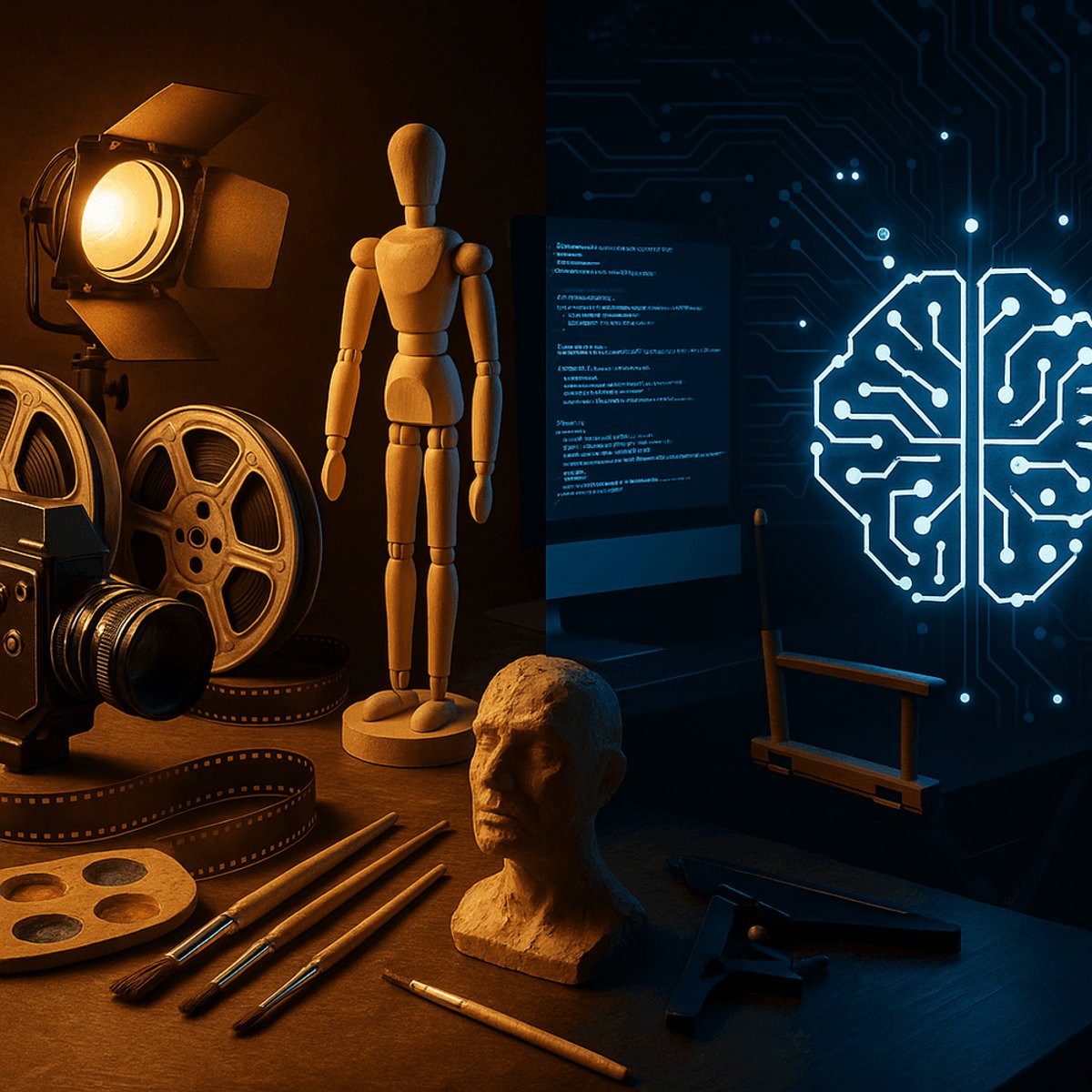
Guillermo del Toro just delivered one of Hollywood's most pointed critiques of artificial intelligence yet. The acclaimed director behind Frankenstein told WIRED he's 'extremely glad' to be 61 and hopes to 'die before AI art takes root.' His comments arrive as the entertainment industry grapples with AI's growing influence on creative work.
Guillermo del Toro isn't pulling punches when it comes to artificial intelligence. The visionary director behind The Shape of Water and Pacific Rim just gave WIRED one of the entertainment industry's most unvarnished takes on AI's creative ambitions yet.
"I'm extremely glad I'm 61," del Toro said during the interview. "So I don't have to worry about this. With a little bit of luck, I'll die before that takes root."
The timing isn't coincidental. Del Toro's latest film, Frankenstein, hits Netflix on November 7 - and he's drawing explicit parallels between Mary Shelley's cautionary tale and today's AI developers. When asked about modern Victor Frankensteins, del Toro didn't hesitate: "Absolutely everyone from political figures to Silicon Valley tech bros."
This isn't just artistic anxiety talking. Del Toro, who's spent decades crafting intricate visual worlds through painstaking stop-motion and practical effects, sees AI art as fundamentally different from human creativity. "In art, I don't think anyone asked for it," he told WIRED. "Nobody raised their hand and said, 'Could you invent this?'"
The director's critique cuts deeper than aesthetic concerns. He's questioning the entire economic model behind AI-generated content. "I will gladly pay $4.99 for a song by the Beatles or Dylan, you name it, but who is going to pay $4.99 for something created with AI?" del Toro asked. "When that threshold is crossed, then we'll see."
His comments arrive as Hollywood continues wrestling with AI's role in creative work. The recent writers' and actors' strikes included provisions limiting AI use, while studios explore cost-cutting applications. Del Toro's position represents the old-guard artisan approach - someone who's built a career on handcrafted monsters and meticulously designed worlds.
The Frankenstein connection runs deeper than surface metaphor. Del Toro describes Victor Frankenstein's core sin as "the arrogance of the tyrant that believes himself to be a victim." It's a character flaw he sees reflected in contemporary tech leaders who position themselves as innovators while potentially disrupting entire creative industries.
"The fact that we enthroned tyranny as a form of certainty, as if it was an attribute," del Toro explained. "I think the people I most admire are people that are riddled with doubts. Certainty and self-victimization oftentimes go hand-in-hand."
The director acknowledged AI's utility in technical fields like engineering and biochemistry, calling those applications "permutations." But art, in his view, occupies different territory entirely. His resistance isn't just philosophical - it's practical. Del Toro's upcoming projects include a stop-motion adaptation of Kazuo Ishiguro's The Buried Giant, requiring months of research into facial mechanics and textile miniaturization.
This hands-on approach stands in stark contrast to AI's promise of instant content generation. Where OpenAI's Sora can produce video clips in minutes, del Toro spends years developing single projects. His Frankenstein took decades to realize, with elaborate sets and costumes that could "only be the work of someone as connected as he is with his source material," according to the film's production notes.
The economic questions del Toro raises aren't academic. Streaming platforms are already experimenting with AI-generated thumbnails and promotional materials. The real test, as he notes, comes when consumers face the choice between human and artificial content at the same price point.
Netflix, which is releasing del Toro's Frankenstein, hasn't publicly addressed whether they'd distribute AI-generated films. But the platform's algorithm-driven approach to content creation suggests they're not philosophically opposed to artificial assistance in entertainment.
Del Toro's stance also reflects generational divides within Hollywood. Younger filmmakers are experimenting with AI tools for pre-visualization and concept art, while established directors like del Toro view it as antithetical to the creative process. The 61-year-old director admitted he's "much more interested in talking about anything you want except that" when pressed further on AI topics.
His upcoming crime film for Oscar Isaac, titled Fury, will test whether traditional filmmaking approaches can compete in an increasingly AI-augmented industry. Del Toro remains committed to pushing "the technology and the form" through human craftsmanship rather than algorithmic shortcuts.
Del Toro's provocative stance captures a pivotal moment in entertainment history. As AI capabilities expand rapidly, his comments force uncomfortable questions about creativity's future value. Whether his economic predictions prove accurate - that consumers won't pay premium prices for AI content - may determine not just individual careers but the entire creative economy's structure. His hope to avoid that future entirely speaks to more than personal preference; it reflects deep uncertainty about what happens when human artistry competes directly with algorithmic production.