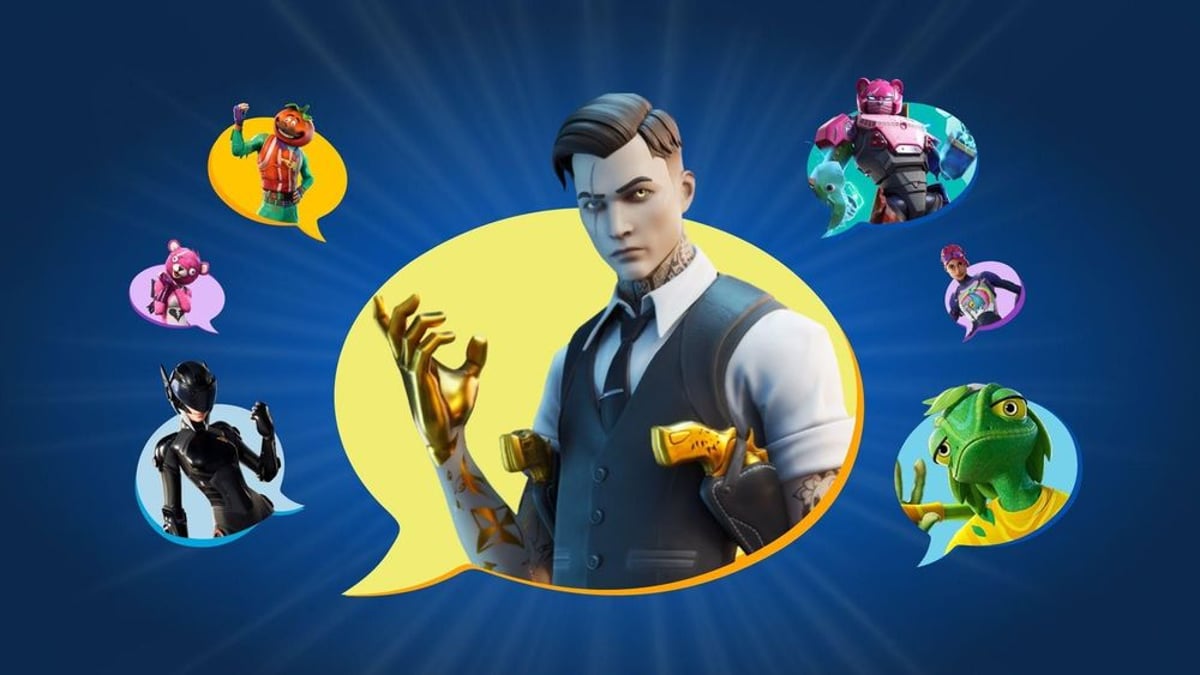
Epic Games is opening the floodgates for AI-powered characters in Fortnite. Starting July 30th, creators will be able to publish custom experiences featuring NPCs with AI-generated voices, marking one of the biggest deployments of voice synthesis tech in mainstream gaming. The company's already rolled out 36 pre-built characters with distinct personalities - from fan favorites like Agent Jonesy and Peely the banana to Fishstick and Cuddle Team Leader - that creators can drop into their islands right away. With Fortnite's 400 million-plus player base, this could be the moment conversational AI goes truly mainstream in gaming.
Epic Games just made conversational AI a standard feature for Fortnite's massive creator community. The company announced that starting July 30th, anyone building custom islands in Fortnite will be able to publish experiences with AI-powered voice characters, complete with 36 pre-made personas that respond dynamically to player interactions.
This isn't Epic's first rodeo with AI characters. Last year, the company dipped its toes in these waters with a Darth Vader NPC powered by the late James Earl Jones' voice - a collaboration the actor's estate explicitly approved. That experiment clearly gave Epic the confidence to go all-in on voice synthesis tech, but this time at a scale that could redefine how NPCs work in games.
The 36 launch characters read like a who's who of Fortnite's iconic roster. Agent Jonesy, the banana-suited Peely, the walking fish Fishstick, and the pink bear mascot Cuddle Team Leader all come with "consistent voices and personas" that creators can plug into their custom maps through Epic's Unreal Editor for Fortnite (UEFN). Instead of scripting rigid dialogue trees, creators now get NPCs that can actually hold conversations.
The timing matters. While companies like OpenAI and Google have been racing to perfect conversational AI, consumer-facing applications remain relatively rare. Fortnite's 400 million-plus player base represents the kind of mainstream distribution most AI companies can only dream about. If these AI personas click with players, we're looking at potentially billions of interactions between humans and LLM-powered characters - all happening inside a video game.
Epic's been quietly building toward this moment through its UEFN platform, which already lets creators build increasingly complex experiences. The addition of AI voices essentially removes one of the last barriers to creating truly dynamic game worlds. A creator building a mystery island can now have detective NPCs that respond naturally to player questions. A racing game could feature pit crew characters with actual personalities. The possibilities sprawl in every direction.
But there's also the ethical dimension. Voice synthesis technology has become frighteningly good at replicating human speech, raising questions about consent and compensation. Epic's approach with the Darth Vader character - getting explicit estate approval - suggests the company's aware of these landmines. Whether that same rigor applies to future celebrity or character voices remains to be seen.
The competitive implications ripple across gaming. Microsoft has been experimenting with AI NPCs in its gaming division, while Nvidia has been pushing its ACE (Avatar Cloud Engine) technology for realistic digital humans. But neither has the distribution Epic just unlocked. If Fortnite creators embrace these AI personas, every other game platform will face pressure to match the feature.
From a technical standpoint, Epic's presumably running these conversational models either on-device or through cloud infrastructure that can handle massive concurrent users. The company hasn't disclosed which LLM powers these personas, but the "consistent voices and personas" language suggests fine-tuned models for each character. That's non-trivial engineering when you're talking about potentially millions of simultaneous conversations.
The creator economy angle can't be ignored either. Fortnite's top creators already earn serious money through the Island Creator program. AI voices that make their experiences more engaging could translate directly to higher player retention and bigger payouts. Epic's essentially given them a production tool that would've required a full voice acting budget just a year ago.
What makes this launch particularly interesting is the democratization factor. Big-budget games from Activision or Ubisoft might've eventually integrated similar tech, but Epic's putting it in the hands of teenagers building maps in their bedrooms. The innovation curve just got a lot steeper when millions of creators can experiment with conversational AI simultaneously.
Epic's July 30th launch represents more than just a new Fortnite feature - it's potentially the inflection point where conversational AI becomes table stakes in gaming. By putting LLM-powered voices in the hands of millions of creators and exposing hundreds of millions of players to the tech, Epic's running the largest real-world test of synthetic characters anyone's attempted. If players embrace talking to AI versions of Peely and Fishstick, the entire gaming industry will scramble to catch up. And if they don't? Well, Epic will have learned what every other company needs to know about the limits of AI in interactive entertainment. Either way, the July 30th floodgates are about to teach us a lot about where this technology actually belongs.