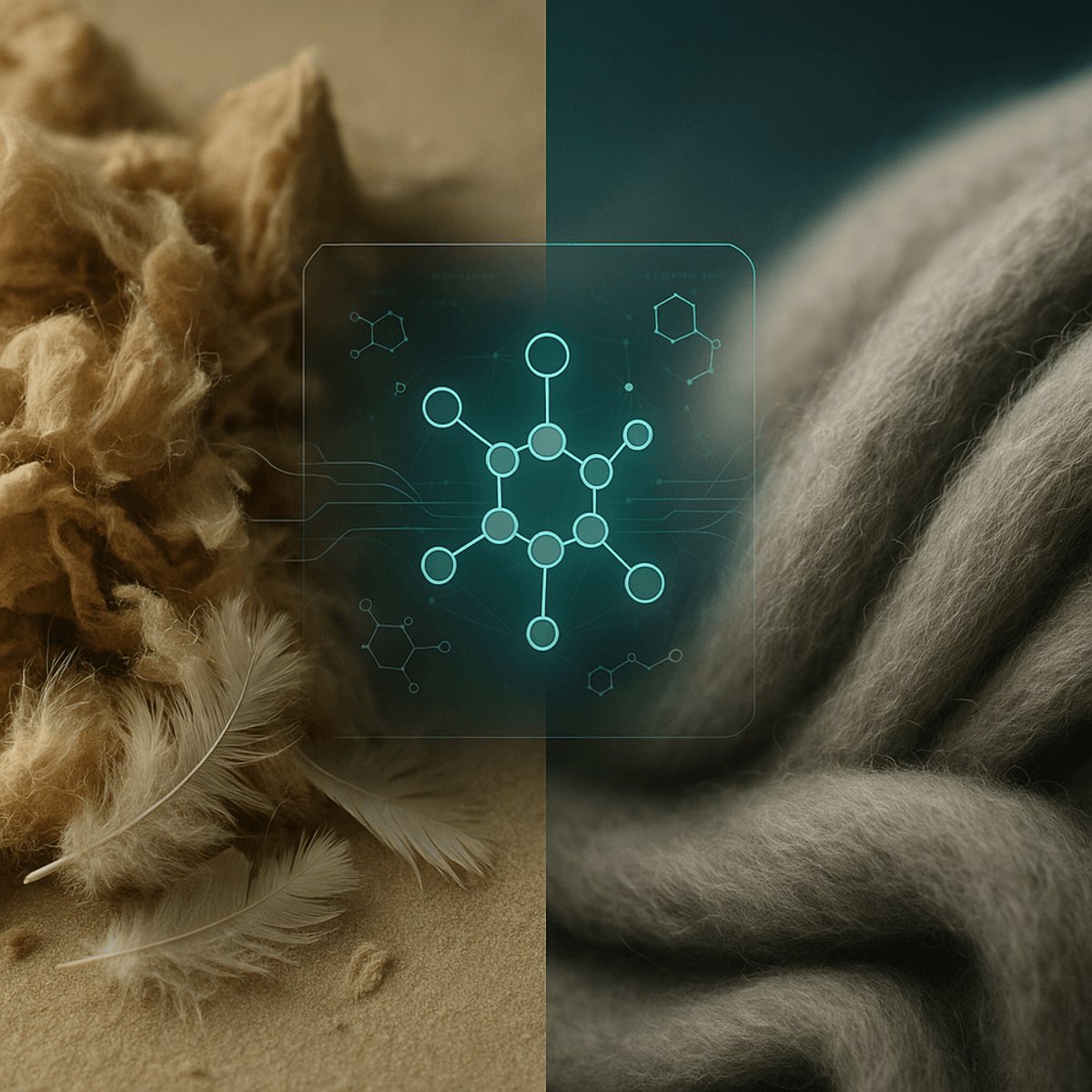
A scrappy materials science startup is solving one of fashion's sustainability problems with an unlikely solution: turning poultry feathers and textile waste into cashmere-grade fiber using AI. Everbloom, which just announced it's raised over $8 million from investors including Hoxton Ventures and SOSV, has built a machine learning model that fine-tunes the molecular parameters of waste keratin to replicate everything from polyester to luxury cashmere. The breakthrough could reshape how the textile industry sources materials while finally breaking the 'sustainable premium' pricing model.
The cashmere sweater crisis is quietly unfolding in global fashion. You've probably seen it - premium-feeling cashmere at $50 a pop, flooding fast-fashion retailers and department stores. The problem is real, and it's brutal for the goat herds that actually produce the stuff.
One goat will get sheared twice a year, yielding maybe four to six ounces of cashmere total. That's the honest math. But when demand exploded and prices plummeted, herders started shearing more aggressively, more often. The fiber quality tanked. The sustainability went out the window. "The producers of raw materials are actually under a lot of stress," Sim Gulati, co-founder and CEO of Everbloom, told TechCrunch. "What you're seeing now, especially with the advent of $50 cashmere sweaters, is that they're being sheared way more often. The quality of the fiber is not as good, and it's creating unsustainable herding practices."
Rather than lecture consumers about sustainability or shame fast-fashion brands, Gulati and his team decided to go a different direction entirely. Instead of defending natural cashmere supply chains, they'd build a replacement so good nobody could tell the difference. That's where Braid.AI comes in.
The AI model is essentially a tuning instrument for fiber architecture. Feed it parameters about what you want to create - softness profile, weight, thermal properties, strength - and it tells you exactly how to manipulate the starting material and process conditions to get there. The starting material? Waste. Lots of it.
Everbloom currently collects waste fibers from cashmere and wool farms, textile mills, and down bedding suppliers. The company plans to expand to feathers from poultry processing, which is where the headline gets its punch. All these waste streams share one crucial thing: they're made of keratin, the same protein that makes cashmere cashmere. It's all the same building block, just waiting to be reshaped.
Here's where the engineering gets elegant. The waste gets chopped up and mixed with proprietary compounds. That mixture gets forced through an extrusion machine - basically the same equipment that shapes plastic pellets. Those pellets then run through spinning machines that already exist on factory floors everywhere. "That equipment is used for 80% of the textile market," Gulati said. "You have to be a drop in replacement."
The chemical reactions that actually transform the keratin happen inside those two existing machines. Everbloom isn't trying to reinvent the textile production process. It's hijacking equipment that's already been amortized across decades. The AI just figures out the exact formulation and machine parameters needed to hit the target fiber profile.
The startup says everything it produces is biodegradable - yes, even the polyester replacement. They're running accelerated degradation tests to prove it, Gulati said. And because they're processing waste that would otherwise hit landfills, the environmental math is dramatically different from virgin fiber production.
But here's the thing that actually matters to brands and consumers: it should be cheaper. "We want it to be more economically viable for brands and consumers," Gulati explained. "I don't believe in a 'sustainable premium.' In order for a material to be successful - both in the supply chain and for the consumer - you have to have both a product benefit and an economic benefit to everyone who touches the product. That's what we're aiming for."
That philosophy is the real disruption here. Everbloom isn't trying to be the expensive ethical choice. It's trying to be the better economic choice that happens to be ethical. The company has raised over $8 million from investors including Hoxton Ventures and SOSV to scale production and validate the technology with real brand partnerships. The space has attracted attention because the math works: textile waste is abundant, existing machinery can be repurposed, and the AI solves the hardest part - getting the molecular properties exactly right.
Everbloom is taking a clever angle on the sustainability playbook. Rather than guilt-trip consumers or try to restore goat herding to some imaginary golden age, the startup is using AI to make waste valuable. If they can actually deliver on the cost promise while maintaining fiber quality and hitting environmental targets, they're not just creating a new material - they're proving that the most powerful sustainability story isn't about sacrifice, it's about being the better deal. That's the kind of thesis that gets capital moving and industry attention focused.