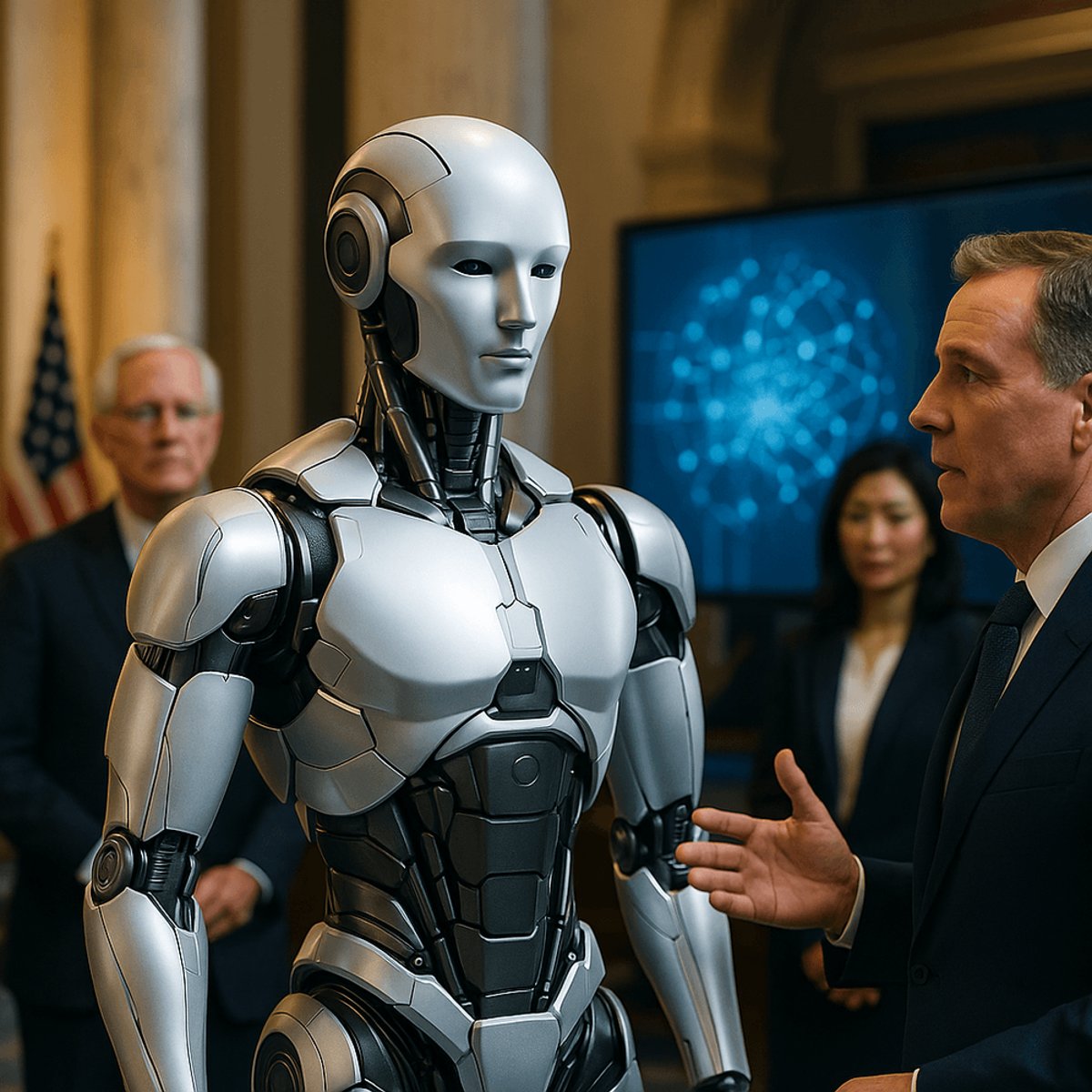
The White House just made robotics history. First lady Melania Trump hosted a humanoid robot from Figure AI in what appears to be the first time a commercially developed autonomous robot has visited 1600 Pennsylvania Avenue. The appearance signals growing White House interest in AI-powered robotics and gives the well-funded startup a cultural moment that money can't buy.
The East Wing of the White House became an unlikely showcase for cutting-edge robotics this week when first lady Melania Trump appeared alongside one of Figure AI's humanoid robots, according to CNBC. The visit represents a significant cultural milestone for both the robotics industry and the Sunnyvale-based startup competing to bring general-purpose humanoid robots to market.
While details of the meeting remain limited, the mere fact that a commercially developed autonomous robot received what amounts to a state reception underscores how quickly AI-powered robotics has moved from science fiction to serious policy consideration. It's the kind of visibility that no PR budget could manufacture and puts Figure squarely in the spotlight as the humanoid robotics race intensifies.
Figure AI has emerged as one of the most well-funded players in the humanoid robotics space since its founding in 2022. The company pulled in a massive $675 million Series B round in February 2024 at a $2.6 billion valuation, with backing from an all-star roster including OpenAI, Nvidia, Microsoft, Amazon, and Jeff Bezos personally. That capital has funded aggressive development of Figure 02, the company's second-generation humanoid platform designed for commercial deployment in warehouses, manufacturing facilities, and eventually retail environments.
The White House appearance comes as Figure races against rivals like Tesla's Optimus robot, Boston Dynamics, and a growing field of well-funded startups all chasing the same prize: a general-purpose humanoid that can work alongside humans in unstructured environments. Figure CEO Brett Adcock, who previously founded aircraft startup Archer Aviation, has been vocal about his timeline to get robots into commercial operation by 2025-2026.
What makes Figure's approach distinctive is its partnership with OpenAI to integrate advanced language models directly into its robots. The collaboration, announced as part of the Series B round, aims to give Figure's humanoids more sophisticated reasoning capabilities than competitors relying solely on traditional robotics control systems. It's a bet that the same transformer architectures powering ChatGPT can help robots navigate the messy complexity of real-world tasks.
The timing of the White House visit is notable. The Trump administration has signaled interest in maintaining American leadership in AI and robotics amid intensifying competition with China. Hosting a domestically developed humanoid robot sends a clear message about prioritizing homegrown innovation in strategically important technologies. For Figure, the optics couldn't be better as it seeks to land major commercial contracts and potentially government partnerships.
But the appearance also raises questions about how quickly regulators and policymakers are preparing for a future where humanoid robots become commonplace. While industrial robots have operated in controlled factory environments for decades, general-purpose humanoids that can navigate human spaces autonomously present novel safety, liability, and employment challenges that existing frameworks weren't designed to address.
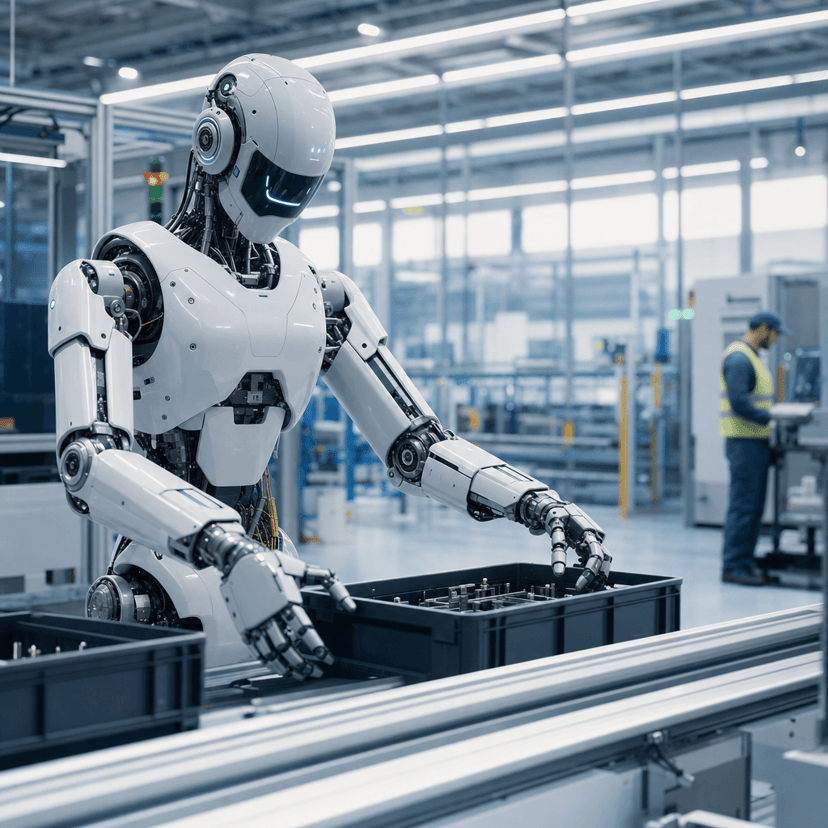
Figure has been testing its robots at BMW manufacturing facilities in South Carolina and reportedly has additional pilot programs in the works with major retailers. The company claims its humanoids can already perform tasks like picking and packing warehouse items, though full commercial deployment remains in early stages. Competitors like Tesla have demonstrated their own progress, with Elon Musk claiming Optimus could be the company's most valuable product long-term.
The White House event gives Figure a massive platform just as the company appears to be approaching critical commercial milestones. Whether that translates to faster adoption or simply generates buzz remains to be seen, but it's clear that humanoid robotics has officially entered the cultural mainstream.
Figure AI's White House moment represents more than just good PR for a well-funded startup. It signals that humanoid robotics has crossed from lab curiosity to serious policy consideration at the highest levels of government. As Figure races to commercialize its technology against deep-pocketed rivals like Tesla and a wave of international competitors, this kind of high-profile validation could prove invaluable in landing the enterprise contracts and regulatory support needed to scale. The question now isn't whether humanoid robots will become part of our daily lives, but which companies will lead that transformation and how quickly regulators can adapt to the reality of autonomous machines working alongside humans.