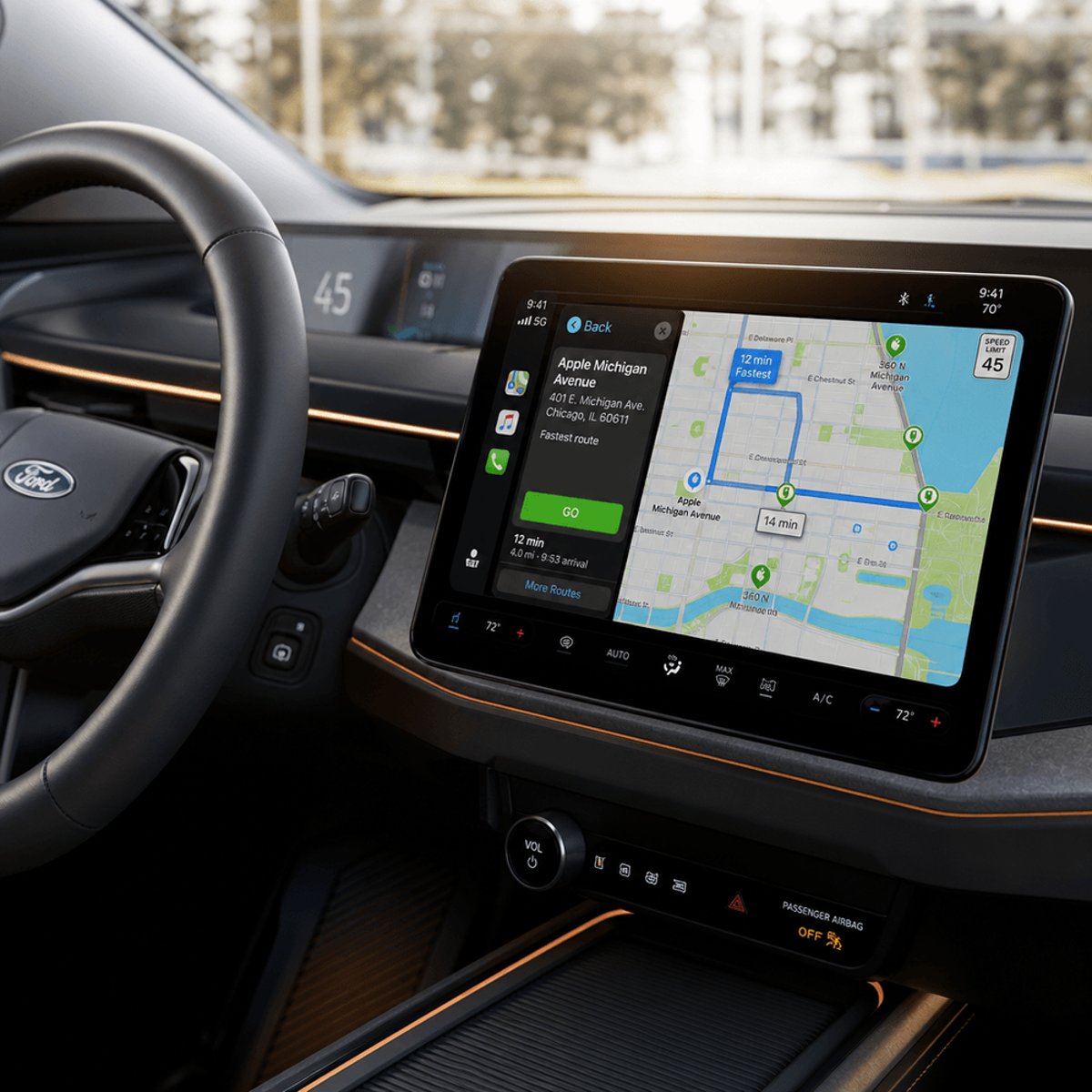
Ford is making a significant bet on Apple for its next wave of electric vehicles. The automaker just became the first to tap into Apple's new developer toolkit, embedding Apple Maps navigation directly into its vehicle infotainment systems - no iPhone required. The move signals a deeper integration between Detroit iron and Silicon Valley software, and could reshape how drivers interact with their EVs.
Ford just pulled ahead in the race to integrate smartphone tech into cars, and it's doing it with Apple riding shotgun. The Dearborn automaker announced it's the first to use Apple's newly released developer toolkit that lets carmakers embed Apple Maps navigation and mapping directly into vehicle infotainment systems. This isn't CarPlay - this is native integration, meaning Apple's mapping intelligence will be baked right into the dashboard, no iPhone mirroring necessary.
The timing couldn't be more strategic. As Ford pushes deeper into the EV market, competing against Tesla's vertically integrated software experience and a flood of new electric entrants, the infotainment system has become a critical battleground. Drivers expect their vehicles to feel as intuitive as their smartphones, and Ford's betting that Apple's ecosystem can deliver that experience better than homegrown solutions.
According to TechCrunch, the new toolkit represents a major shift in how Apple works with automakers. Previously, CarPlay operated as a projection system - your iPhone did the heavy lifting while the car's screen simply displayed the interface. This native integration means Apple Maps will tap directly into vehicle systems, potentially accessing real-time battery data for EV routing, leveraging vehicle sensors, and delivering a more seamless experience.
For Apple, this partnership opens a new front in its quiet push into automotive. While the company's rumored car project has reportedly shifted focus multiple times, these developer tools let Apple embed its services into millions of vehicles without manufacturing a single one. It's classic Apple strategy - control the experience layer while partners handle the hardware.
The move also puts pressure on Google, whose Android Automotive operating system has been gaining traction with automakers like General Motors and Volvo. Google Maps has long dominated navigation, but Apple's integration with Ford could spark a new wave of platform competition in vehicle cockpits. Ford's decision suggests it sees value in offering drivers choice, or at least hedging its bets on which tech ecosystem will dominate the next decade of driving.
What's particularly interesting is how this integration might enhance EV-specific features. Modern electric vehicles need sophisticated routing that accounts for charging station locations, real-time availability, battery degradation, and weather impacts on range. If Apple Maps can tap directly into Ford's vehicle data, it could deliver routing that's smarter than generic navigation apps, calculating the optimal charging stops based on your specific vehicle's battery condition and charging curve.
Ford hasn't disclosed which vehicles will get the integration first, but the company's focus on "next-generation EVs" suggests it'll debut in upcoming models rather than retrofitting existing vehicles. The automaker has been aggressive in its EV push, investing billions in battery production and new electric platforms, even as it's pulled back on some ambitious timelines due to market conditions.
The partnership also raises questions about data sharing and privacy. When Apple Maps runs natively on vehicle hardware, what information flows back to Apple? How much vehicle data does the integration require? These are questions automakers and tech companies have been wrestling with as cars become increasingly connected. Apple has built its brand on privacy protection, but the company will need to prove that ethos extends to embedded automotive applications.
For consumers, the benefits seem clear - a familiar, polished navigation interface that doesn't depend on having your iPhone connected. For Ford, it's a signal that the company recognizes software and user experience are now as critical as horsepower and towing capacity. And for the auto industry, it's another sign that the traditional boundaries between carmakers and tech companies continue to dissolve.
Ford's embrace of Apple's native mapping toolkit marks a pivotal moment in the convergence of automotive and consumer tech. As EVs transform cars into software platforms on wheels, partnerships like this will define which automakers can deliver the seamless digital experiences drivers expect. For Ford, it's a pragmatic bet that leveraging Apple's ecosystem strength can help it compete in an increasingly crowded EV market. The real test will be whether this integration delivers tangibly better experiences than competitors - and whether other automakers follow Ford's lead or double down on alternative platforms. Either way, the dashboard wars are just getting started.