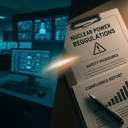
TerraPower, the nuclear energy startup backed by Bill Gates, just secured a construction permit from the Nuclear Regulatory Commission - the first new reactor approval the agency has issued in nearly a decade. The green light marks a watershed moment for advanced nuclear technology and signals a potential thawing of America's long-frozen nuclear buildout, as regulators show willingness to approve next-generation designs that promise safer, more efficient power generation than conventional reactors.
TerraPower just broke through one of the toughest regulatory barriers in American energy. The Nuclear Regulatory Commission granted the company a construction permit for its next-generation nuclear reactor - the first such approval the federal agency has issued since 2016. For an industry that's spent years in regulatory purgatory, it's a major win.
Bill Gates founded TerraPower in 2008 with a vision to commercialize advanced nuclear designs that improve on decades-old light water reactor technology. The company's Natrium reactor uses liquid sodium as a coolant instead of water, allowing it to operate at higher temperatures and store energy in molten salt batteries - features that make it both safer and more flexible than conventional nuclear plants.
The approval comes as tech companies scramble to secure power for energy-hungry AI data centers. Microsoft, Google, and Amazon have all signed deals or expressed interest in nuclear power to meet soaring electricity demands from machine learning infrastructure. Unlike solar and wind, nuclear provides constant baseload power that doesn't fluctuate with weather - exactly what massive computing operations need.
TerraPower plans to build its first commercial Natrium plant in Kemmerer, Wyoming, on the site of a retiring coal plant. The project received $2 billion in funding through the Department of Energy's Advanced Reactor Demonstration Program, part of a broader federal push to revive domestic nuclear energy. The Wyoming plant is designed to generate 345 megawatts of electricity, with the molten salt storage system capable of boosting output to 500 megawatts for over five hours during peak demand.
The NRC's decade-long permit drought reflected both the economics and politics of nuclear power. After the 2011 Fukushima disaster in Japan, public skepticism intensified while cheap natural gas made new nuclear plants financially questionable. The last construction permits before TerraPower went to two conventional reactors at the Vogtle plant in Georgia - units that went billions over budget and years behind schedule, finally coming online in 2023 and 2024.
But advanced reactor designs like Natrium promise to avoid those pitfalls. The technology uses passive safety systems that shut down automatically without human intervention or electrical power. Smaller, modular components can be factory-built rather than constructed on-site, potentially cutting costs and construction time. And the energy storage capability addresses one of nuclear's historic weaknesses - the inability to ramp output up and down quickly to match grid demand.
TerraPower isn't alone in the advanced nuclear race. X-energy is developing high-temperature gas reactors, while NuScale Power focuses on small modular reactors. Both companies are working through their own NRC review processes. TerraPower's permit approval could accelerate those timelines by proving regulators are ready to certify new designs.
The permit clears TerraPower to begin construction but isn't the final regulatory hurdle. The company still needs an operating license from the NRC before the plant can generate power - a process that typically takes additional years of review. TerraPower expects to complete construction and begin operations by the early 2030s, though nuclear projects historically face delays.
For Gates, who's invested heavily in climate solutions through Breakthrough Energy, the approval validates years of advocacy for nuclear power as essential to decarbonization. He's argued that reaching net-zero emissions requires firm, carbon-free power that can complement intermittent renewables - a position that's gained traction as countries struggle to balance climate goals with energy reliability.
The timing aligns with shifting political winds around nuclear energy. Both Republican and Democratic administrations have supported advanced reactor development, and several states are reconsidering nuclear bans or exploring life extensions for existing plants. Climate activists remain divided, but a growing faction views nuclear as necessary to phase out fossil fuels fast enough to meet Paris Agreement targets.
What happens next depends partly on whether TerraPower can deliver on its cost and timeline promises. The nuclear industry has a troubled history of overpromising and underdelivering. But if the Kemmerer plant comes online on schedule and at reasonable cost, it could trigger a wave of similar projects as utilities and tech companies search for reliable clean power.
TerraPower's regulatory breakthrough represents more than one company's milestone - it signals that America's nuclear industry might finally be emerging from its decade-long deep freeze. As AI workloads push power demand to new heights and climate pressures mount, advanced reactors like Natrium could provide the carbon-free, always-on electricity that neither fossil fuels nor renewables alone can deliver. The real test comes next: whether TerraPower can translate regulatory approval into a functioning plant that proves advanced nuclear can work at commercial scale and reasonable cost. If it succeeds, expect the NRC's permit queue to get a lot longer.