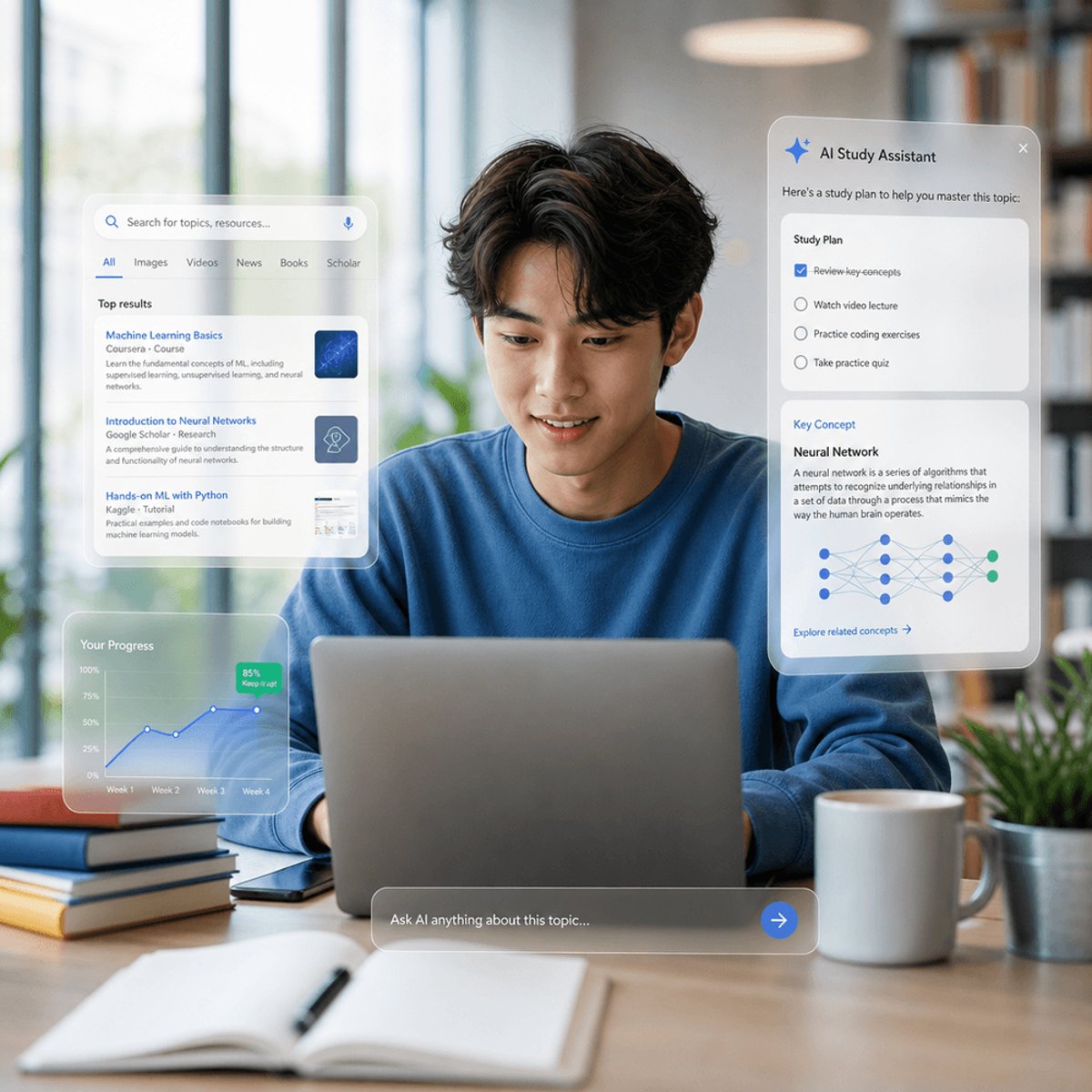
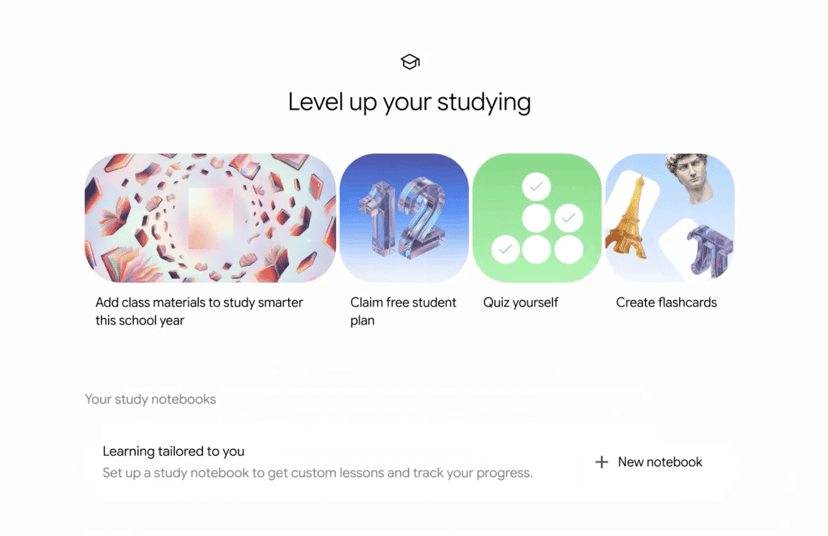
Google is making its biggest play yet for the student market. The company just rolled out new AI-powered study tools across both Search and Gemini, marking a direct challenge to OpenAI's grip on academic AI assistance. The move signals Google's determination to position Gemini as the default learning companion for millions of students, as the AI assistant wars heat up heading into the new school year.
Google just fired a shot across OpenAI's bow in the battle for students' attention. The tech giant rolled out new study-focused features spanning both Google Search and its Gemini AI assistant, according to TechCrunch. The timing isn't coincidental - with the school year ramping up, Google's betting it can capture students before they default to ChatGPT for homework help.
The integration marks Google's most aggressive push yet to own the education AI space. While the company's kept specific feature details close to the vest, the strategy is crystal clear: embed learning assistance so deeply into Search and Gemini that students never think to look elsewhere. It's the same playbook that made Google synonymous with research itself, now turbocharged with generative AI.
OpenAI has dominated headlines with ChatGPT's adoption in classrooms, but Google's got advantages its rival can't match. The company already owns the starting point for most student research - that familiar search bar - and now it's weaving AI assistance directly into that workflow. Students who begin a query in Search can seamlessly transition to Gemini for deeper explanations, practice problems, or study guides without ever leaving Google's ecosystem.
The move reflects broader shifts in how tech giants are positioning their AI assistants. While OpenAI has focused on ChatGPT as a standalone powerhouse, Google's taking an integration approach that leverages its existing dominance. Students already use Google Docs for papers, Google Classroom for assignments, and Chrome for browsing. Adding AI study tools creates a comprehensive learning environment that's tough to abandon.
Education technology has become the new battleground for AI companies. The student market represents not just immediate users, but the next generation of professionals who'll carry their tool preferences into the workplace. Capture a college freshman's workflow now, and you've potentially secured a customer for decades. Both Google and OpenAI understand these stakes, which explains the accelerating feature launches.
Google's announcement comes as schools grapple with how to incorporate AI into curricula without enabling academic dishonesty. The company's positioning these tools as learning aids rather than answer generators, though the line between the two remains fuzzy. Teachers and administrators are watching closely to see whether Google's implementation includes guardrails that OpenAI's more open-ended ChatGPT sometimes lacks.
The competitive dynamics are fascinating. OpenAI moved first and built massive brand recognition among students, but Google's got distribution advantages that are hard to overstate. Every student with a school-issued Chromebook or Gmail account is already inside Google's walls. The question isn't whether they'll discover Gemini's new study features - it's whether those features are compelling enough to change established habits.
Industry observers expect this to trigger a feature arms race throughout the academic year. If Google's study tools gain traction, expect OpenAI to respond with deeper educational integrations of its own. Microsoft, with its OpenAI partnership and dominance in enterprise education through Teams and Office, won't sit idle either. The student AI assistant market is suddenly the hottest front in the broader AI wars.
What remains to be seen is how these tools actually perform in real-world study sessions. AI assistants excel at explanation and summarization, but effective learning requires struggle and synthesis - qualities that instant AI answers can undermine. Google's challenge isn't just technical superiority over OpenAI, but designing features that genuinely help students learn rather than just complete assignments faster.
Google's study tools launch represents more than just new features - it's a declaration that the company intends to dominate AI-assisted learning the same way it conquered search. By embedding Gemini directly into students' existing workflows and leveraging Search's ubiquity, Google's built structural advantages that OpenAI will struggle to match. But brand loyalty matters, especially among young users who've already embraced ChatGPT. The next few months will reveal whether integration beats innovation, or if students stick with the AI assistant they know. Either way, the real winners might be students themselves, as competition drives both companies to build better, more responsible learning tools.