Google just made a major bet on manufacturing's AI future. The company's philanthropic arm, Google.org, announced a $10 million commitment to the Manufacturing Institute that will train 40,000 factory workers in artificial intelligence skills. The initiative marks one of the largest workforce AI training programs to date, signaling how seriously tech giants view the need to prepare blue-collar workers for an AI-driven industrial landscape.
Google is putting serious money behind a problem the manufacturing industry has been quietly panicking about: how to prepare tens of thousands of workers for an AI-powered factory floor. The $10 million commitment from Google.org to the Manufacturing Institute will fund AI training for 40,000 manufacturing workers, according to an announcement from VP Maggie Johnson.
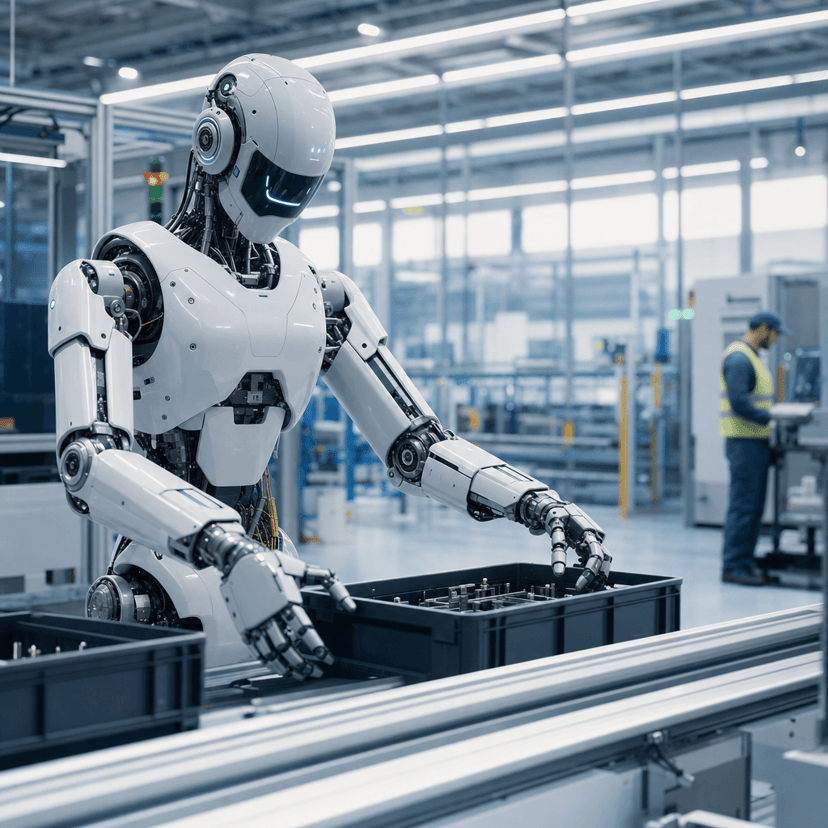
The timing isn't coincidental. Manufacturing has become a critical battleground for AI adoption, with companies racing to deploy machine learning models for everything from predictive maintenance to quality control. But there's a catch - the workers who actually run these facilities often lack the technical foundation to interact with AI systems, creating a skills gap that threatens to slow industrial AI deployment across the sector.
"We're seeing manufacturers invest millions in AI infrastructure, then realize their workforce can't actually use it," one industry analyst noted. The Manufacturing Institute has been sounding the alarm on this gap for years, making Google's $10 million injection particularly significant.
The program will focus on practical AI literacy - not turning factory workers into data scientists, but giving them enough fluency to work alongside AI-powered systems. Think understanding how to interpret AI-generated quality reports, troubleshoot when automated systems flag anomalies, and collaborate with predictive maintenance algorithms. It's the kind of baseline AI competency that's becoming as essential as basic computer skills were two decades ago.
What makes this initiative notable is its scale. Training 40,000 workers represents a meaningful chunk of the U.S. manufacturing workforce, particularly in advanced manufacturing sectors where AI adoption is accelerating fastest. Google.org has been ramping up its workforce development investments lately, but this manufacturing focus suggests the company sees industrial AI as a critical frontier.
The broader context matters here. Microsoft has been pushing AI training through community colleges, Amazon has committed to upskilling 29 million people in cloud computing by 2025, and now Google is targeting manufacturing specifically. The pattern is clear: tech giants recognize that their AI products are only as valuable as the workforce's ability to use them.
For the Manufacturing Institute, the funding solves a real problem. The organization has the curriculum and industry connections to deliver training at scale, but lacked the capital to reach tens of thousands of workers. Google's $10 million changes that math entirely, allowing the institute to expand programs that were previously limited to pilot scale.
The investment also carries strategic implications for Google itself. Manufacturing represents a massive enterprise market where Microsoft's Azure and Amazon Web Services have been gaining ground. By training workers on AI fundamentals - likely with some exposure to Google Cloud tools - the company is essentially creating future customers who are already familiar with its ecosystem.
But beyond the competitive positioning, there's a genuine workforce crisis brewing. The Bureau of Labor Statistics projects manufacturing will need to fill 4 million jobs over the next decade, with AI skills increasingly becoming mandatory rather than optional. Programs like this one don't solve the entire problem, but they create a template for how private sector investment can accelerate workforce adaptation to technological change.
The $10 million will roll out over multiple years, with the Manufacturing Institute designing curriculum in partnership with manufacturers to ensure the training addresses real shop floor needs rather than theoretical AI concepts. Early programs will likely focus on sectors where AI is already deployed - automotive, aerospace, and advanced electronics manufacturing - before expanding to broader industrial applications.
The Google.org investment in manufacturing AI training signals a broader shift in how tech companies think about AI deployment. It's not enough to build powerful models - you need workers who can actually use them. The $10 million commitment to train 40,000 manufacturing workers represents one of the most ambitious attempts yet to bridge that gap, and it'll be closely watched by other industries facing similar AI skills shortages. If the program delivers results, expect manufacturing to become a blueprint for workforce AI adaptation across healthcare, logistics, and other blue-collar sectors where automation is accelerating faster than training programs can keep up.