Google just landed a major Pentagon partnership that could reshape the quantum computing race. The tech giant's Quantum AI division has been selected for DARPA's Quantum Benchmarking Initiative, a program designed to identify which quantum approaches can deliver utility-scale, fault-tolerant computers by 2033. This marks a critical validation moment for Google's quantum strategy as the industry faces mounting pressure to prove commercial viability.
Google is betting big on quantum supremacy, and now the Pentagon is backing that bet. The company's Quantum AI division has secured a coveted spot in DARPA's Quantum Benchmarking Initiative - a rigorous program that will determine which quantum computing approaches can deliver the holy grail of fault-tolerant, utility-scale systems by 2033.
The selection carries significant weight in an industry where bold claims often outpace actual performance. DARPA's involvement brings military-grade benchmarking standards to an field that's struggled with inconsistent performance metrics and marketing hype. "We are proud to partner with DARPA and its technical experts, who will play an important role as a trusted validator," Google Quantum AI founder Hartmut Neven said in the announcement.
This isn't just academic recognition - it's a strategic positioning move in the quantum race. While competitors like IBM, IonQ, and Rigetti have made their own quantum noise, Google's inclusion in DARPA's exclusive cohort suggests the defense agency sees real potential in the company's approach. The initiative will subject Google's systems to the kind of rigorous, third-party testing that could either validate years of research investment or expose critical limitations.
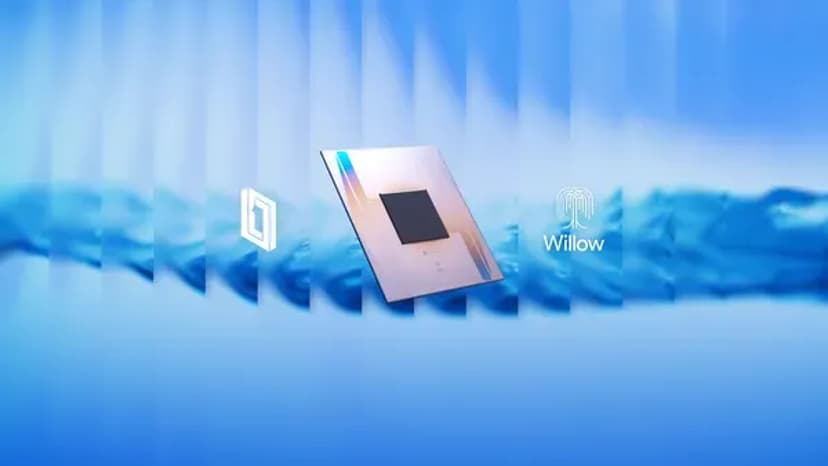
Google's quantum strategy has evolved significantly since its 2019 "quantum supremacy" claim, when its Sycamore processor solved a specific problem faster than classical computers. Critics argued the achievement was more symbolic than practical, but DARPA's selection indicates the company has moved beyond proof-of-concept demonstrations toward systems with genuine utility potential.
The 2033 timeline is particularly aggressive given current quantum computing limitations. Today's quantum systems require extreme cooling and struggle with error rates that make complex calculations unreliable. Google's approach using superconducting qubits faces the same fundamental challenges as competitors - maintaining quantum coherence long enough to perform useful work while scaling up to the hundreds or thousands of qubits needed for practical applications.
DARPA's benchmarking program arrives as quantum computing faces a credibility moment. Venture funding has poured into quantum startups, with companies like Atom Computing and QuEra raising significant rounds based on future promises. But commercial applications remain largely theoretical, confined to narrow use cases in cryptography, optimization, and materials simulation.
Google's confidence in its quantum roadmap extends beyond the DARPA partnership. The company continues pushing applications in drug discovery, where quantum systems could model molecular interactions that overwhelm classical computers, and machine learning, where quantum algorithms might unlock new AI capabilities. "We're confident in our approach as we continue our mission to build best-in-class quantum computing for otherwise unsolvable problems," Neven noted.
The DARPA selection also positions Google favorably for future government contracts as national security agencies increasingly view quantum computing as strategic infrastructure. Countries including China and the European Union have launched massive quantum initiatives, creating geopolitical pressure for U.S. companies to deliver breakthrough systems.
For investors and industry watchers, the DARPA partnership represents a crucial external validation of Google's quantum investments. Parent company Alphabet has poured resources into quantum research without clear commercial returns, making scientific credibility essential for justifying continued spending. Third-party benchmarking from DARPA could provide the proof points needed to accelerate both internal investment and customer adoption.
Google's selection for DARPA's quantum benchmarking program signals a maturation moment for the entire quantum computing industry. While technical challenges remain formidable, having Pentagon-level validation could accelerate both commercial adoption and competitive positioning. The 2033 timeline creates urgency around an technology that's been perpetually "five years away" for decades. For Google, success in DARPA's rigorous testing could translate into quantum leadership that extends far beyond research labs into real-world applications that reshape computing itself.