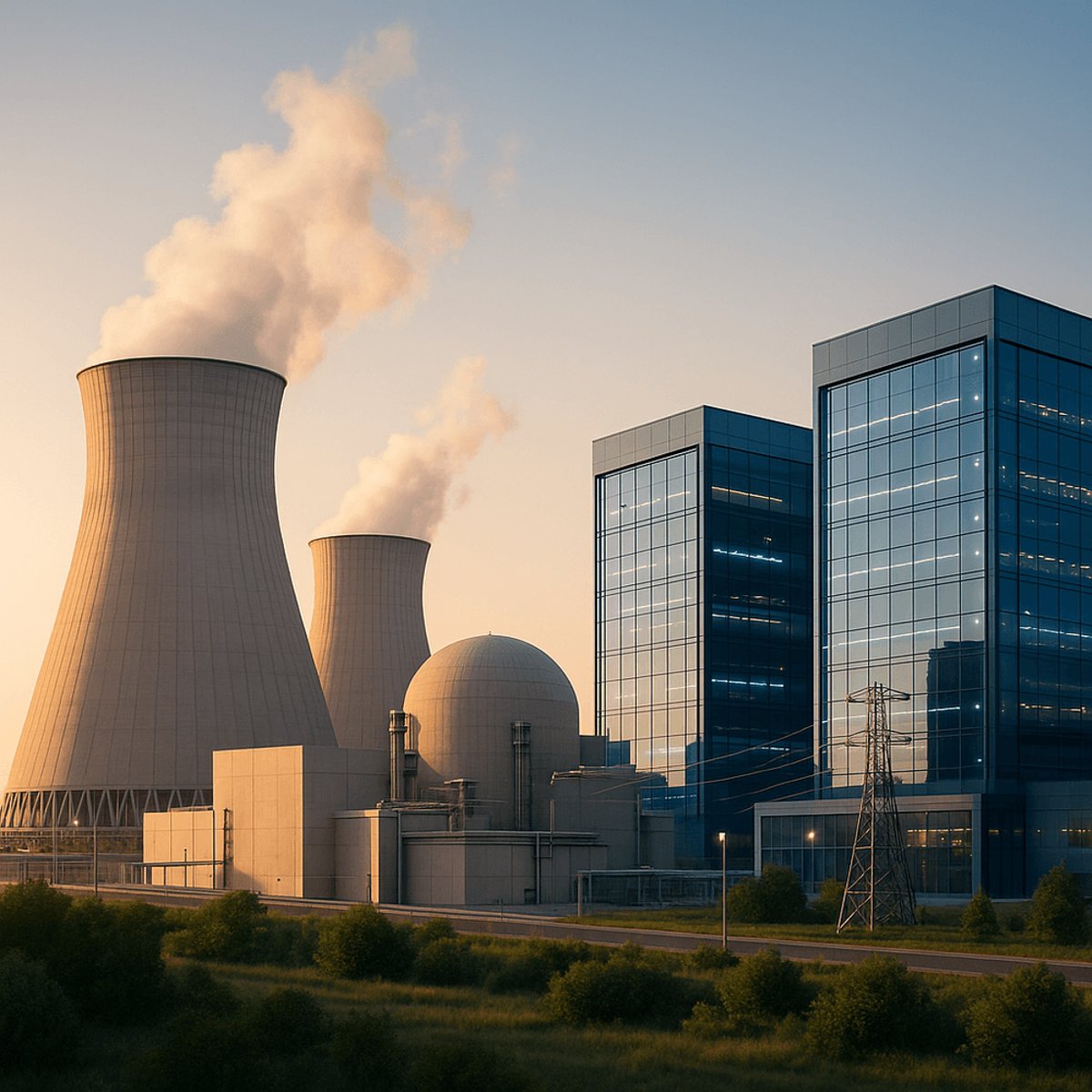
Google just made a stunning move in the AI power race, partnering with NextEra Energy to bring the shuttered Duane Arnold Energy Center in Iowa back online by 2029. The deal signals how desperate tech giants have become for reliable, carbon-free electricity as AI workloads explode their data center power demands. This marks the second major nuclear revival project in tech, following Microsoft's Three Mile Island resurrection.
The nuclear power resurrection is happening faster than anyone predicted. Google just announced it's partnering with NextEra Energy to bring Iowa's Duane Arnold Energy Center back from the dead - a facility that's been dark since 2020 when a devastating derecho storm damaged its containment systems.
The timing isn't coincidental. Google's data center appetite has reached fever pitch as AI models demand exponentially more compute power. Traditional renewable sources like solar and wind can't match the 24/7 reliability that nuclear provides, making these dormant reactors suddenly valuable again.
NextEra has been hunting for a partner to revive Duane Arnold for over a year, and Google stepped up with a 25-year power purchase agreement that'll consume most of the plant's 615-megawatt output when it comes online in 2029. The renovated reactor will actually pump out 14 megawatts more than its original 601-megawatt design - a nice bonus from the recommissioning process.
Neither company disclosed the deal's financial terms, but industry insiders suggest these nuclear revival projects don't come cheap. Microsoft is already spending $1.6 billion to restart Constellation Energy's Three Mile Island reactor, which should fire up in 2028 with 835 megawatts of capacity. That deal established the template: tech giants with deep pockets willing to absorb massive upfront costs for long-term clean power certainty.
The Duane Arnold plant's story reads like a climate change cautionary tale. The facility was humming along fine until August 2020, when a rare derecho - essentially a land hurricane with straight-line winds - tore through Iowa and damaged the reactor's secondary containment systems designed to prevent radioactive gas releases. Rather than invest in repairs, the plant's operators decided to shutter it permanently.
Now Google's money is bringing it back to life, highlighting how AI's power hunger is reshaping America's energy landscape. The Central Iowa Power Cooperative will buy the remaining power output under similar terms, though NextEra plans to buy out both the co-op and other minority owners to streamline operations.
This nuclear revival trend reflects a harsh reality: renewable energy isn't scaling fast enough to match AI's exponential growth. While Google continues investing heavily in solar and battery projects that can deploy in months rather than years, these sources can't provide the baseload power that data centers require around the clock.
The nuclear restart strategy offers a middle path - faster than building new reactors from scratch, but still requiring years of regulatory approval and safety upgrades. It's essentially tech companies betting that AI's power demands will only intensify, making these long-term investments worthwhile despite the wait.
Restarting existing reactors shaves significant time off new nuclear construction, which typically takes a decade or more. But even these revival projects face years of regulatory hurdles, putting them in direct competition with natural gas plants that developers can build relatively quickly.
The broader implications extend beyond Google's energy strategy. As more tech giants follow this nuclear path, it could fundamentally reshape America's power grid and accelerate the retirement of fossil fuel plants. The irony isn't lost: AI technologies originally designed to fight climate change are now driving a nuclear renaissance to power themselves sustainably.
Google's nuclear gambit represents more than just another energy deal - it's a signal that AI's power demands are reshaping fundamental infrastructure decisions. As other tech giants watch this experiment unfold, expect more dormant reactors across America to suddenly become very attractive real estate. The race for AI supremacy is now literally powering a nuclear renaissance, and Google just fired the starting gun on what could be the biggest infrastructure buildout since the internet boom.