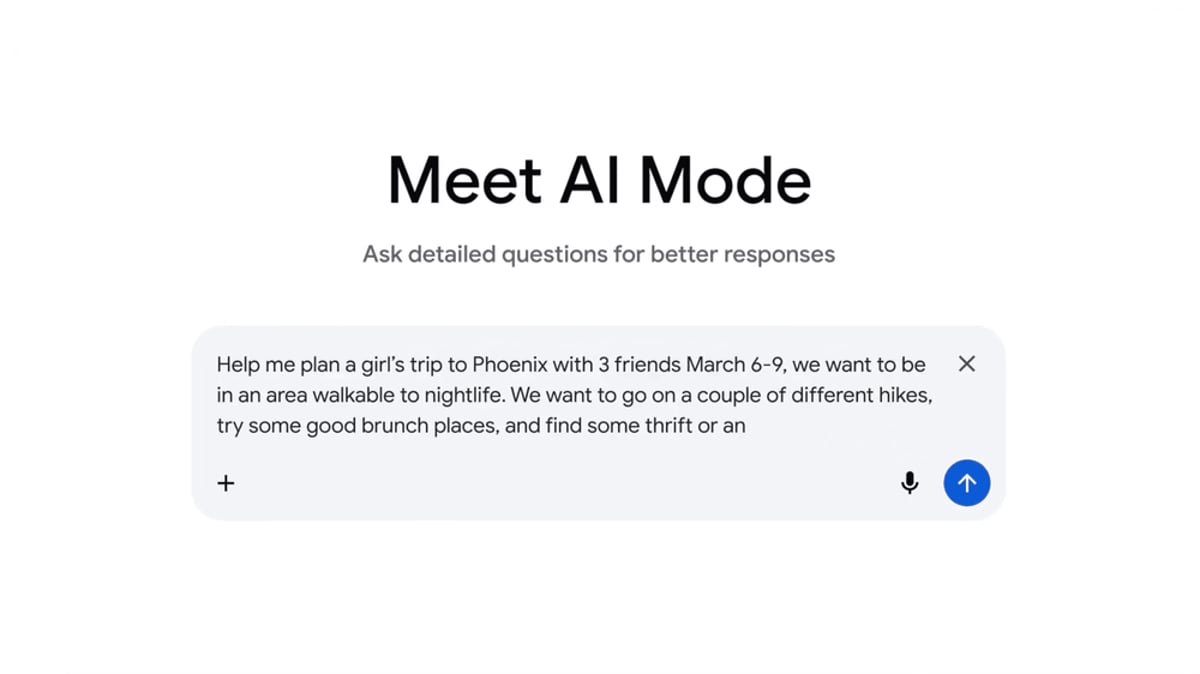
Google just launched Canvas integration for AI Mode travel planning, letting users describe trips and get visual itineraries complete with flight data, hotel options, and Google Maps integration. The feature marks Google's biggest push yet into the travel booking space, directly challenging Expedia and Kayak with AI-powered trip visualization that could reshape how people plan vacations.
Google is turning travel planning into a visual experience. The company just rolled out Canvas integration for AI Mode, letting users describe their dream trip and watch as the AI builds out a complete itinerary in a dynamic side panel. The feature pulls in flight data, hotel suggestions, photos, and reviews from Google Maps to create what amounts to a personalized travel magazine for your vacation.
Users can now tell AI Mode "I want a weekend in Barcelona with good food and museums" and get back a structured plan they can actually see and interact with. The Canvas workspace displays everything from potential restaurants to walking routes, all backed by Google's vast data ecosystem. According to Google's official blog post, the feature stores these visual plans in AI Mode's history for future reference.
This isn't just another travel tool - it's Google flexing its search dominance in a new arena. Canvas originally launched in March as a workspace for Gemini to display coding output and study plans, but integrating it with travel planning puts Google squarely in competition with dedicated travel companies. Expedia and Kayak have been building their own AI features, but they can't match Google's integration with the world's most-used search engine.
The real game-changer is what Google calls "agentic booking" - AI that actually handles reservations for you. Restaurant bookings are rolling out to all US users this week, not just the Labs beta testers who've had access since earlier this year. The system shows curated options with direct links to finalize bookings through partners like OpenTable, Resy, and Tock.
But Google's not stopping at dinner reservations. The company announced partnerships with major hotel chains including Marriott International and Wyndham Hotels & Resorts, plus booking platforms like Booking.com, to eventually automate flight and hotel reservations too. That's the kind of end-to-end booking experience that could make traditional travel sites feel obsolete.
The expansion comes as Google pushes its AI-powered Flight Deals feature global, rolling out to over 200 countries with support for 60+ languages. What started as a US-only experiment is becoming Google's worldwide travel platform, complete with the visual planning tools that competitors lack.
For travel companies, this represents an existential threat wrapped in a user-friendly interface. Google already captures the initial "I want to go somewhere" search query. Now it's building the tools to handle everything from inspiration to booking, potentially cutting out the middlemen who've dominated online travel for decades.
The Canvas integration also signals Google's broader AI strategy - taking successful enterprise features from Gemini and making them accessible to billions of search users. What works for coding and study planning apparently works just as well for vacation itineraries, creating visual experiences that feel more like collaboration with a smart travel agent than traditional search results.
Google's Canvas integration represents more than just another travel feature - it's a direct challenge to the entire online travel industry. By combining visual planning with agentic booking and leveraging its search dominance, Google is positioned to capture the complete travel journey from inspiration to reservation. For consumers, this means more intuitive planning tools. For travel companies, it means adapting quickly or watching Google absorb their market share one visual itinerary at a time.