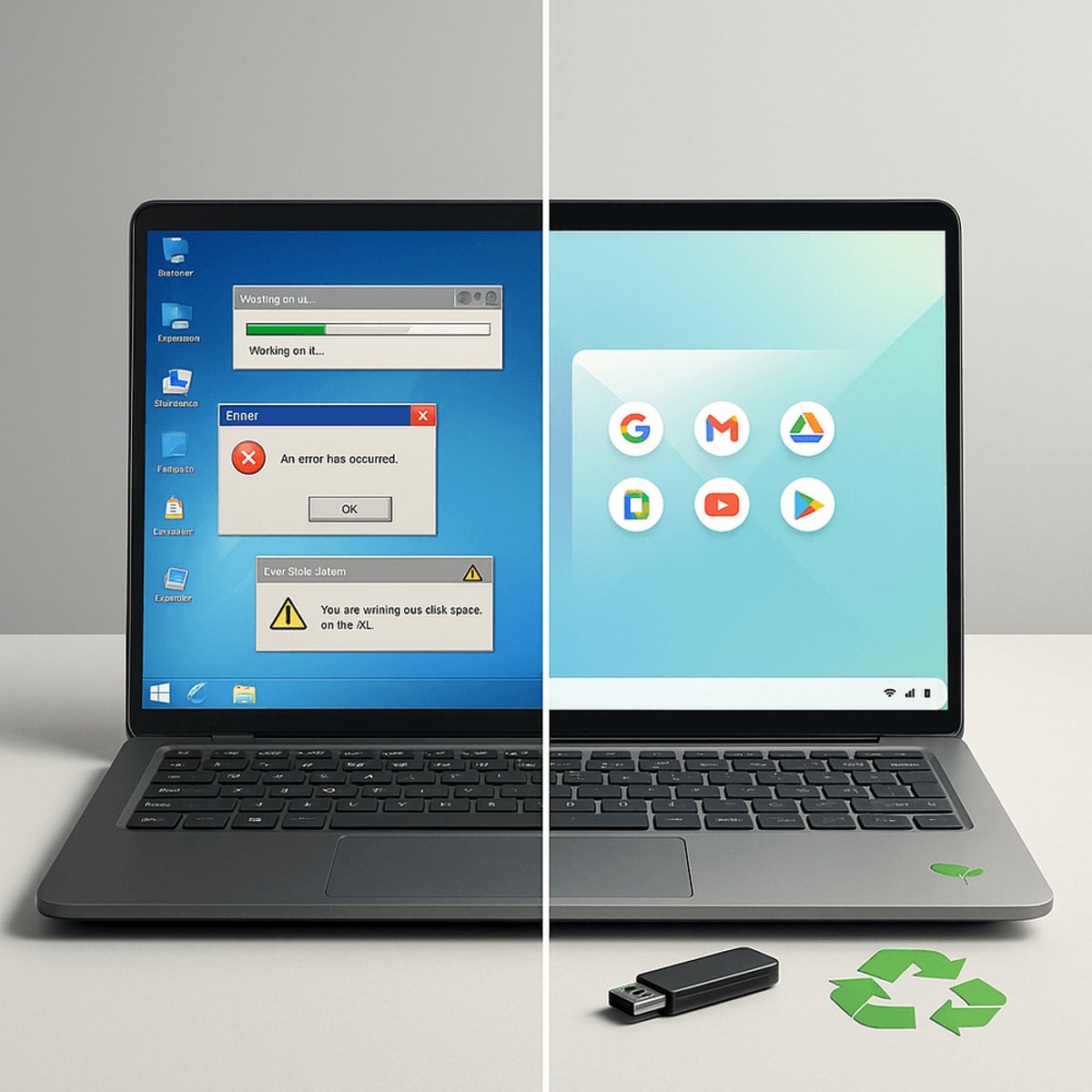
Google is quietly solving the tech industry's old laptop problem with ChromeOS Flex, a free operating system that transforms aging Windows and Mac machines into functional Chromebooks. The lightweight OS breathes new life into sluggish computers that Microsoft and Apple have abandoned with update cutoffs, offering consumers a sustainable alternative to premature hardware replacement.
Your old laptop doesn't have to become e-waste just because it's slowing down. Google has been quietly offering a solution that transforms aging hardware into functional machines through ChromeOS Flex, and it's gaining momentum as more users discover this free alternative to expensive upgrades.
The timing couldn't be better. As laptops reach their twilight years with sluggish performance, random crashes, and mounting error messages, users typically face a costly decision: shell out hundreds for new hardware or struggle with increasingly unusable machines. Microsoft and Apple eventually stop supporting older hardware entirely, leaving users stranded.
But ChromeOS Flex changes that equation entirely. The operating system essentially strips away the bloat that's killing your laptop's performance, replacing it with what's essentially a souped-up Chrome browser plus essential extras. According to Google's support documentation, the OS works on an extensive list of certified models, though even uncertified laptops often run it successfully.
The installation process reveals just how streamlined Google has made the transition. Using Chrome's Recovery Utility extension, users can create a bootable USB drive in about 30 minutes, depending on internet speed. The process requires just an 8GB USB drive and works from any Windows or Mac computer - it doesn't even need to be the target machine.
What's particularly clever about Google's approach is the "try before you install" option. Users can run ChromeOS Flex directly from the USB drive without touching their existing operating system, letting them test compatibility and performance before committing to the switch. This removes the biggest barrier to adoption - the fear of permanently altering a working (if slow) system.
The performance gains can be dramatic. Since ChromeOS Flex is fundamentally a web browser with a desktop interface, it sidesteps the resource-heavy processes that bog down aging Windows and Mac machines. File management, settings configuration, and app launching all happen through the streamlined ChromeOS interface that Chromebook users already know.
For Google, this represents more than just a goodwill gesture toward sustainability. Every ChromeOS Flex installation creates a new entry point into Google's ecosystem of services, from Gmail and Drive to the company's growing suite of web applications. It's user acquisition through hardware rescue.
The broader implications extend beyond individual users. Educational institutions and businesses sitting on fleets of aging laptops now have a path forward that doesn't involve massive capital expenditure. ChromeOS Flex transforms what would be e-waste into functional work machines, addressing both budget constraints and environmental concerns.
The technology landscape is shifting toward web-based applications anyway, making the transition less jarring than it would have been five years ago. Most user workflows already happen in browsers, whether that's document editing in Google Workspace, video calls through Zoom, or media consumption via streaming services.
But there are limitations worth considering. ChromeOS Flex won't run traditional Windows applications or Mac software - it's strictly a web-and-Android-app environment. Users heavily dependent on specific desktop software will need to find web alternatives or stick with their current operating systems.
The move also positions Google to capture market share in the growing sustainability-conscious consumer segment. As environmental concerns influence purchasing decisions, offering a free alternative to hardware replacement becomes a competitive advantage.
ChromeOS Flex represents Google's long-term bet on web-centric computing while solving an immediate problem for millions of users stuck with aging hardware. As the technology industry grapples with sustainability concerns and consumers grow more cost-conscious, this free OS transformation could reshape how we think about laptop lifecycles. The real test will be whether users can adapt to Google's vision of computing entirely through the browser - but for laptops destined for the recycling bin, it's certainly worth the experiment.