Hewlett Packard Enterprise just posted its most impressive earnings beat in nearly eight years, sending shares rocketing 30% in extended trading. The legacy hardware company's second-quarter results revealed something Wall Street didn't see coming: explosive growth in its Cloud & AI segment, with server revenue soaring as enterprises scramble to build out AI infrastructure. It's a stunning validation that the AI boom isn't just lifting chip makers and software companies - it's reshaping the entire enterprise hardware landscape.
Hewlett Packard Enterprise just delivered the kind of earnings surprise that makes investors scramble to recalculate their models. The company's second-quarter results, released after market close, triggered a 30% surge in extended trading - the biggest single-day jump since its 2018 earnings beat that signaled the beginning of its hybrid cloud transformation.
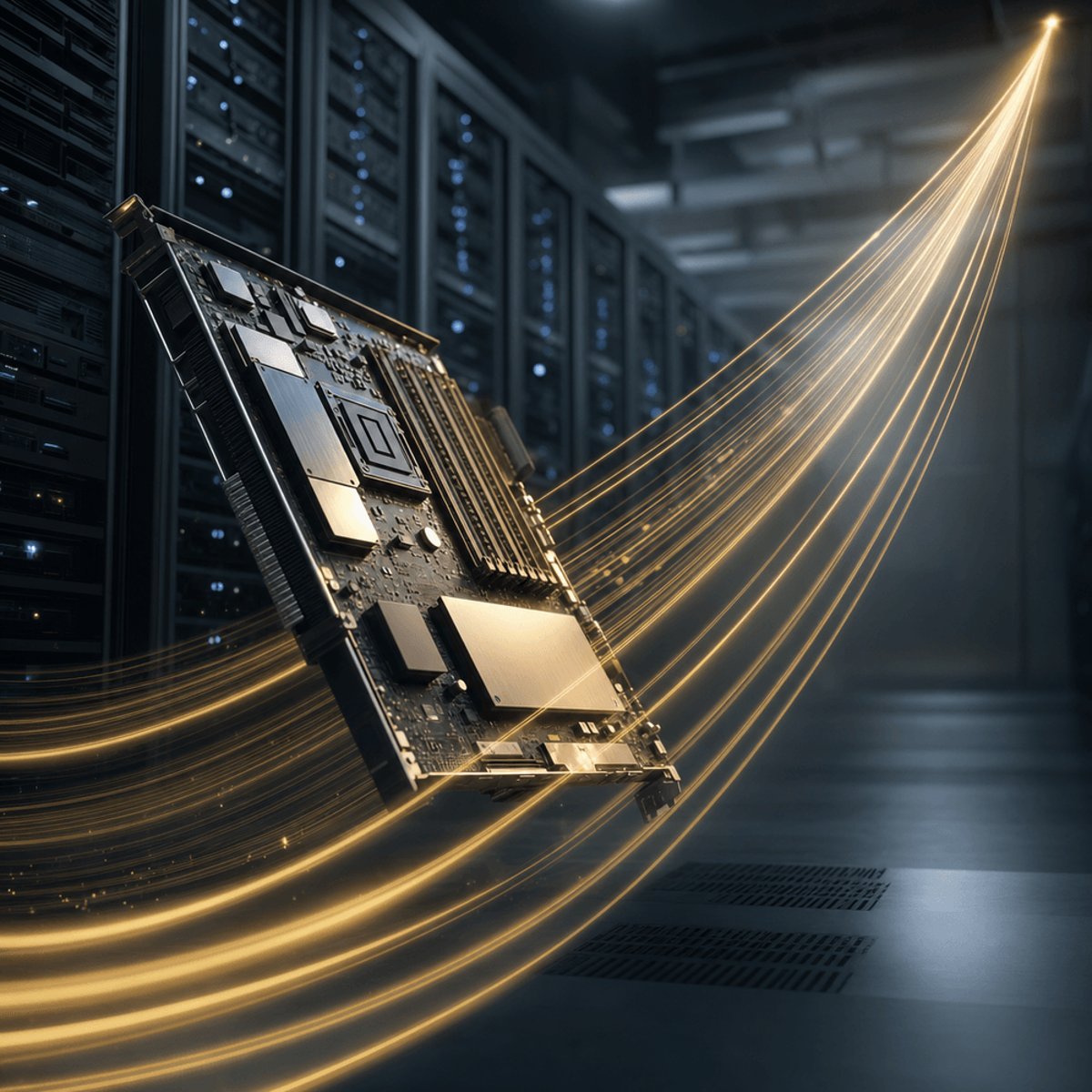
The story here isn't just about beating expectations. It's about what's driving those numbers: AI infrastructure demand that's proving far stronger and more immediate than most analysts predicted. HPE's Cloud & AI segment, which houses its server business, showed revenue growth that caught even bullish investors off-guard. According to CNBC, the segment's performance was the standout in a quarter full of surprises.
This matters because HPE isn't a flashy AI startup or a chip designer riding the generative AI wave. It's a 86-year-old enterprise hardware company that's been grinding through a multi-year transformation. The fact that it's now posting blowout numbers on AI server sales tells us something crucial about where the industry is: we've moved from experimentation to deployment at scale.
The timing is particularly striking. While Nvidia and other chip makers have been capturing headlines with their AI-driven growth, HPE's results suggest that the infrastructure buildout is accelerating across the entire stack. Enterprises aren't just buying GPUs - they're building complete AI-capable data centers, and that means servers, networking gear, and the kind of integrated systems that HPE specializes in.
Wall Street is now recalibrating. The 30% after-hours surge suggests investors drastically underestimated how quickly AI workloads would translate into hardware refresh cycles. HPE's traditional customer base - large enterprises, government agencies, and service providers - tends to move deliberately. If they're already buying AI infrastructure at this pace, it implies the transformation is happening faster than the consensus view suggested.
The competitive implications are immediate. Dell Technologies reports earnings later this month, and expectations just got reset. Cisco, which has been positioning its networking gear for AI workloads, faces new questions about whether it's capturing its fair share. Even cloud providers like Amazon Web Services and Microsoft Azure might see customers opting for on-premises AI infrastructure instead of cloud-based solutions.
But there's a wrinkle in this narrative. HPE's success also exposes a tension in the AI infrastructure market: supply constraints. The company's ability to deliver servers depends on getting enough high-end processors and accelerators, which remain in tight supply. Strong demand is great until you can't fulfill it, and that could create a ceiling on how long this growth trajectory continues.
The earnings beat also validates HPE's strategic pivot over the past several years. CEO Antonio Neri bet heavily on hybrid cloud and AI-ready infrastructure, even as some investors questioned whether the company could compete against hyperscalers and pure-play cloud vendors. Today's results suggest that bet is paying off - enterprises want flexibility, and they're willing to pay for hardware that can run AI workloads on-premises or in hybrid configurations.
For the broader market, HPE's surge is a reminder that the AI investment cycle is far from over. While software and chip stocks have dominated AI-related gains, the infrastructure layer is now catching up. That could mean a rotation of capital into companies that were previously overlooked in the AI narrative.
HPE's massive earnings beat and 30% stock surge isn't just a win for one legacy tech company - it's a signal that the AI infrastructure buildout has entered a new phase. As enterprises move from pilot projects to production deployments, they're buying hardware at a pace that's surprising even optimistic analysts. The question now is whether this pace is sustainable, or if we're seeing a temporary spike as companies rush to build capacity. Either way, HPE just proved that in the AI era, you don't have to be a chip maker or a software company to capture explosive growth. Sometimes being the company that helps enterprises actually deploy AI is exactly where you want to be.