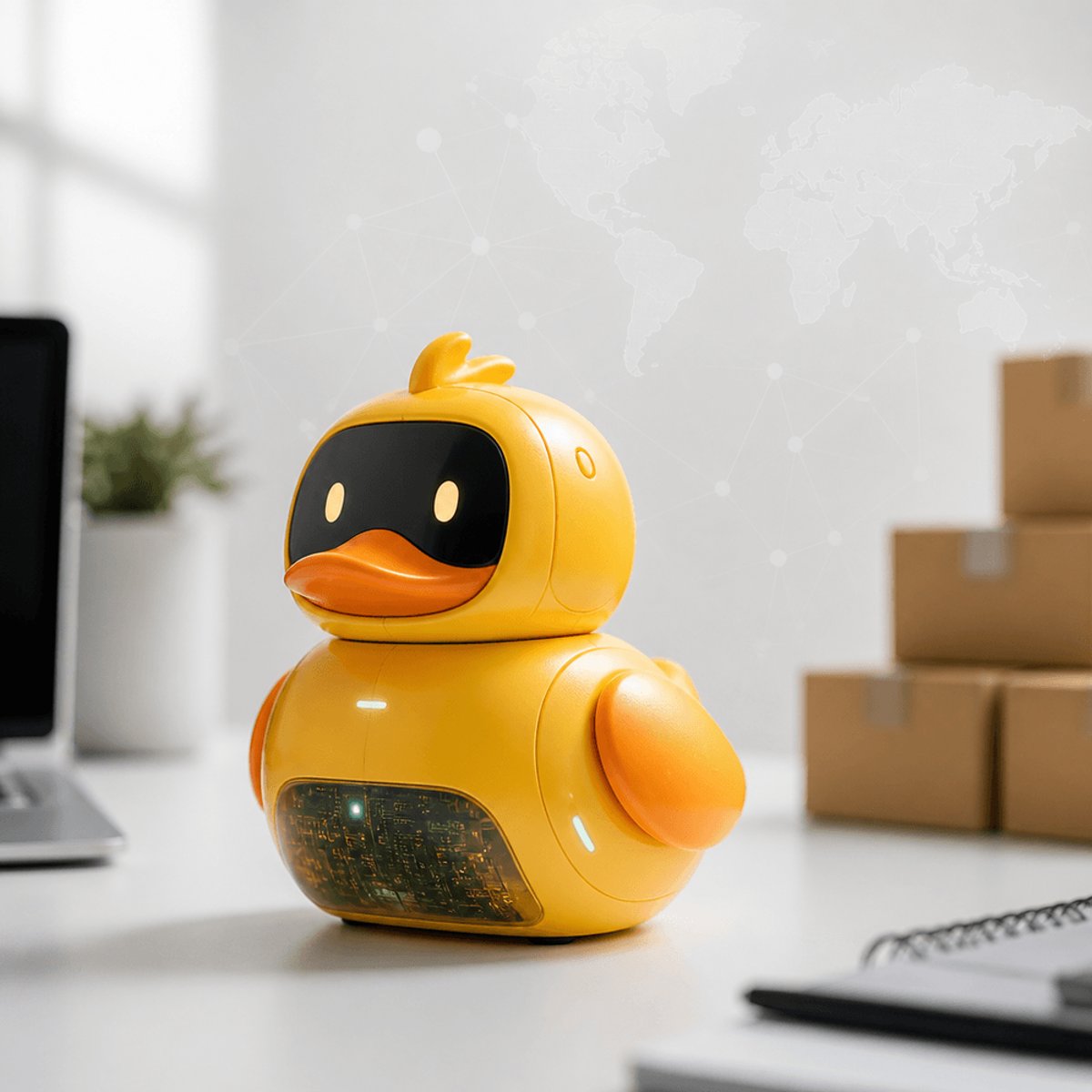
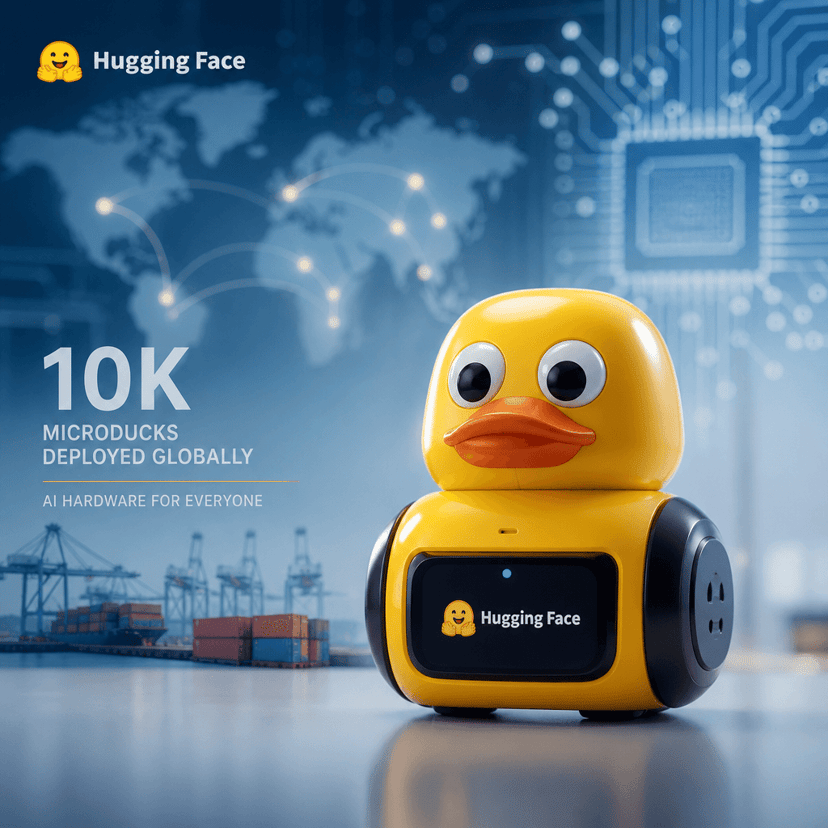
Hugging Face's French robotics arm just proved that cute, affordable robots still move fast. The company's new Microduck robot sold more than 10,000 units within days of its Thursday launch, according to CNBC, a number that's turning heads not just for its speed but for what's inside the plastic shell: a chip made in China.
Hugging Face's French robotics subsidiary, Pollen Robotics, just had a breakout moment. The company's new Microduck, a small, colorful desktop robot, has sold more than 10,000 units since it launched last Thursday, according to CNBC. That's a strong debut for a hardware product from a company best known for hosting open-source AI models rather than shipping physical gadgets.
What's grabbing attention beyond the sales figures is what's powering the little duck. The Microduck runs on a chip manufactured in China, a detail that's sparked chatter given the ongoing tension between the US and China over semiconductor supply chains. While companies like Nvidia have faced export restrictions and scrutiny over where their chips end up, Pollen Robotics went the other direction, sourcing a Chinese-made processor to power a consumer robot built by a France-based, Hugging Face-owned company. It's a small but telling example of how global the hardware stack has become, even for products that look more like toys than AI infrastructure.
Hugging Face has spent the last few years building its reputation as the go-to hub for open-source machine learning models, hosting everything from language models to computer vision tools that developers around the world plug into their own products. Its move into physical robotics through Pollen Robotics signals the company wants a piece of the growing market for AI-native hardware, not just the software layer. Robotics has become one of the hotter corners of the AI world lately, with companies racing to put large language models and other AI systems into bodies that can interact with the physical world.
The Microduck itself is a lower-cost, playful entry into that space rather than a industrial or humanoid robot. Its appeal seems to be part novelty, part accessibility. At a moment when much of the robotics conversation is dominated by expensive humanoid platforms from companies chasing warehouse automation or in-home assistance, a sub-category of cheap, fun, desk-sized robots that just sell fast is a different kind of signal. It suggests there's real consumer appetite for approachable robotics products, not just enterprise-grade machines.
The chip sourcing detail is worth watching closely. As AI hardware companies build out supply chains, the geopolitics of where components come from keeps getting more complicated. Firms like Apple and Tesla have spent years diversifying their component sourcing to hedge against exactly this kind of scrutiny. Pollen Robotics choosing a Chinese chip for a mass-market robot, intentionally or not, puts it in the middle of that broader conversation about where the components inside AI-powered consumer products actually come from.
For now, the headline is simple: a duck-shaped robot from an AI company's hardware offshoot is flying off shelves. But the story underneath, about chip sourcing, about Hugging Face's ambitions beyond software, and about consumer appetite for playful robotics, is the part worth tracking as the company decides what comes next. If Pollen Robotics scales production or expands the lineup, expect more scrutiny on both the supply chain choices and whether this becomes a real business line for Hugging Face or stays a fun side project that happened to catch fire.
The Microduck's fast sellout is a reminder that AI companies are increasingly betting on physical products, not just models and APIs, to reach consumers. But the Chinese chip inside it adds a layer of complexity that goes beyond cute robotics, tying a small French startup's supply chain choices to the much bigger, messier story of global semiconductor politics. Whether Hugging Face leans further into hardware or treats this as a one-off experiment will say a lot about where the company sees its future.