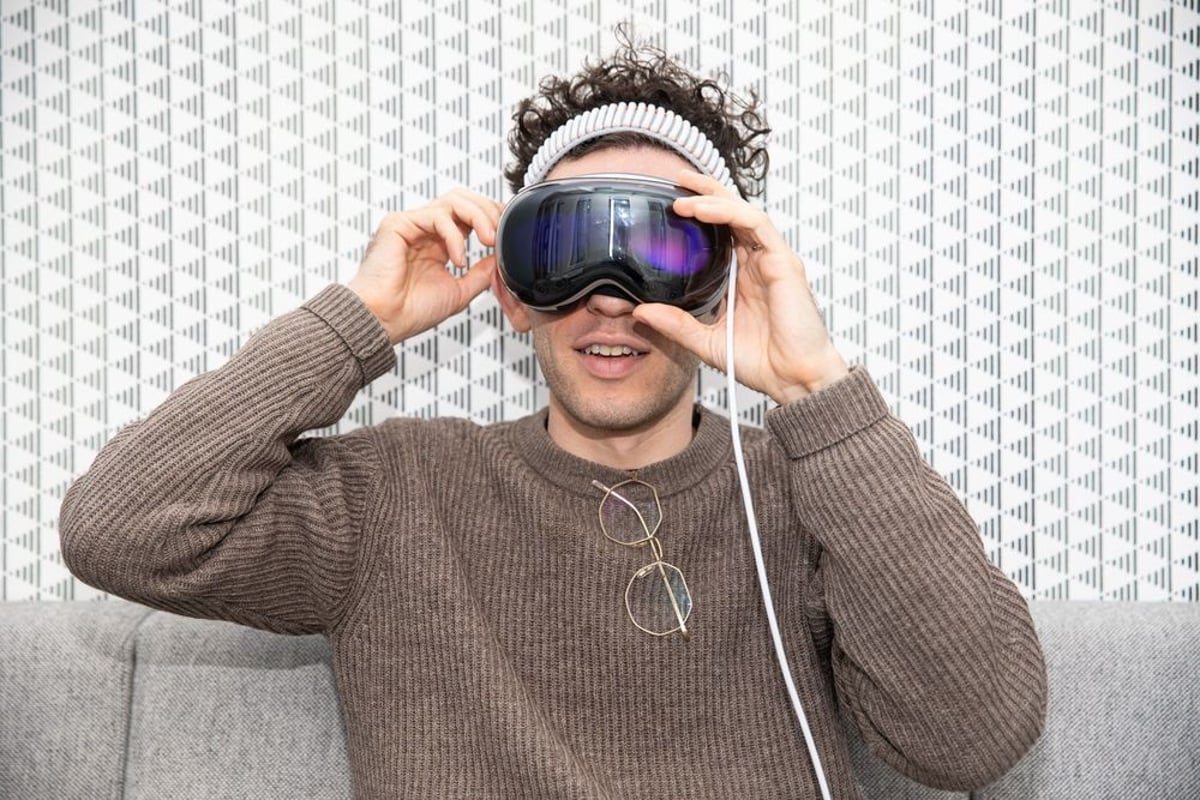
Apple is cutting more than 200 jobs across its Vision Pro and Siri divisions, marking a significant pullback from the company's spatial computing ambitions. The iPhone maker is largely shutting down its Vision Pro gaming team and scaling back immersive content production, according to Bloomberg. It's a surprising retreat for a company that launched the $3,499 headset just two years ago as the future of computing.
Apple just delivered an unwelcome reality check to its spatial computing dreams. The Cupertino giant is laying off more than 200 employees from its Vision Pro and Siri teams, Bloomberg reported Thursday, in a restructuring that raises serious questions about the company's commitment to its most ambitious hardware bet in years.
The cuts hit hardest in Vision Pro's content creation arms. Apple is "largely shutting down" an entire gaming team dedicated to the headset and "reducing the size" of its immersive video production group, according to people familiar with the matter. For a company that rarely retreats publicly from major product initiatives, it's a telling move.
"We are making these changes to evolve our business to deliver the best experiences for our users," Apple told Bloomberg in a statement. The company added it would create new roles elsewhere but didn't specify where or how many. Apple didn't respond to The Verge's request for comment.
The Vision Pro launched in early 2024 as Apple's big swing at redefining personal computing through what it calls "spatial computing." CEO Tim Cook positioned the $3,499 device as revolutionary as the iPhone - a bold claim that carried enormous internal expectations. But the headset's eye-watering price tag and limited content library have kept it firmly in enthusiast territory rather than mainstream adoption.
Gaming was supposed to be a killer app. Apple promoted Vision Pro's ability to run thousands of iOS games and showcased custom spatial gaming experiences at launch. The decision to now dismantle that dedicated gaming team suggests those experiences didn't materialize the way Apple hoped - or that customers didn't care enough to justify continued investment.
The immersive video cuts are equally revealing. Apple partnered with major studios and sports leagues to create 3D content exclusive to Vision Pro, commissioning everything from concert films to NBA games in 180-degree video. Scaling back that team implies the content either wasn't driving hardware sales or the production costs outweighed the strategic value.
Siri's inclusion in the layoffs is less surprising but no less significant. Apple's voice assistant has lagged behind Google Assistant and Amazon's Alexa for years in capability and reliability. While Apple has been racing to integrate AI features across its products - recently announcing Apple Intelligence as its next-generation AI platform - Siri has remained the weak link in that strategy.
The timing matters. These cuts come as the broader tech industry continues to recalibrate after years of aggressive hiring. Meta slashed its Reality Labs division multiple times, Microsoft shut down its HoloLens division earlier this year, and even AI darling OpenAI has quietly reduced headcount in non-core areas. But Apple has largely avoided the mass layoffs that hit peers in 2023 and 2024, making these job cuts more notable.
What's unclear is whether this represents a strategic pivot or a full retreat. Apple could be consolidating Vision Pro efforts around enterprise applications, where high prices are less of a barrier and use cases are clearer. The company has quietly courted business customers for surgical training, industrial design, and remote collaboration - areas where the headset's capabilities justify the cost.
Or this could signal Apple is preparing to launch a cheaper Vision Pro variant and doesn't need premium content teams focused on a narrow enthusiast audience. Rumors have swirled about a sub-$2,000 model that could reach more consumers, though nothing's been confirmed.
The market hasn't exactly validated Apple's vision. IDC estimates Apple shipped fewer than 500,000 Vision Pro units in its first year - respectable for a first-generation premium device but nowhere near the millions needed to build a sustainable content ecosystem. Developers have been slow to create native apps, with many simply porting iPad experiences rather than building true spatial computing applications.
For employees affected by the cuts, Apple says it's offering opportunities to apply for other positions within the company. But the message is clear: Vision Pro's current trajectory isn't sustainable at its current scale, and Siri remains a problem Apple hasn't solved despite a decade of trying.
Apple's decision to cut 200-plus jobs from Vision Pro and Siri teams marks a rare public acknowledgment that its current approach isn't working. Whether this is a strategic reset to refocus on enterprise markets and a cheaper headset, or the beginning of a longer retreat from spatial computing, won't be clear for months. But for now, the company that told us the future was spatial is quietly scaling back its bet on that future - and that should make everyone watching the mixed reality space take notice.