Oura is fighting a new class-action lawsuit that strikes at the heart of its product claims. Filed this week, the complaint alleges the company's flagship smart ring can't actually measure the physiological signals needed to assess sleep quality or determine sleep stages - despite marketing materials suggesting otherwise. It's the latest legal challenge facing the booming wearables industry as consumers push back on health-tracking accuracy.
Oura, the Finnish health tech company behind the popular smart ring, is facing a class-action lawsuit that questions the very foundation of its sleep-tracking capabilities. The complaint, filed in federal court, alleges the company has misled consumers by claiming its devices can accurately measure sleep stages and quality when they fundamentally lack the sensors to do so.
According to the lawsuit reported by TechCrunch, Oura rings are "unable to measure any of the physiological signals needed to assess sleep quality or determine sleep stages." That's a direct hit on the company's core value proposition - the ring's ability to provide detailed sleep analysis has been central to its marketing and premium pricing strategy.
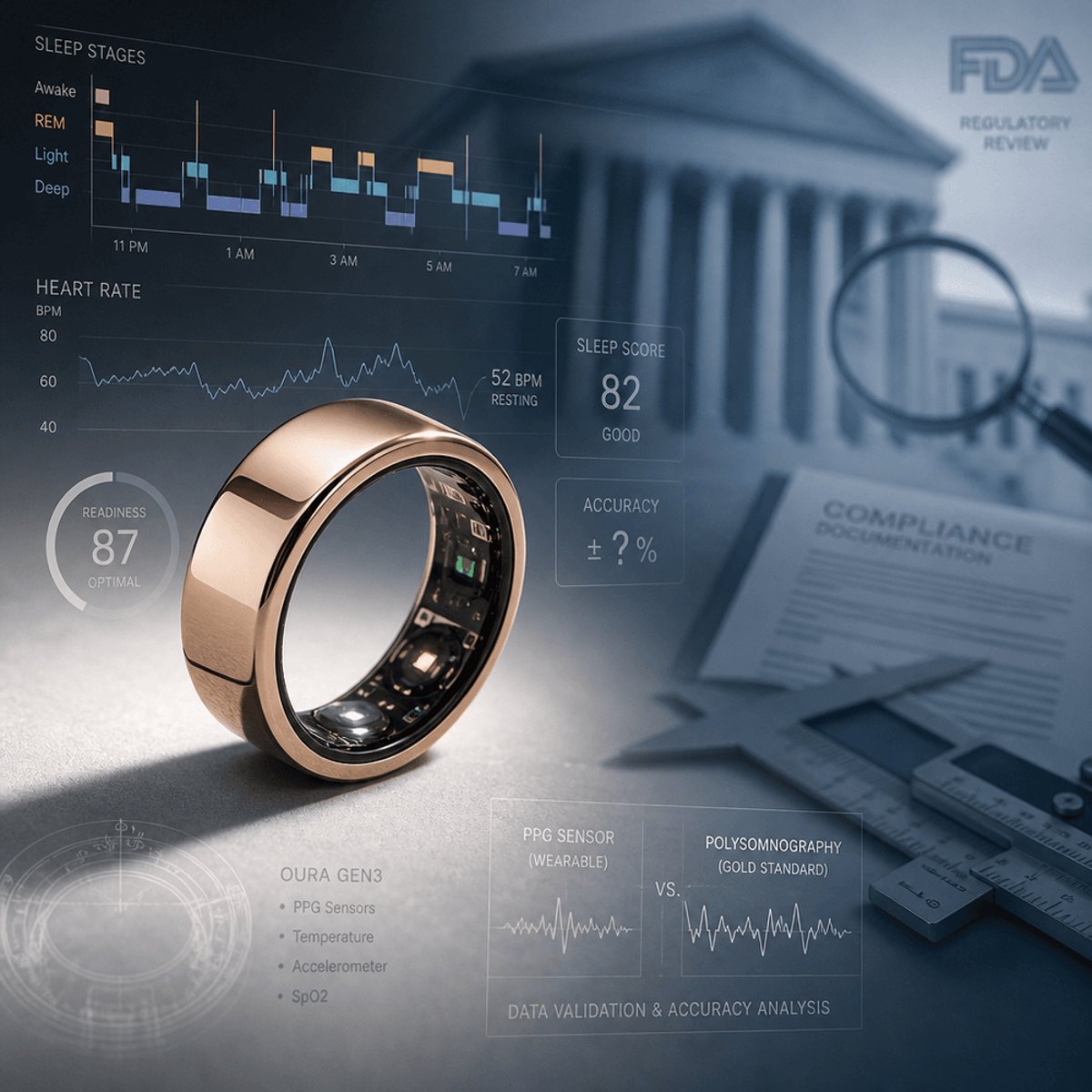
The timing couldn't be more awkward for Oura. The company has positioned itself as a leader in the health wearables space, counting celebrities and professional athletes among its user base. Its third-generation ring, which retails for $299 plus a $5.99 monthly membership fee, promises to track sleep stages, heart rate variability, body temperature, and more. But if the lawsuit's claims hold up, that sophisticated sleep analysis might be more algorithmic guesswork than physiological measurement.
The case taps into a broader tension in the wearables industry. Companies like Apple, Fitbit (owned by Google), and Whoop all make sleep-tracking claims, but they're not medical devices - they're consumer gadgets operating in a regulatory gray zone. The FDA doesn't require the same level of validation for wellness devices as it does for medical equipment, leaving room for what critics call overpromising.
Oura has built an impressive business on its sleep and recovery insights. The company raised $100 million in a Series C round in 2021, reaching a valuation of $2.55 billion. That funding came from investors betting that consumers would pay premium prices for actionable health data. But actionable requires accurate, and that's exactly what this lawsuit challenges.
The complaint likely centers on the technical limitations of ring-based sensors. Medical-grade sleep studies use polysomnography, which involves electroencephalography (EEG) to measure brain waves, electrooculography (EOG) for eye movement, and electromyography (EMG) for muscle activity. Oura's ring relies on photoplethysmography (PPG) for heart rate, accelerometers for movement, and temperature sensors - a far cry from the clinical gold standard.
Industry experts have long noted that consumer sleep trackers are better at detecting when you're asleep versus awake than distinguishing between sleep stages like REM, light, and deep sleep. A 2023 study published in Sleep Medicine Reviews found that wearable devices showed significant variability in sleep stage classification compared to polysomnography. Oura has previously published validation studies, but they've faced criticism for methodology and sample size.
The legal challenge comes as the wearables market faces increased scrutiny. Class-action lawsuits have targeted other health tech companies over accuracy claims, from heart rate monitors to blood oxygen sensors. What makes Oura's case particularly interesting is that sleep tracking is the company's primary selling point - it's not a secondary feature on a multi-purpose device.
Oura hasn't publicly responded to the specific allegations, and the company declined to comment for this story. But the legal battle could force uncomfortable disclosures about how the ring's algorithms work and what limitations exist in its sensor capabilities. That kind of transparency isn't typically something hardware companies volunteer.
For consumers who've spent $300-plus on an Oura ring expecting medical-grade insights, the lawsuit raises uncomfortable questions. Are they getting sophisticated health monitoring or expensive sleep theater? The answer likely falls somewhere in between, but where exactly could determine whether this case becomes a settlement footnote or a watershed moment for wearables marketing.
This lawsuit could reshape how wearables companies market their health-tracking features. If Oura is forced to dial back its sleep-tracking claims, expect ripple effects across the industry as competitors preemptively adjust their own marketing language. For now, consumers should remember that wellness wearables offer interesting data points and trends, not medical diagnoses. The Oura case will test whether that distinction has been clearly communicated - or if companies have been selling aspiration as accuracy.