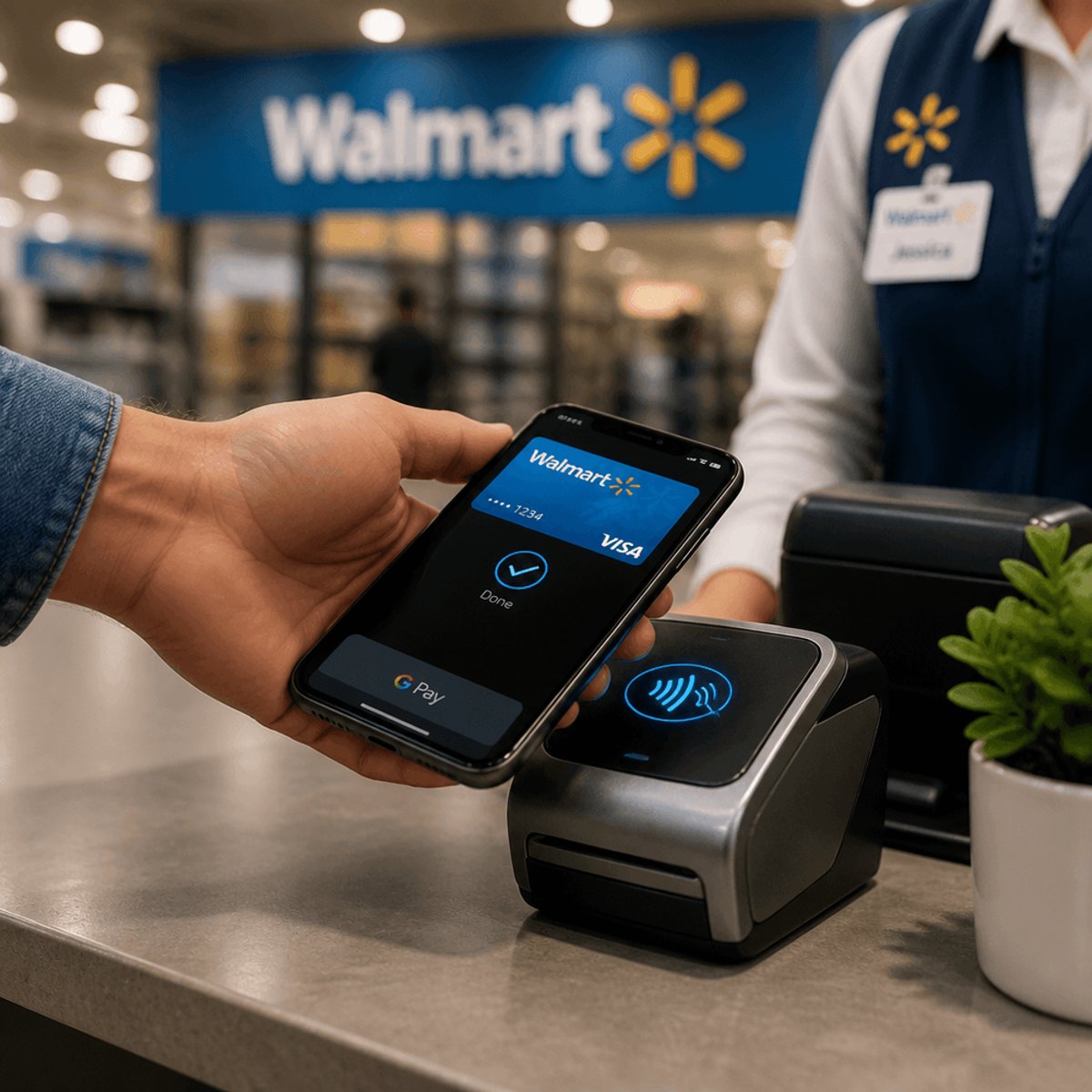
After nearly a decade of stubborn resistance, Walmart is finally accepting Apple Pay and Google Pay at its stores. The reversal marks a stunning capitulation for the world's largest retailer, which has long forced customers to use its proprietary Walmart Pay system instead. The move affects over 4,600 U.S. stores and could reshape the competitive landscape for mobile payments, potentially driving billions in new transaction volume through Apple and Google's platforms.
Walmart just pulled off one of retail's most surprising about-faces. The company confirmed it will begin accepting Apple Pay and Google Pay across its U.S. store network, ending a standoff that's lasted since Apple Pay launched in 2014. For nearly ten years, Walmart stubbornly refused to install the NFC terminals required for tap-to-pay services, betting instead that customers would embrace Walmart Pay, its QR code-based payment app embedded in the main Walmart mobile app.
That bet didn't exactly pan out. While Walmart Pay has millions of users, it never achieved the ubiquity the retailer hoped for. Customers consistently complained about the friction - having to open the Walmart app, navigate to the payment section, and scan a QR code at checkout instead of simply tapping their phone. The resistance became a running joke in retail tech circles, with analysts questioning why America's largest retailer was fighting a battle it couldn't win.
The timing of Walmart's reversal speaks volumes about where mobile payments are headed. Apple recently disclosed that Apple Pay is now used by over 500 million people globally, while contactless payments have become the default for a generation of shoppers who came of age during the pandemic. Walmart's holdout position was becoming increasingly untenable as competitors like Target, CVS, and even Home Depot embraced tap-to-pay years ago.
The financial implications are staggering. Walmart processes over $600 billion in annual U.S. sales, and even a modest shift toward Apple Pay and Google Pay could represent tens of billions in new transaction volume for those platforms. That's money flowing through Apple and Google's payment rails instead of directly through Walmart's systems, giving the tech giants valuable data about shopping patterns and consumer behavior.
But Walmart isn't just surrendering - it's adapting. The retailer is reportedly keeping Walmart Pay active alongside the new payment options, betting that its integration with Walmart+ membership perks, digital receipts, and loyalty rewards will still give customers reasons to use the in-house system. It's a hedge that acknowledges reality while trying to maintain some control over the checkout experience.
The shift also reflects broader changes in retail technology strategy. The days of every major retailer building proprietary everything - from payment systems to delivery networks to advertising platforms - are giving way to a more pragmatic approach. Retailers are learning to pick their battles, focusing proprietary tech investments on areas where they can truly differentiate while adopting industry-standard solutions for table-stakes features like contactless payments.
For Apple and Google, Walmart's capitulation represents a massive validation. Apple Pay's acceptance rate among U.S. retailers now approaches near-universal levels, making the iPhone an increasingly essential piece of payment infrastructure. Google Pay, while less dominant, benefits from the same NFC terminals and Android's global market share.
The move also puts pressure on the remaining holdouts. If Walmart - the retailer most committed to controlling every aspect of the customer experience - has accepted Apple Pay and Google Pay, what excuse do smaller chains have? The message to the retail industry is clear: the battle for proprietary mobile wallets is over, and the platform providers won.
What's less clear is how this affects the broader payments ecosystem. Companies like PayPal and Square have built businesses facilitating digital transactions, while traditional card networks like Visa and Mastercard still process the underlying payments. Walmart's embrace of Apple Pay and Google Pay doesn't necessarily disrupt those players, but it does consolidate more power at the front-end of transactions with Apple and Google.
The rollout timeline remains unclear, with Walmart not yet announcing specific dates for when tap-to-pay will go live. But the direction is set, and it marks the end of an era in retail payments - one where major chains thought they could force customers onto proprietary systems through sheer market dominance. Turns out, convenience beats corporate strategy every time.
Walmart's decision to finally accept Apple Pay and Google Pay isn't just about adding payment options - it's a strategic acknowledgment that the future of retail belongs to platforms that work with industry standards, not against them. For shoppers, it means one less friction point at checkout. For Apple and Google, it's the final domino falling in their quest to own the mobile wallet. And for the retail industry, it's a reminder that even the biggest players eventually have to bend to what customers actually want. The proprietary wallet experiment is over. Platform interoperability won.