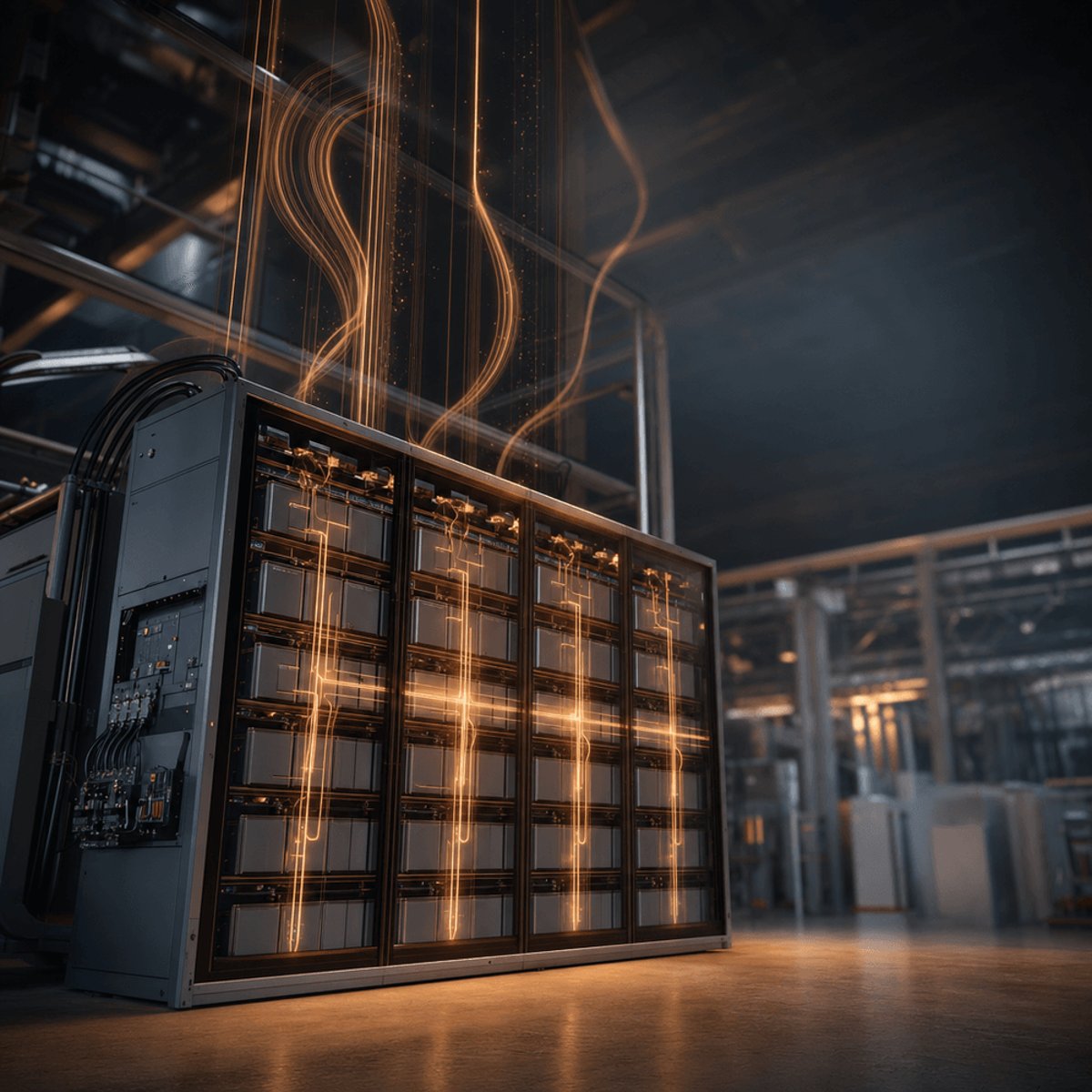
LG Energy Solution's stock surged as much as 16% Thursday after the South Korean battery manufacturer landed a significant energy storage deal with DTE Energy in Michigan. The agreement marks a major win for LG's U.S. expansion strategy as the company pushes deeper into grid-scale battery systems, riding the wave of America's renewable energy buildout and positioning itself against Chinese competitors in a rapidly electrifying market.
LG Energy Solution just scored a major win in America's energy storage race. The South Korean battery giant's shares rocketed as much as 16% Thursday after announcing a substantial battery storage deal with DTE Energy, the Detroit-based utility serving over 2 million Michigan customers.
The market reaction was swift and decisive. Investors clearly see this as validation of LG's aggressive push into grid-scale energy storage, a sector that's becoming just as critical as the electric vehicle batteries that built the company's reputation. While specific financial terms weren't disclosed in the initial announcement, the stock surge suggests Wall Street views this as a breakthrough contract that could open doors to similar deals across the U.S.
This deal couldn't come at a better time for LG Energy Solution. The company has been working hard to diversify beyond its core EV battery business, where competition from Chinese manufacturers like CATL and BYD continues to intensify. Energy storage systems represent a strategic pivot - one that plays directly into America's grid modernization needs as utilities scramble to integrate more renewable energy sources.
DTE Energy's decision to partner with LG signals the South Korean company's growing credibility in the stationary storage market. U.S. utilities have become increasingly selective about battery suppliers, prioritizing companies with proven track records, domestic manufacturing capabilities, and supply chains that align with Buy America requirements. LG's existing U.S. manufacturing footprint - including facilities in Michigan and Arizona - likely gave it a competitive edge in landing this contract.
The timing also aligns with broader market dynamics. Grid-scale battery storage installations in the U.S. have been growing at triple-digit rates as states push renewable energy mandates and utilities need backup power to stabilize grids. Michigan itself has ambitious clean energy targets, aiming for 60% renewable electricity by 2035. That creates massive demand for the kind of large-scale battery systems LG manufactures.
For LG Energy Solution, this represents more than just one deal. It's a proof point that the company can compete in a market segment where it's been playing catch-up to rivals like Tesla Energy and Fluence. The stock's 16% surge reflects investor recognition that energy storage systems could become a significant revenue driver, not just a side business to the company's EV battery operations.
The Michigan deal also demonstrates LG's ability to leverage its existing relationships and manufacturing presence in the U.S. The company has invested billions in American production capacity, betting that proximity to customers and alignment with domestic content requirements would pay off. This DTE contract suggests that strategy is working.
What makes this particularly significant is the competitive landscape. Chinese battery manufacturers have dominated global markets with aggressive pricing, but U.S. utilities are increasingly wary of supply chain risks and geopolitical tensions. That creates an opening for South Korean and Japanese suppliers who can offer competitive technology without the political baggage. LG appears to be capitalizing on that shift.
The energy storage market is projected to grow exponentially over the next decade as renewables become the dominant source of new power generation. Batteries are essential for storing solar and wind energy when the sun isn't shining or wind isn't blowing. For utilities like DTE, these systems aren't optional anymore - they're critical infrastructure for maintaining grid reliability while transitioning away from fossil fuels.
Investors are clearly betting that LG Energy Solution can capture a meaningful slice of this exploding market. The 16% stock jump suggests confidence that this DTE deal is just the beginning, potentially opening a pipeline of similar contracts with other U.S. utilities looking for reliable battery storage partners.
LG Energy Solution's stock surge isn't just about one deal - it's the market recognizing a strategic shift that could reshape the company's future. As U.S. utilities race to build out energy storage infrastructure and navigate supply chain concerns around Chinese suppliers, LG's combination of proven technology, domestic manufacturing, and South Korean provenance positions it perfectly for this moment. The real question now is whether this DTE contract opens the floodgates to similar deals across the American utility sector, potentially establishing LG as a dominant player in grid-scale storage just as it became in EV batteries.