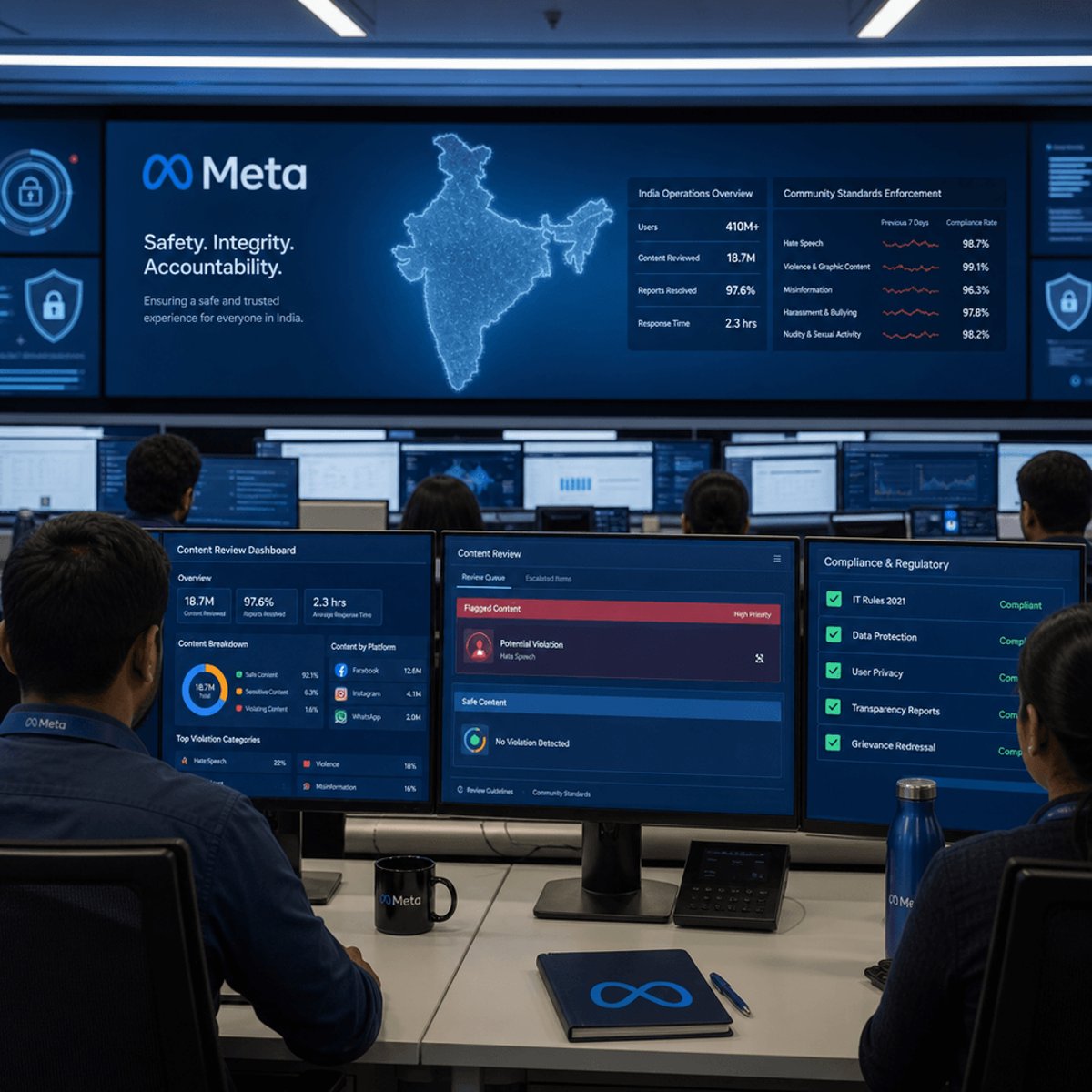
Meta is staring down its biggest regulatory crisis in India, where disturbing reports of child abuse advertisements on Instagram have triggered swift government action. The development marks a critical escalation for the social media giant in its largest market, with India accounting for over 500 million users across Facebook, Instagram, and WhatsApp combined. According to CNBC, Indian authorities are now examining the company's content moderation practices with unprecedented intensity.
Meta just landed in serious trouble with Indian regulators, and the timing couldn't be worse. The company's Instagram platform has been flagged for hosting advertisements related to child abuse, triggering what sources describe as an "onslaught" of regulatory scrutiny from New Delhi, according to CNBC.
India isn't just another market for Meta - it's the crown jewel. With more than 500 million users spread across Facebook, Instagram, and WhatsApp, the country represents the largest concentration of Meta users anywhere in the world. Losing ground here would fundamentally reshape the company's global strategy and revenue outlook.
The discovery of child abuse-related advertisements cuts to the core of Meta's ongoing battle with content moderation. While the company has invested billions in AI-powered safety systems and human moderators, this incident exposes critical gaps in how harmful content slips through the cracks, especially in non-English speaking markets where automated detection proves less effective.
Indian government officials are now taking a hard look at Meta's entire operation in the country. The examination extends beyond Instagram to include the company's other properties, signaling that regulators view this as a systemic failure rather than an isolated incident. Meta's WhatsApp and Facebook platforms are also under the microscope as authorities assess whether similar content moderation failures exist across the company's suite of apps.
This crisis arrives as Meta already navigates a complex regulatory landscape in India. The country has been tightening its grip on social media companies through new IT rules that demand faster content takedowns, local data storage, and greater accountability for user-generated content. Other tech giants like Twitter and Google have faced similar pressures, but Meta's massive user base makes it a particularly high-priority target for Indian regulators.
The child safety angle makes this particularly explosive. Governments worldwide have been cracking down on tech platforms over child protection issues, with the U.S. Senate grilling social media CEOs and the European Union implementing strict new regulations through the Digital Services Act. India's action fits into this global pattern but carries unique weight given the market's size and growth potential.
Meta's advertising business in India has been growing rapidly, with the country emerging as a key revenue driver for the company's Asia-Pacific operations. Any restrictions on advertising practices or increased compliance costs could directly impact Meta's financial performance in the region. The company reported strong user growth in Asia during its recent earnings, making the Indian market increasingly important to its overall business trajectory.
For Meta CEO Mark Zuckerberg, India represents both opportunity and risk. The company has positioned itself as essential infrastructure for India's digital economy, with WhatsApp serving as a primary communication tool for hundreds of millions and Facebook Marketplace becoming a hub for small business commerce. But that prominence also means heightened scrutiny when things go wrong.
The regulatory response will likely involve multiple government agencies. India's Ministry of Electronics and Information Technology typically leads on social media oversight, while the National Commission for Protection of Child Rights could get involved given the nature of the violations. Meta may face substantial fines, operational restrictions, or requirements to overhaul its content moderation systems specifically for the Indian market.
What makes this particularly challenging for Meta is that India demands localized solutions. The company can't simply apply its global content policies and expect them to work in a market with 22 official languages, diverse cultural contexts, and unique regulatory requirements. Building effective moderation systems for India requires substantial investment in local language AI, regional moderators, and partnerships with local organizations - investments Meta will now likely be forced to accelerate.
Meta's India crisis exposes the brutal reality facing global tech platforms: growth markets come with regulatory risk that can explode overnight. With 500 million users at stake and governments worldwide watching how India handles this, Meta needs to move fast on content moderation fixes. The company's ability to navigate this regulatory firestorm will set the template for how it operates in other high-growth, high-scrutiny markets. For investors and industry watchers, the key question isn't whether Meta will face penalties - it's whether this triggers a broader reassessment of how the company's platforms handle child safety globally. The next few weeks will reveal whether Meta's content moderation infrastructure is genuinely robust or just looks good until regulators start digging.